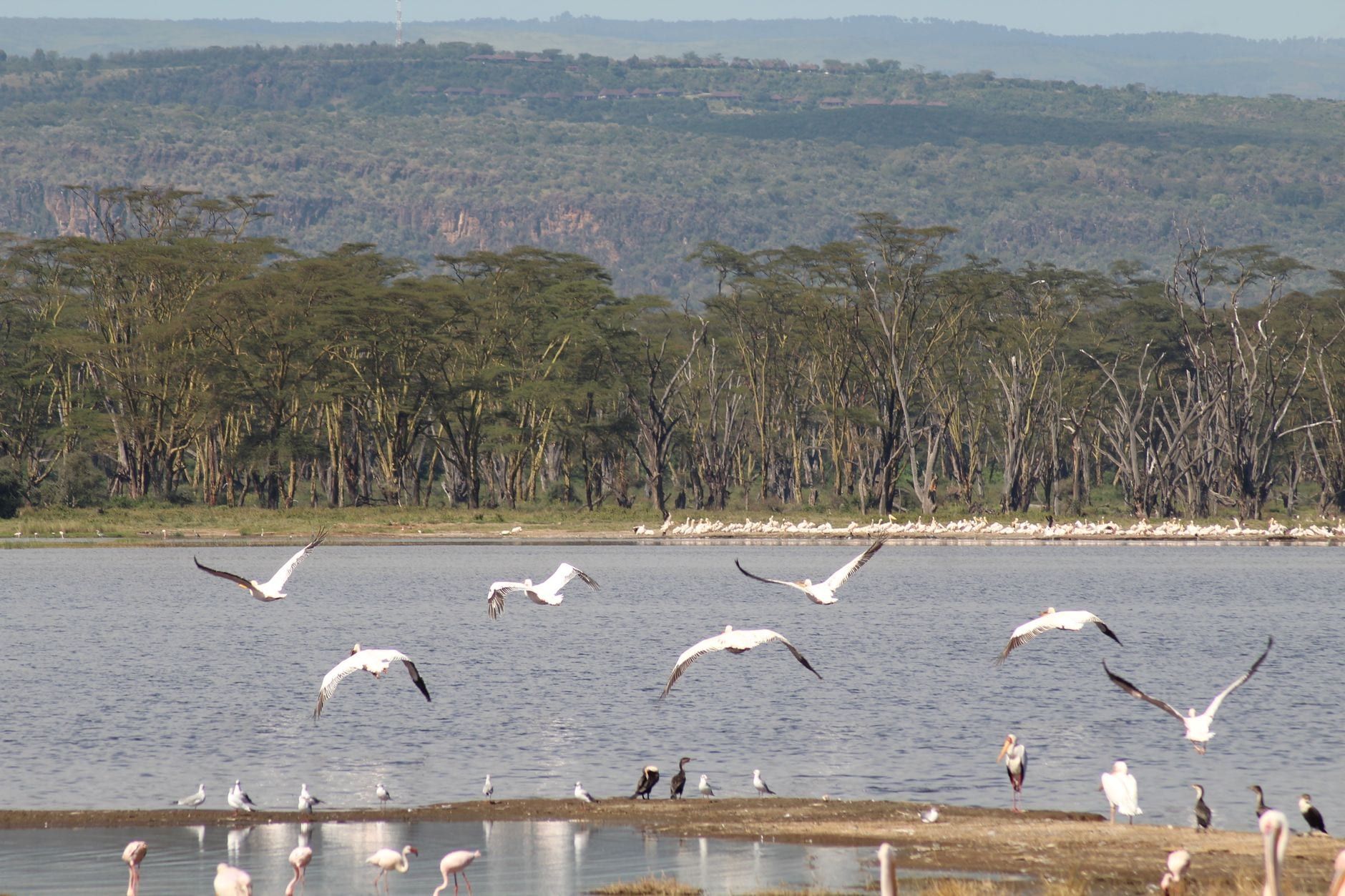
Two lakes, ninety minutes apart by road, and most Kenya itineraries have room for only one of them. Lake Nakuru is a fenced national park built around rhinos and game drives. Lake Naivasha is a freshwater lake where the day's plan is a boat ride past hippos, a walk among giraffes, or a bicycle through a gorge. Pick the wrong one and you can spend USD 90 on a day you didn't actually want.
Here's the short version, then the details. If this is your only Rift Valley stop and big game is the point, go to Nakuru. If your safari already includes the Masai Mara or Amboseli and you'd rather add variety than another day in a vehicle, go to Naivasha. And if you have three or more days, do both — the loop between them is short and the two lakes complement each other.
Lake Nakuru vs Lake Naivasha at a Glance
The structural difference drives everything else. Nakuru is a 188 sq km national park, fully fenced since 1986, holding Kenya's first government-managed rhino sanctuary (set up in 1987) — everything inside those fences is protected park land. Naivasha is an open freshwater lake of roughly 139 sq km, ringed by private sanctuaries, lodges and flower farms rather than a park boundary, and you pay only for the activities you choose.
| Lake Nakuru | Lake Naivasha | |
|---|---|---|
| Water type | Shallow, alkaline (soda) lake | Freshwater lake (~139 sq km) |
| From Nairobi | ~156 km, 2.5-3 hours | ~100 km, 1.5-2 hours |
| Signature wildlife | Black and white rhinos, lions, leopards, Rothschild's giraffes | Hippos, plus giraffes and zebras on Crescent Island |
| Headline activities | Game drives, Baboon Cliff, birding | Boat safaris, walking, cycling at Hell's Gate |
| Non-resident entry | USD 90 per adult per day | Free lake access; pay per activity |
| Time needed | 1 full day | 1-2 days |
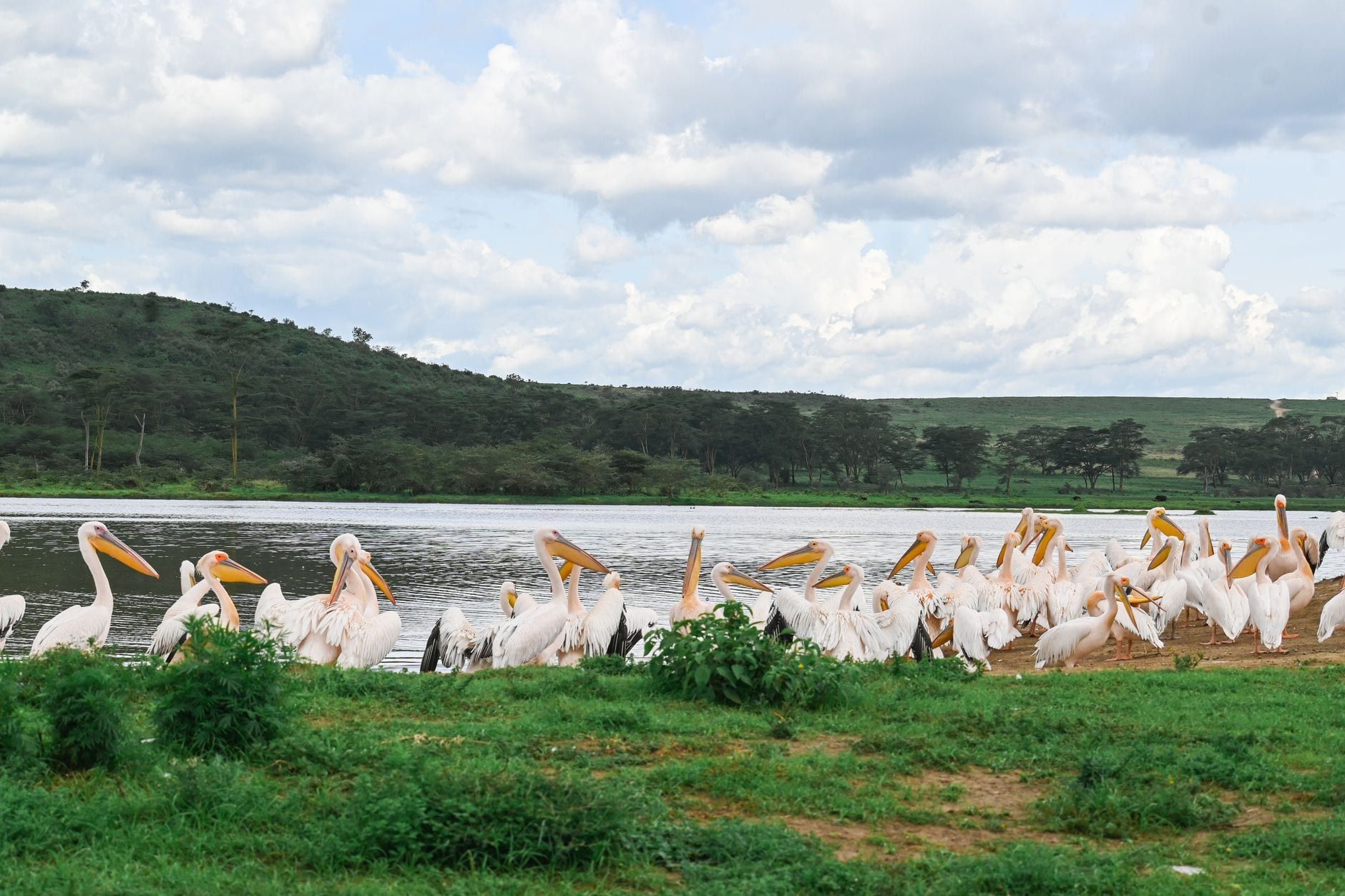
The water itself explains most of what you'll see. Nakuru is a shallow alkaline basin — average depth around 0.3 m, maximum 1.8 m — whose warm soda water grows the spirulina algae that flamingos feed on. Naivasha is fresh, river-fed and fish-rich, which is why it holds hippos, fish eagles and pelicans rather than flamingo masses.
Both carry international protection, of different kinds. Nakuru's lake is part of the UNESCO-listed Kenya Lake System in the Great Rift Valley (inscribed 2011, together with Lakes Bogoria and Elementaita) and has been a Ramsar wetland since 1990. Naivasha has held Ramsar status since 1995. Nice credentials, but they won't decide your itinerary — the animals and the fees will.
Wildlife: Where You'll See What
Nakuru gives you the tick-list safari; Naivasha gives you proximity. The park concentrates four of the Big Five inside a fence you can drive in a day, while the open lake hands you animals at arm's length — from a boat, or on foot. Neither does the other's job.
Lake Nakuru: rhinos and the driveable Big Four
Rhinos are the reason most people choose Nakuru. The park became Kenya's first government-managed rhino sanctuary in 1987 and now holds around 70 southern white rhinos grazing the shoreline grasslands and more than 25 eastern black rhinos browsing the thickets, guarded around the clock inside the fence. There are no elephants here, which sounds like a loss until you realise the other four of the Big Five — lion, leopard, buffalo, rhino — are packed into a compact, drivable park where encounters come quickly.
Rothschild's giraffes, relocated here from western Kenya since 1977, are a reliable sighting, alongside zebra, waterbuck, impala and spotted hyenas. Lions doze in the acacias; leopards show up for patient watchers. If you want the full species list before committing, our guide to the animals of Lake Nakuru breaks it down season by season.
Lake Naivasha: hippos, birds and animals on foot
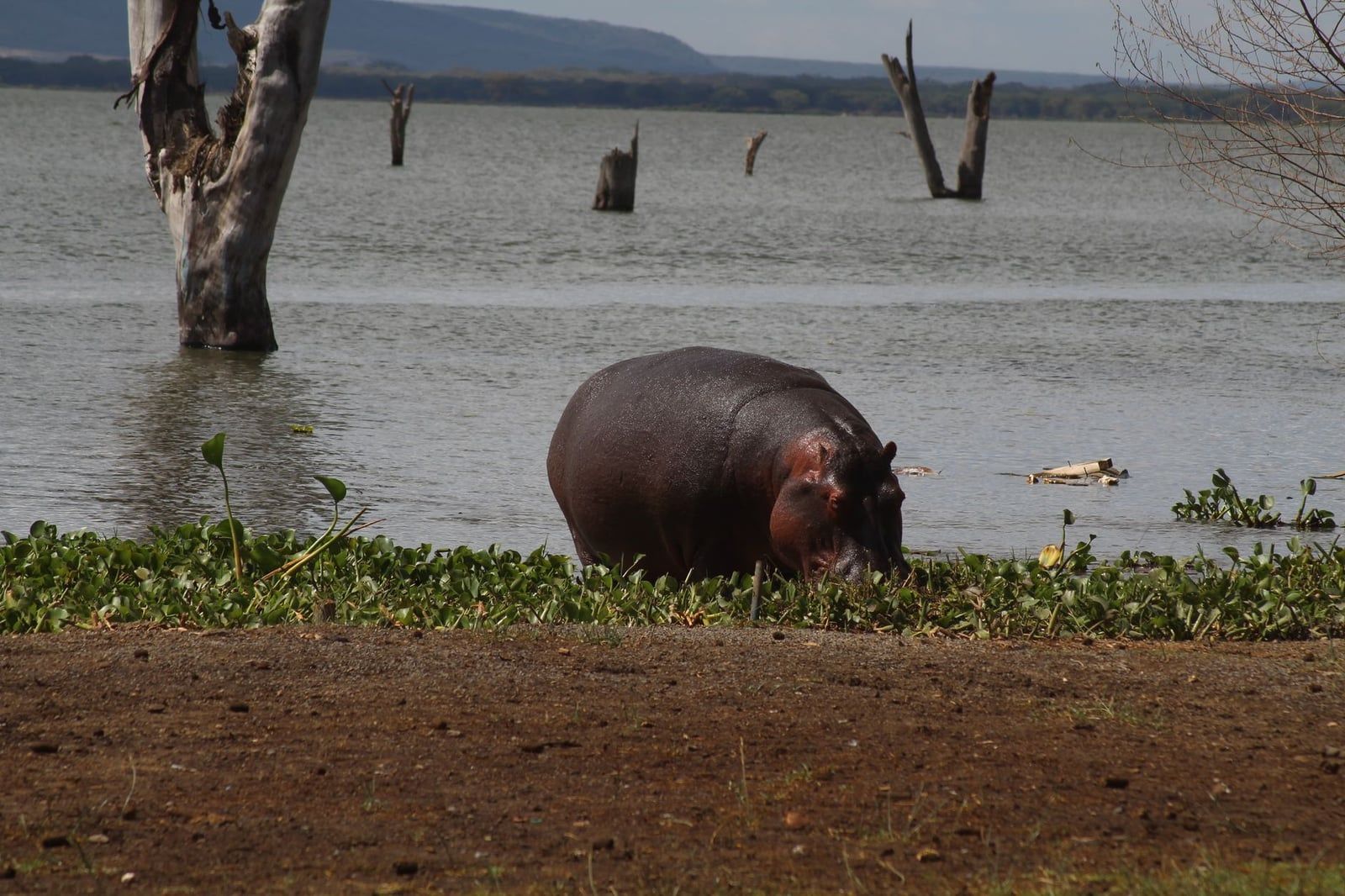
Naivasha's headline act is the hippo. Boat trips put you at eye level with pods in the water, and at dusk the animals climb out to graze the shoreline — a sight you'll never get at Nakuru, where you stay in the vehicle. The lake and its surrounds have recorded more than 400 bird species: African fish eagles, goliath herons, malachite kingfishers and pelicans among them.
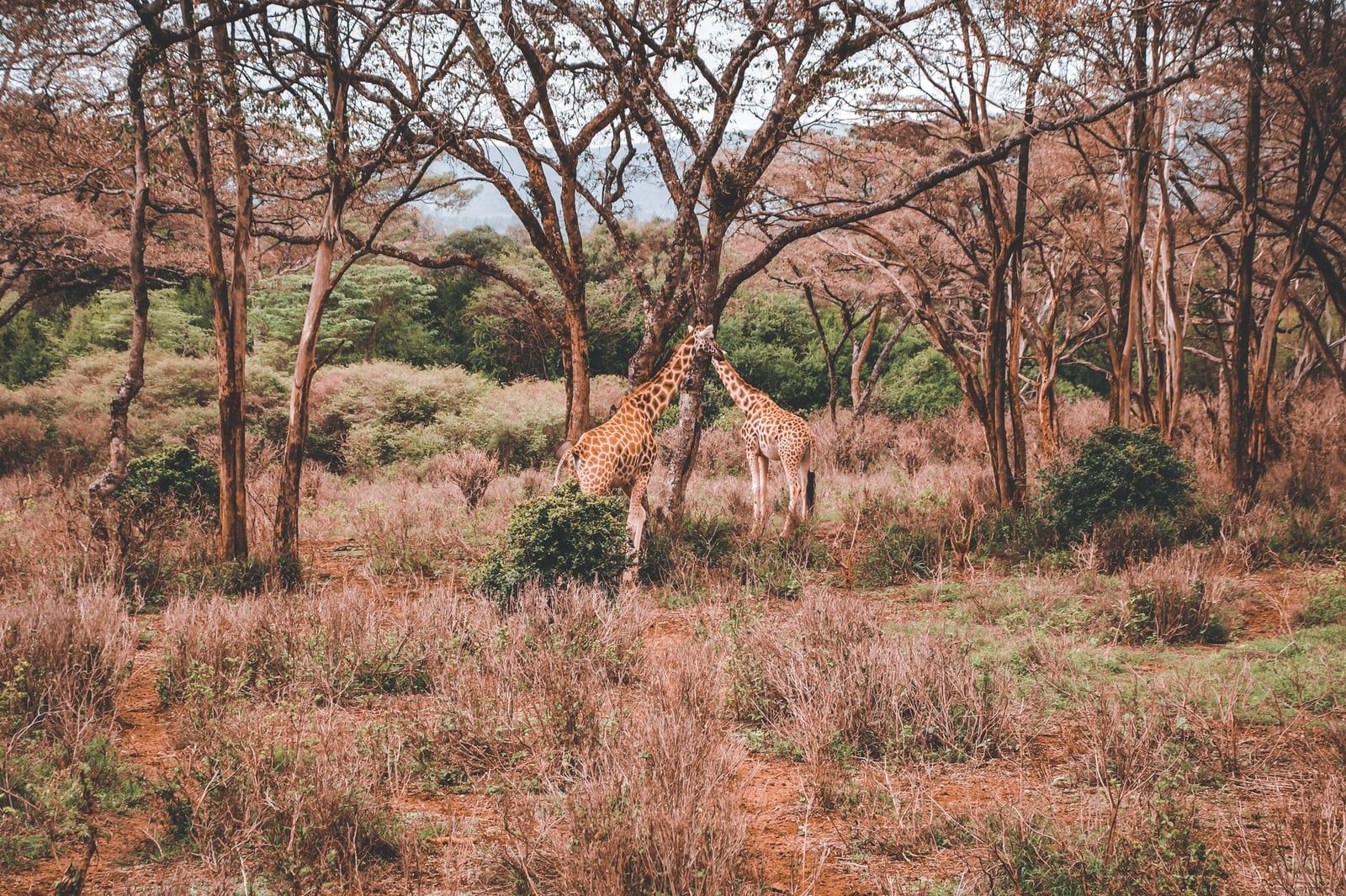
Then there's Crescent Island, a peninsula sanctuary with no large predators, where you walk among giraffes, zebras, wildebeest and waterbuck with no fence between you. This is the reversal most comparisons skip: for close-range, on-foot encounters, Naivasha beats the national park outright. For Big Five game drives, Nakuru wins, and it isn't close — Naivasha has no game-drive circuit at all.
Birders get a genuine choice. Nakuru's park list runs to about 450 species across lakeshore, marsh and euphorbia forest; Naivasha's 400-plus lean toward waterbirds and raptors. On paper Nakuru edges it. In practice both reward a morning with binoculars.
Flamingos at Lake Nakuru: The Honest Status Check
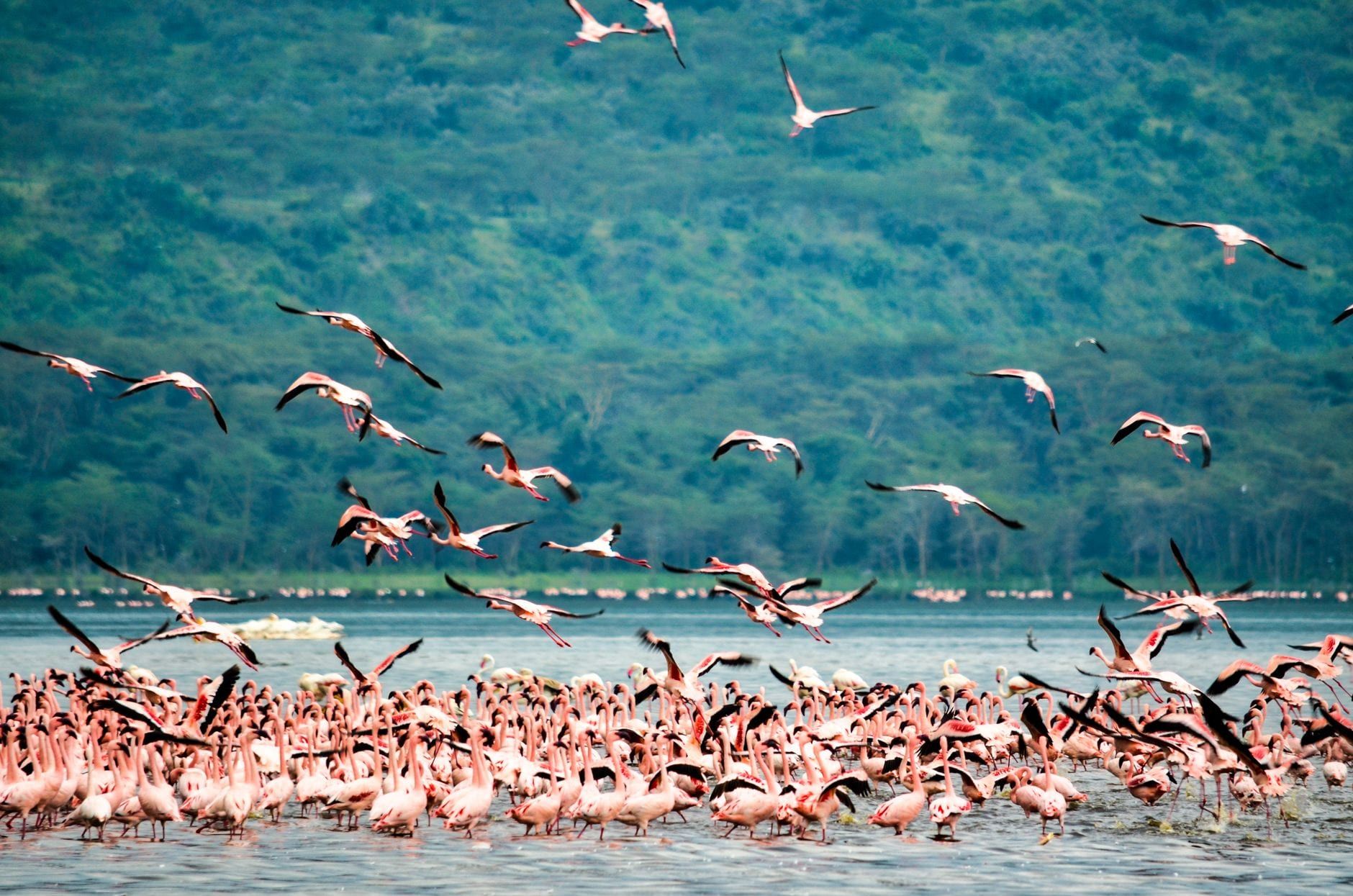
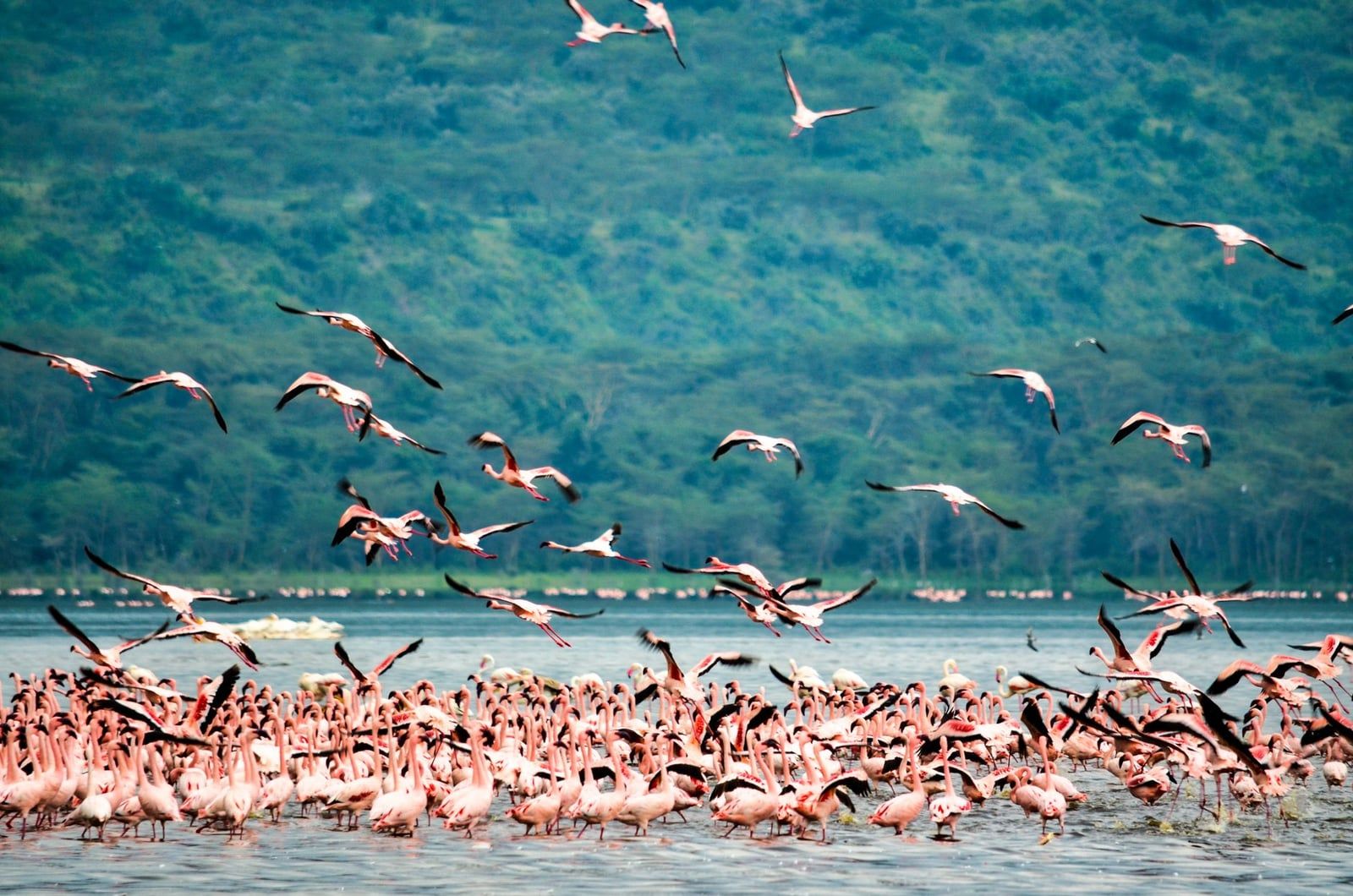
The famous pink blanket of flamingos at Nakuru is real — in old photographs. A KWS survey in January 2006 counted 1,347,063 flamingos on the lake. Today the same lake holds thousands to tens of thousands, and anyone promising you the postcard scene is selling you 2006.
The cause was water. Between 2010 and 2020 the lake expanded from roughly 40 to 68 sq km as flooding raised levels; deeper, more dilute water suppressed the spirulina algae the birds feed on, and the flocks moved on. They largely returned by 2020, and now gather in clusters of roughly 10,000-30,000 birds on the shallow southern mudflats near Naishi and Makalia, where alkalinity — and algae — still concentrate.
Lake Bogoria, two hours north, now hosts the biggest flocks. That's the honest arithmetic: you will likely see flamingos at Nakuru, sometimes in impressive numbers, but the birds move between Rift Valley lakes as water chemistry shifts, and there is no month that guarantees them. Don't build the itinerary around pink birds; build it around rhinos, and treat flamingos as a bonus. For deeper background on where the flocks went, see our guide to flamingos at Lake Nakuru.
Activities Compared: Game Drives vs Boats, Bikes and Walks
This is the sharpest line between the two lakes, and it's simpler than the wildlife question. Nakuru is a vehicle park: you see everything from a seat. Naivasha is an activity hub where boats, boots and bicycles are the point.
Lake Nakuru: game drives and viewpoints
At Nakuru you drive, full stop. Morning and afternoon game drives run the circuit between lakeshore, grassland and acacia woodland, with Baboon Cliff the classic stop — a panoramic viewpoint over the lake and southern plains, and a popular picnic site (keep the car doors closed; the resident baboon troops are bold). Makalia Falls in the park's south roars after the rains and trickles in the dry season, and the whole 188 sq km circuit fits comfortably in a 4-6 hour loop.
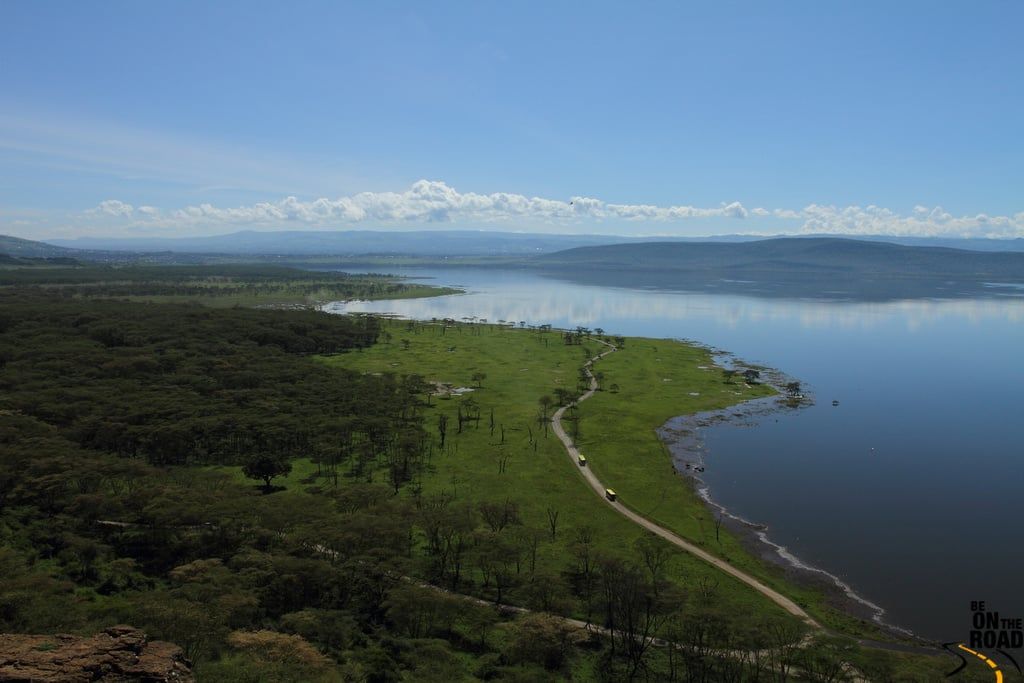
One misconception to kill: there are no boat safaris on Lake Nakuru. None. If a boat ride is what you're after, that's Naivasha, and you can stop comparing.
Lake Naivasha: boats, walks and Hell's Gate
Naivasha's signature hour is on the water. Boat safaris cruise past hippo pods while fish eagles dive for tilapia thrown by the boatman — the most photographed three seconds in the Rift Valley. Trips usually include a landing on Crescent Island for the guided walk among giraffes and zebras.
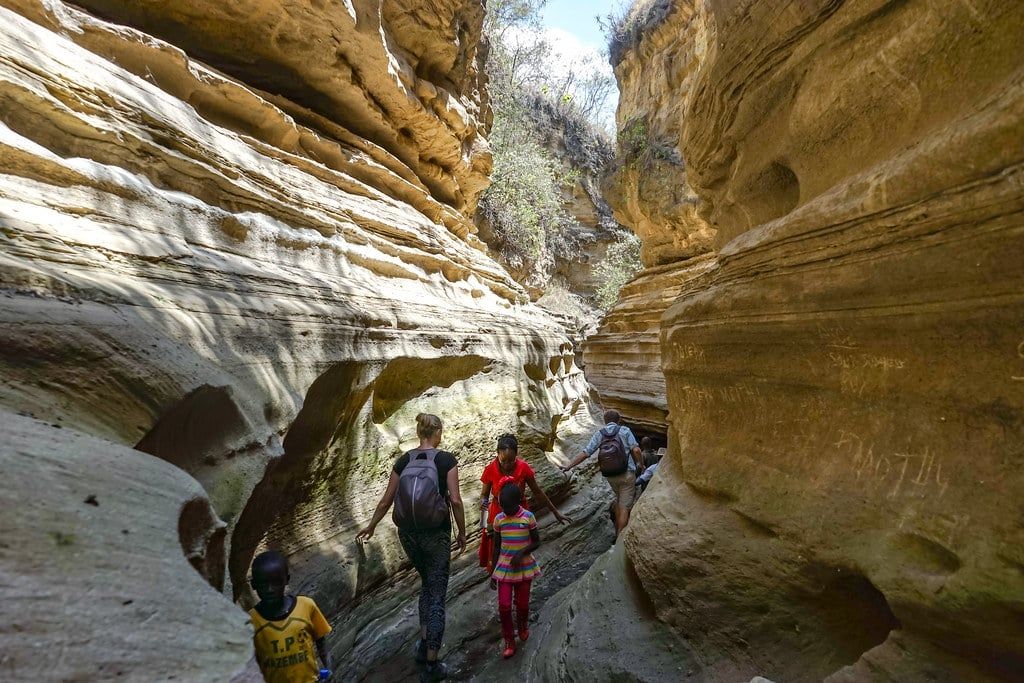
The activity cluster around Naivasha is what makes it unique on the Kenya circuit. Hell's Gate National Park, beside the lake, is one of very few Kenyan parks where you can walk or cycle among wildlife — you pedal past cliffs and gorges, past Fischer's Tower, and can finish at the geothermal spa inside the park. Mount Longonot, the extinct volcano on the horizon, adds a half-day crater-rim hike. Two days at Naivasha can pass without a single game-drive hour, and that's the point.
Costs and Entry Fees: What You'll Actually Pay
The Kenya Wildlife Service fee revision that took effect on 1 October 2025 changed the math, and most guides online still carry the old numbers. Lake Nakuru, classed as a premium park, went from USD 60 to USD 90 per non-resident adult per day. Here is the current picture for a non-resident visitor.
| What you're paying for | Price | Good to know |
|---|---|---|
| Lake Nakuru NP entry | USD 90 adult / USD 45 child per day | Premium park rate since 1 Oct 2025, up from USD 60; vehicle entry KES 600/day extra |
| Hell's Gate NP entry | USD 50 adult / USD 25 child | Children under 6 free; bicycle hire at the gate runs KES 500-1,000 per day |
| Crescent Island walk | ~USD 30 adult / ~USD 15 child | Guided walking sanctuary; boat transfer usually booked separately |
| Lake Naivasha boat ride | ~USD 30-40 per person | Shared boats KES 1,000-1,500 per person per hour; private boats up to ~KES 5,000 per hour |
The two lakes work on opposite cost models. Nakuru charges one big daily gate fee and then everything inside — the rhinos, the cats, the whole park — is included. Naivasha charges nothing for the lake itself; you pay per activity, so a boat ride plus a Hell's Gate bike day might total USD 80-90, while a slow lakeside afternoon costs close to nothing. Two active Naivasha days can still undercut one Nakuru day, but a Nakuru day buys you a full big-game park. East African citizens pay KES 1,500 at Nakuru rather than the dollar rate.
Fees do change, and the fee category you pick must match the ID you show at the gate. Prepay through the official KWS eCitizen portal and cross-check the numbers on our page of current entry fees and opening hours before you travel.
Getting There and How Long to Stay
Both lakes sit off the same Nairobi-Nakuru highway, which makes them the two easiest safari stops in the country. Naivasha is roughly 100 km from Nairobi — 1.5 to 2 hours on tarmac — which is why it works as a weekend trip. Nakuru is about 156 km, 2.5 to 3 hours, and roadworks on the highway can stretch that; if you're driving yourself, our guide to how to get to Lake Nakuru covers the routes and gates. Coming from Nairobi, use Lanet Gate — it skips Nakuru town traffic, while the Main Gate (4 km from town) has periodically closed due to flooding.
Between the lakes it's about 80 km, or 1.5-2 hours. That single fact is why "which one?" is often the wrong question. Plan one full day at Nakuru — gates open at 6 AM and close at 6 PM, and the early hour is when predators are still moving — and one to two days at Naivasha for the boat, Crescent Island and Hell's Gate.
The classic Rift Valley loop runs 3-4 days: Naivasha first for boats and the bike ride through Hell's Gate, then the drive north to Nakuru for a full game-drive day (many travellers overnight in the park for the golden-hour access), then onwards. From Nakuru the road continues toward the Masai Mara, and Nakuru and Masai Mara combination tours stitch the two together in one booking.
Best Time to Visit Each Lake
The dry seasons — June to October and January to February — are the best months for this itinerary. Wildlife gathers at remaining water, vegetation thins out, and Nakuru's tracks stay firm. April and May, the peak of the long rains, are the worst: park tracks turn to mud and game viewing gets harder. November's short rains are a lesser version of the same.
Green-season travel isn't a mistake, though. The scenery is at its lushest, crowds thin, and October to April brings Palearctic migrant birds to both lakes on top of Nakuru's 450 resident species — the strongest birding window of the year. Naivasha is also the less season-sensitive of the two: boats run year-round, and Hell's Gate cycling is simply better on dry ground.
One thing the calendar can't help with: flamingos. They follow water chemistry, not seasons, and shift between Nakuru, Bogoria and Elementaita regardless of the month on your booking. If flamingos are the priority, check recent sightings before you go — not the weather forecast.
Where to Stay
At Nakuru the choice is strategic. Sleeping inside the park — Sarova Lion Hill, Lake Nakuru Lodge, The Cliff, Lake Nakuru Sopa — buys you the 6 AM gate opening and game-drive hours before day visitors arrive, which is exactly when the park is at its best. Our rundown of lodges inside Lake Nakuru National Park compares them. Budget travellers instead bed down in Nakuru town, 4 km from the Main Gate.
Naivasha has the widest accommodation range in the region: lakeside resorts like Enashipai and Lake Naivasha Sopa, boutique tented camps at Crater Lake, and campsites along the shore. Prices and styles run from backpacker to honeymoon.
That spread is why the most common itinerary pattern is to base at Naivasha and do Nakuru as a day trip — you sleep somewhere cheaper and prettier, drive up in the morning, and still catch the park's best hours. Our guide to a day trip from Naivasha to Lake Nakuru lays out the timing.
The Verdict: Which Lake Should You Choose?
Choose Lake Nakuru if this is your only Rift Valley stop and big game is the reason you came. Rhinos — both species, at close range — plus lions, leopards and buffalo in a compact park make it the stronger single wildlife day, and it's the better pick for birders chasing more than waterbirds. Accept the USD 90 gate fee as the price of a guaranteed-class game drive.
Choose Lake Naivasha if your itinerary already includes the Masai Mara or Amboseli and another full day in a vehicle sounds like a repeat. Naivasha adds what those parks can't: a boat at eye level with hippos, a walk among giraffes, a bicycle in a gorge. It's also the budget answer — pay-per-activity with a free lake — and the easiest logistics from Nairobi, which matters for families and short trips.
For a first-time Kenya safari, lean Nakuru: the rhino sightings alone justify it, and one day is enough. But with three or more days the answer is both. The lakes are 80 km apart, the drive is easy, and they're complements rather than rivals — Nakuru for the game, Naivasha for everything the game park can't do.
Frequently asked questions
Can you visit Lake Nakuru and Lake Naivasha on the same trip?
Yes, easily — the lakes are only about 80 km apart, a 1.5-2 hour drive. The standard pattern is a 3-4 day Rift Valley loop, or basing at Naivasha and taking Nakuru as a day trip; many itineraries then continue toward the Masai Mara.
Which lake is better for seeing hippos?
Lake Naivasha, by a wide margin. Boat safaris put you at eye level with hippo pods, and the animals graze the shoreline at dusk. Nakuru's hippos are seen occasionally from the shoreline tracks, but you can't get close.
Is there a boat safari at Lake Nakuru?
No. Lake Nakuru National Park offers game drives, viewpoints and birding only. Boating is Lake Naivasha's signature activity.
Are there still flamingos at Lake Nakuru?
Yes, but far fewer than the historic millions. Rising water diluted the alkaline algae the birds feed on; flocks returned by 2020 and now number roughly 10,000-30,000, clustered on the southern mudflats near Naishi and Makalia. Lake Bogoria currently hosts the biggest flocks.
How much are the entrance fees for Lake Nakuru and Lake Naivasha activities?
Since the KWS fee revision of 1 October 2025: Lake Nakuru NP costs USD 90 per non-resident adult per day (up from USD 60) and USD 45 per child; Hell's Gate is USD 50 per adult; Crescent Island is around USD 30; Naivasha boat rides run about USD 30-40 per person on a shared boat.
How far is Lake Naivasha from Lake Nakuru?
About 80 km, roughly a 1.5-2 hour drive depending on the route, which is why combining both lakes in one itinerary is straightforward.
Which is better for a first-time Kenya safari?
Nakuru if big-game viewing — rhinos and cats in a compact, fenced park — is the priority. Naivasha if your itinerary already includes the Masai Mara or Amboseli and you'd value variety (boat rides, walks, cycling) over another game-drive day.
How many days do you need at each lake?
One full day covers Nakuru well, though an overnight inside the park adds the best light and quietest hours. Naivasha needs 1-2 days for a boat ride, Crescent Island and Hell's Gate. Both fit into a 3-4 day Rift Valley loop.