Few parks in Kenya stack the odds in your favor like Lake Nakuru. It covers just 188 km² on the Rift Valley floor, roughly 156 km northwest of Nairobi, yet it holds more than 50 mammal species and around 450 bird species behind a complete electric fence — and that fence is why your chances are so good. Nothing wanders beyond your game drive's reach.
The compactness comes with one famous gap: no elephants. What you get instead is four of the Big Five — rhino, buffalo, lion and leopard — plus the Rothschild's giraffe, tree-climbing lions, hippos, pythons, and a flamingo story that has changed a lot over the past decade. This guide goes animal by animal, with honest sighting odds and exactly where and when to look.
Lake Nakuru at a Glance: Which Animals Live in the Park
Lake Nakuru is a shallow, alkaline soda lake fringed by grassland, acacia and euphorbia woodland, and rocky escarpments — varied habitat squeezed into a space you can drive across in a morning. The lake belongs to the UNESCO-listed Kenya Lake System in the Great Rift Valley, inscribed in 2011 alongside Lakes Elementaita and Bogoria. An electric perimeter fence, built in 1986, encloses the whole park, which concentrates the wildlife and makes Nakuru one of Kenya's most dependable parks for sightings in a single day.
The full cast, in rough order of how soon you'll meet them:
- Black and white rhinos, including one of Kenya's largest black rhino populations
- Rothschild's giraffe, reintroduced and now locally common
- Cape buffalo, plains zebra, waterbuck, impala, gazelles, eland and warthogs
- Lions (famously tree-climbing), leopards, spotted hyenas and jackals
- Hippos, olive baboons, colobus monkeys and African rock pythons
- Flamingos and roughly 450 other bird species
So is it a Big Five park? Yes and no. Buffalo, both rhino species, lion and leopard all live here, and a good day can deliver all four. The elephant is the missing fifth, for a reason worth understanding before you plan — more on that below. The park is an easy 2.5–3 hour drive from Nairobi (see our guide to getting to Lake Nakuru), which is why it anchors so many first-time Rift Valley safaris.
Flamingos and Birdlife: What's Left of the Pink Lake
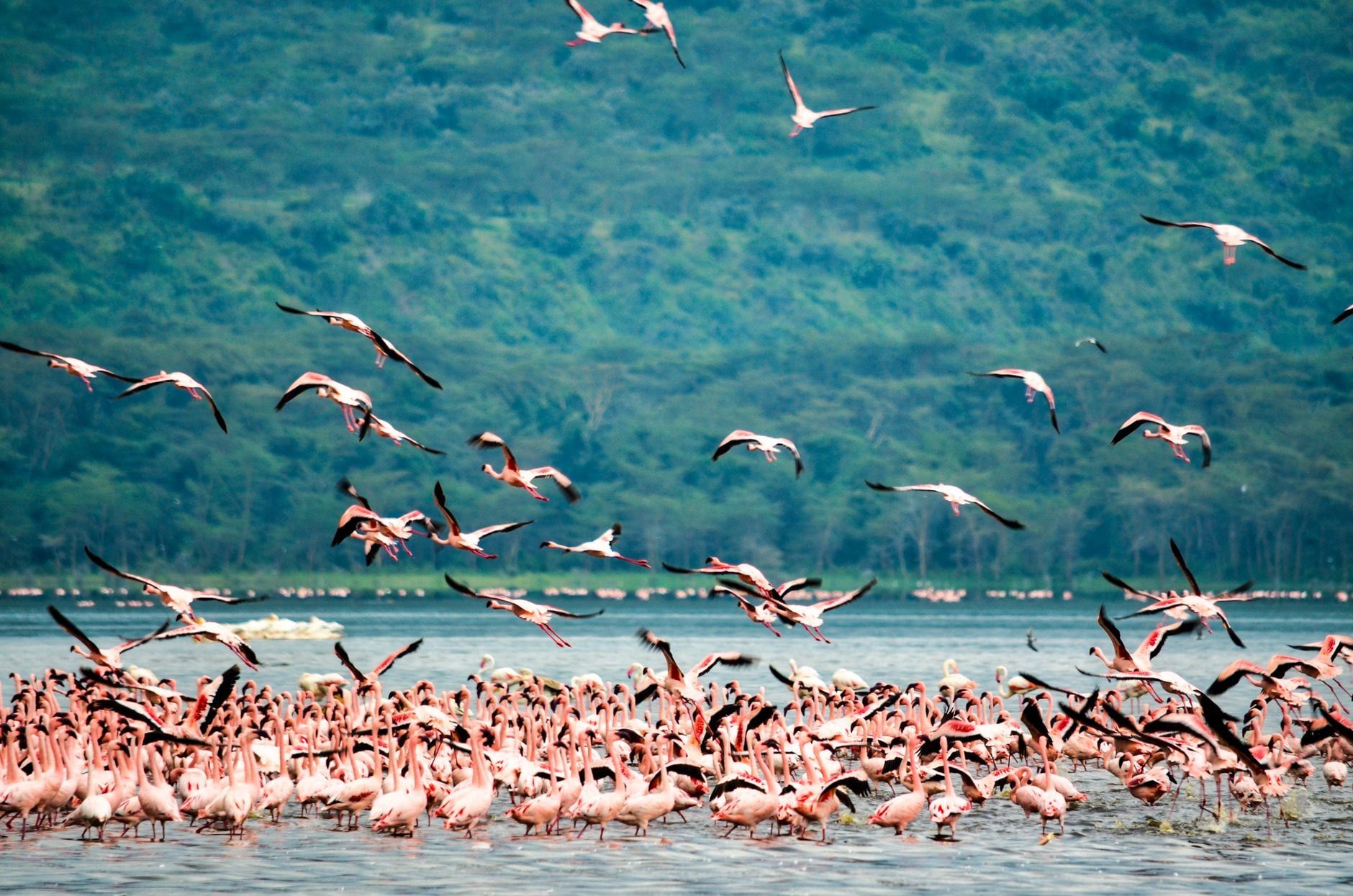
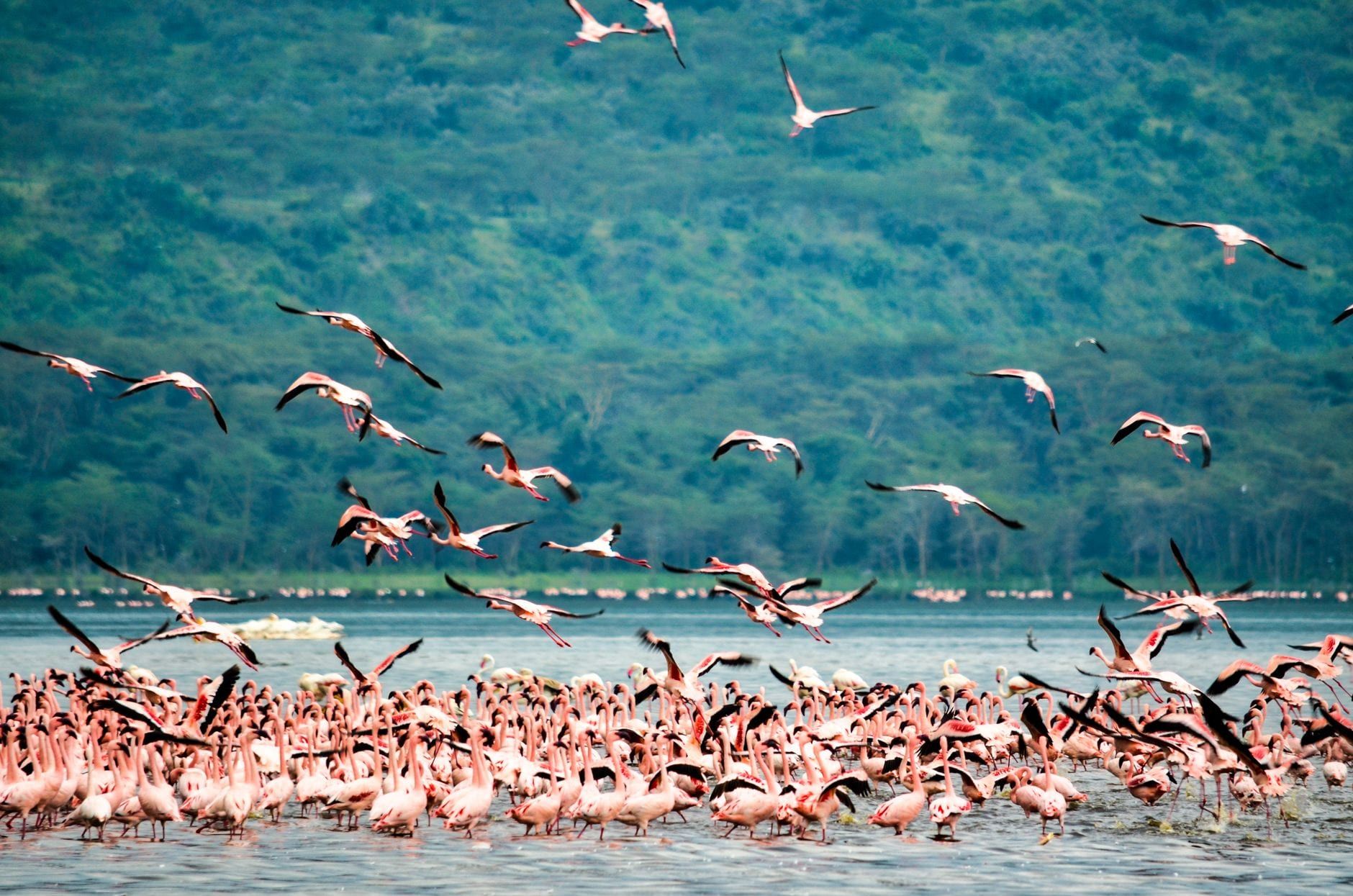
The pink lake you've seen in old photographs was real. A Kenya Wildlife Service survey in January 2006 counted 1,347,063 flamingos on Lake Nakuru — likely the largest single flock on Earth at the time. What changed is the water. Heavy rains from about 2013 pushed the lake from 40 km² to 68 km² within a decade, diluting the alkalinity that fed the blue-green algae lesser flamingos live on. Less algae, fewer birds, and the survivors turned nomadic, shifting between Nakuru, Lake Bogoria 90 km north, and Elementaita.
Today, expect thousands rather than millions — recent counts run around 10,000 to 30,000 birds, moving between the Naishi plains and the neighboring lakes. You'll very likely see flamingos; you won't see the shoreline-wide pink blanket. Ask the rangers at the gate where the flock is feeding that week, work the shoreline tracks early in the morning while the water is calm, and finish with the panorama from Baboon Cliff. If flamingos are your reason for coming, check recent reports first — or add Lake Bogoria to the itinerary.
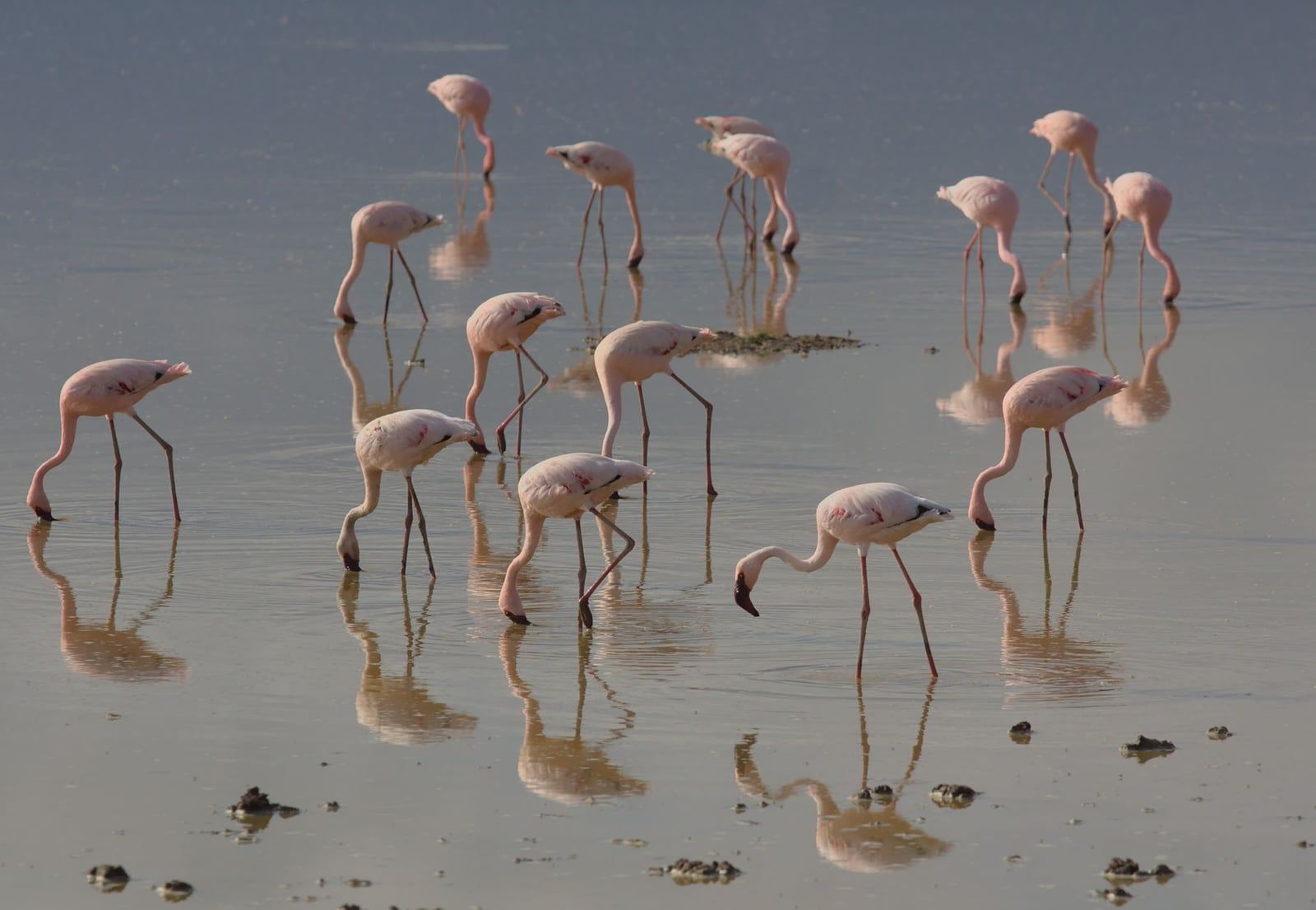
Lesser or greater?
Two flamingo species feed here, and the split is easy to read. Lesser flamingos are smaller and much pinker — the pigment comes straight from the algae they filter from the alkaline shallows. Greater flamingos stand taller, run paler, and sift a broader diet from muddier water. If the flock looks two-tone, coral against cream, you're watching both species.
Beyond the flamingos
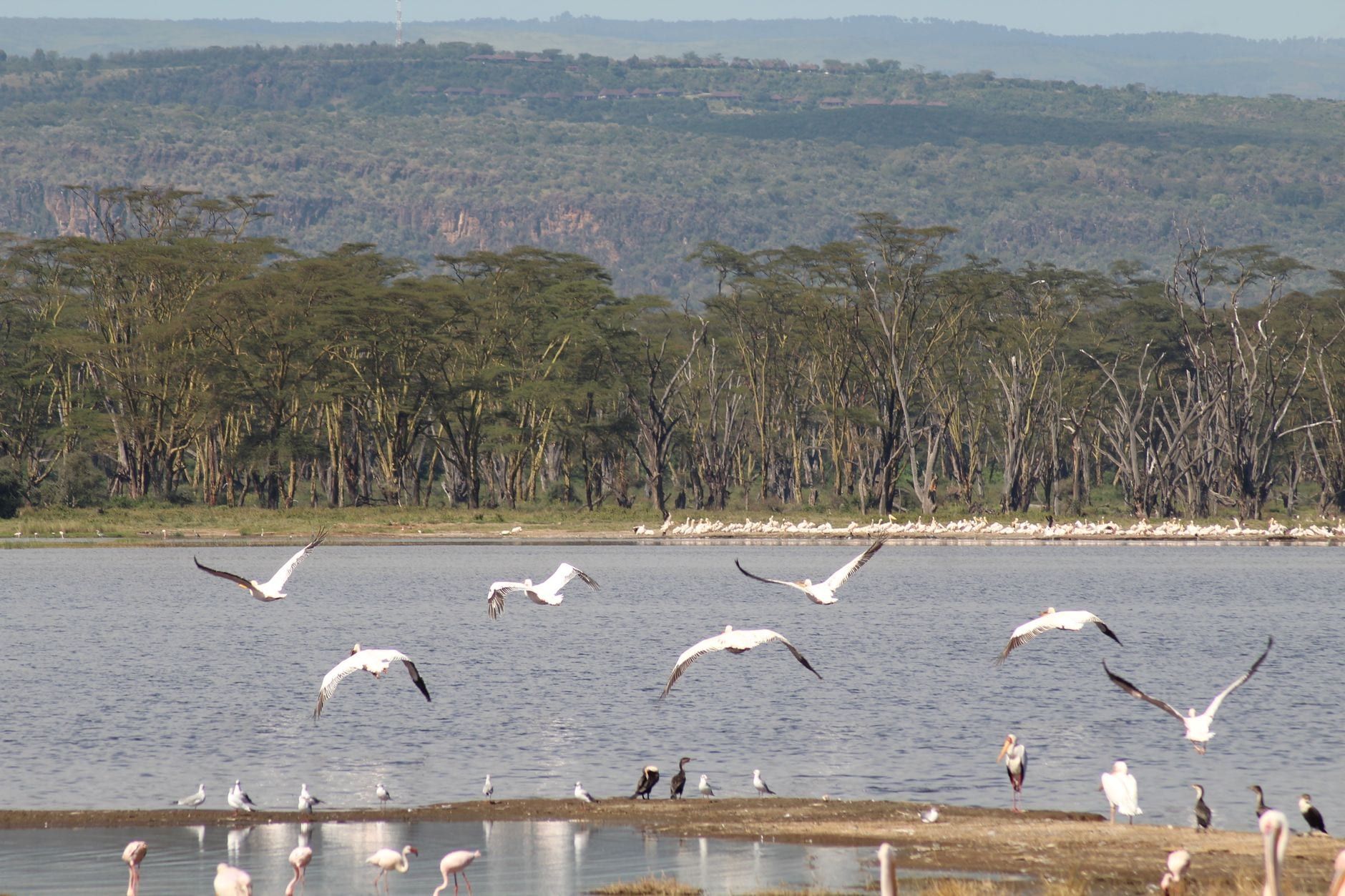
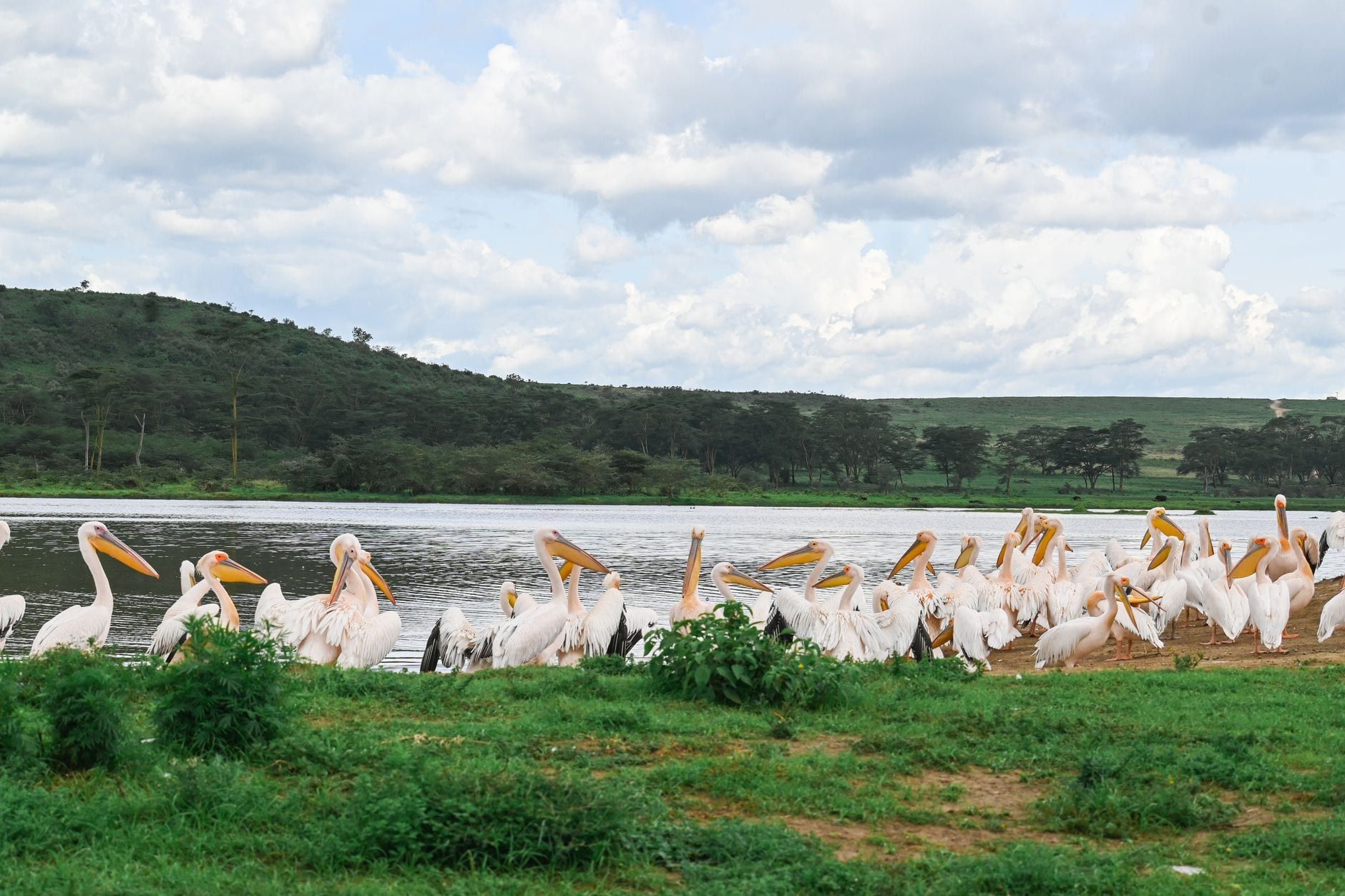
Roughly 450 bird species have been recorded in the park, enough to make the lake an Important Bird Area and a serious birding destination in its own right. Great white pelicans fish in synchronized lines, African fish eagles occupy the shoreline snags, grey crowned cranes stalk the marsh edges, and secretary birds stride the grassland on stilt legs. October to April adds Palearctic migrant waders, which is peak birding season. For the full story of where the big flocks have gone, read our guide to Lake Nakuru's flamingos.
Rhinos: Lake Nakuru's Signature Sighting
No park in Kenya makes rhinos easier to find. The lake was first protected as a bird sanctuary in 1961 and became a national park in 1968; in 1987, a year after the electric fence closed the boundary, it became Kenya's first government-managed rhino sanctuary. It still holds one of the country's largest black rhino concentrations plus around 70 southern white rhinos. The fence that keeps elephants out is exactly what makes this work — rhinos need far less space than elephants, and inside the fence they get round-the-clock protection.
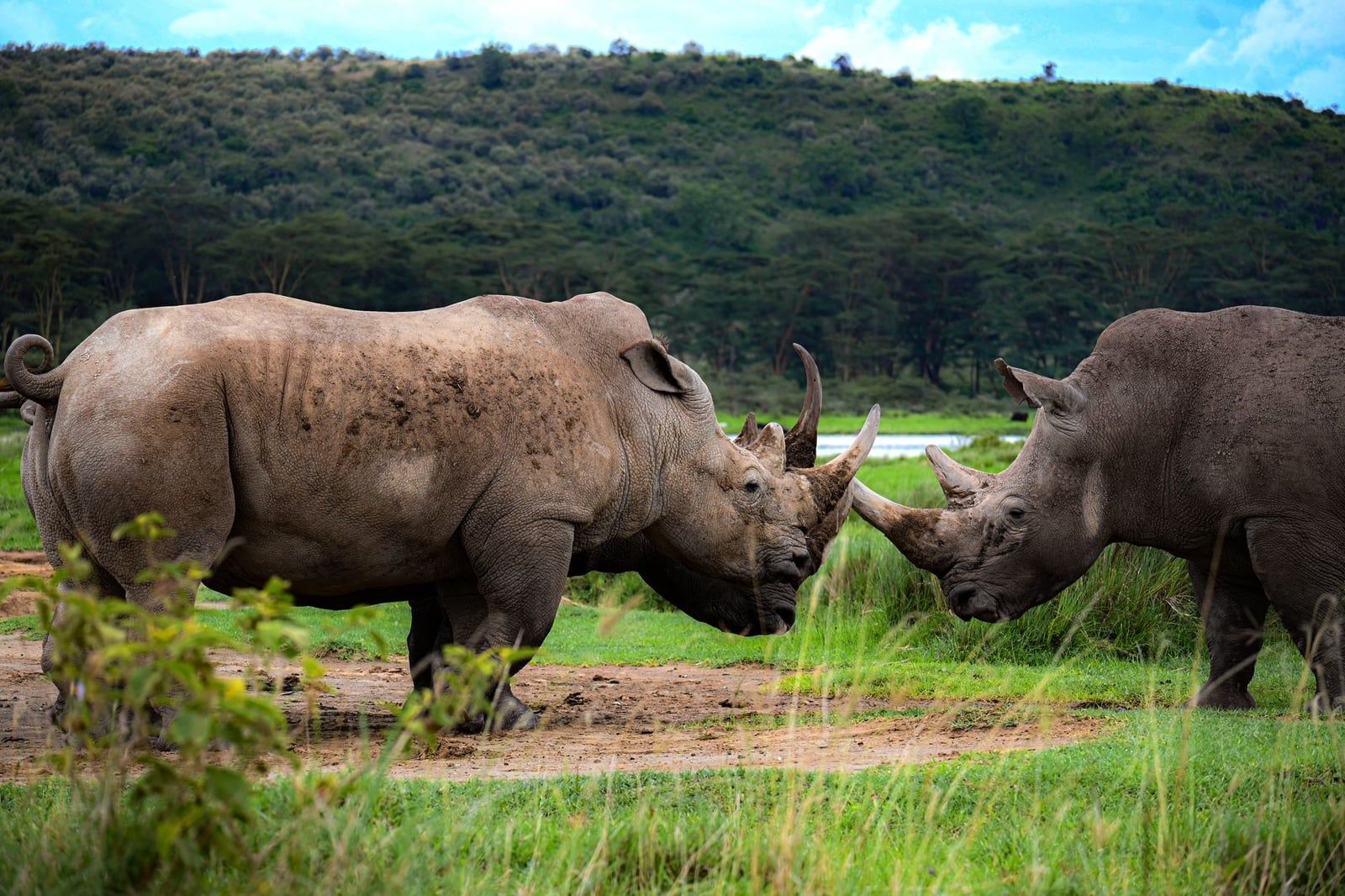
White rhinos: the near-certain sighting
White rhinos are grazers, built to mow short grass on open ground, and that's where you'll find them — the southern lakeshore grassland and the causeway at the lake's southern end. Groups show up there through the day, heads down, moving like slow grey lawnmowers. The identification giveaway is the mouth: a wide, flat, square lip for clipping grass. On most visits, a white rhino sighting happens within the first hour without any effort at all.
Black rhinos: earned, not given
Black rhinos browse instead of graze — a hooked, prehensile lip strips leaves off thornbush — so they live in dense cover, not on open plains. Scan the edges of thickets and woodland, especially early and late in the day, and give each dark shape in the bush a second look. They're solitary, secretive, and classified as Critically Endangered by the IUCN, which is precisely why a black rhino sighting is the one worth stopping the engine for. Nakuru offers better odds than almost anywhere else in East Africa.
Rothschild's Giraffes and the Great Herds of Grazers
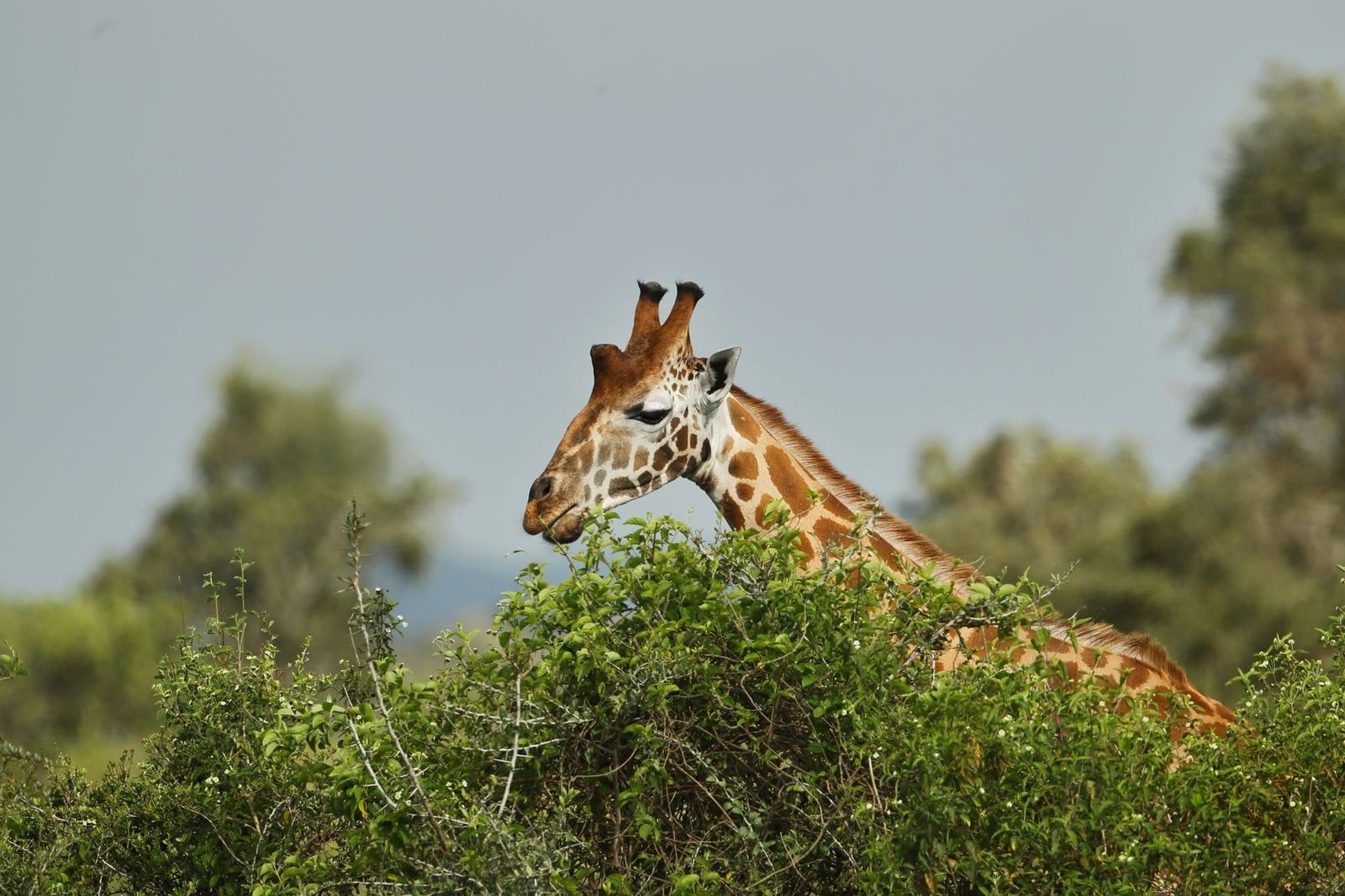
Look at the legs first. Rothschild's giraffes wear clean, creamy-white lower legs — "white socks" — below deep orange-brown patches, and no other Kenyan giraffe looks like that. The subspecies was relocated here from western Kenya starting in 1977, and Nakuru became one of its strongest refuges. They feed in the acacia and fever-tree woodland extending from the southwestern end of the lake, often within a few meters of the park roads, brows low enough for easy photographs.
Cape buffalo and the plains cast
Cape buffalo come in two modes here. Big breeding herds graze the open grassland in numbers, while old bulls wallow alone at the lake edge, horns wide, mud to the hocks. The lake suits them — water, grass, and wallow within a short walk — and the herds are among the park's most dependable large-mammal sightings.
The rest of the cast fills your first hour. Plains zebra share the southern grassland with the buffalo. Defassa waterbuck — shaggy, grey, marked with a white ring on the rump — can't endure dehydration and stay near the lake year-round. Impala prefer the woodland edges; the black-flanked Thomson's gazelles run with the taller, paler Grant's gazelles on open ground. Eland, the continent's biggest antelope, appear in small groups, and warthogs trot between burrows with their tails straight up.
Big Cats: Tree-Climbing Lions, Leopards and Hyenas
Nakuru's lions do something most lions don't: they climb trees. On warm afternoons they sprawl along the branches of large acacias and euphorbias — behavior recorded in only a handful of East African populations — partly to escape the heat and biting flies at ground level. Lion Hill ridge is their core territory. The habit makes them oddly easy to find: scan the flat-topped trees before you scan the grass, because a lion draped over a limb is visible from hundreds of meters away. Odds on a day visit are fair, not certain — think possible bonus rather than booking promise.
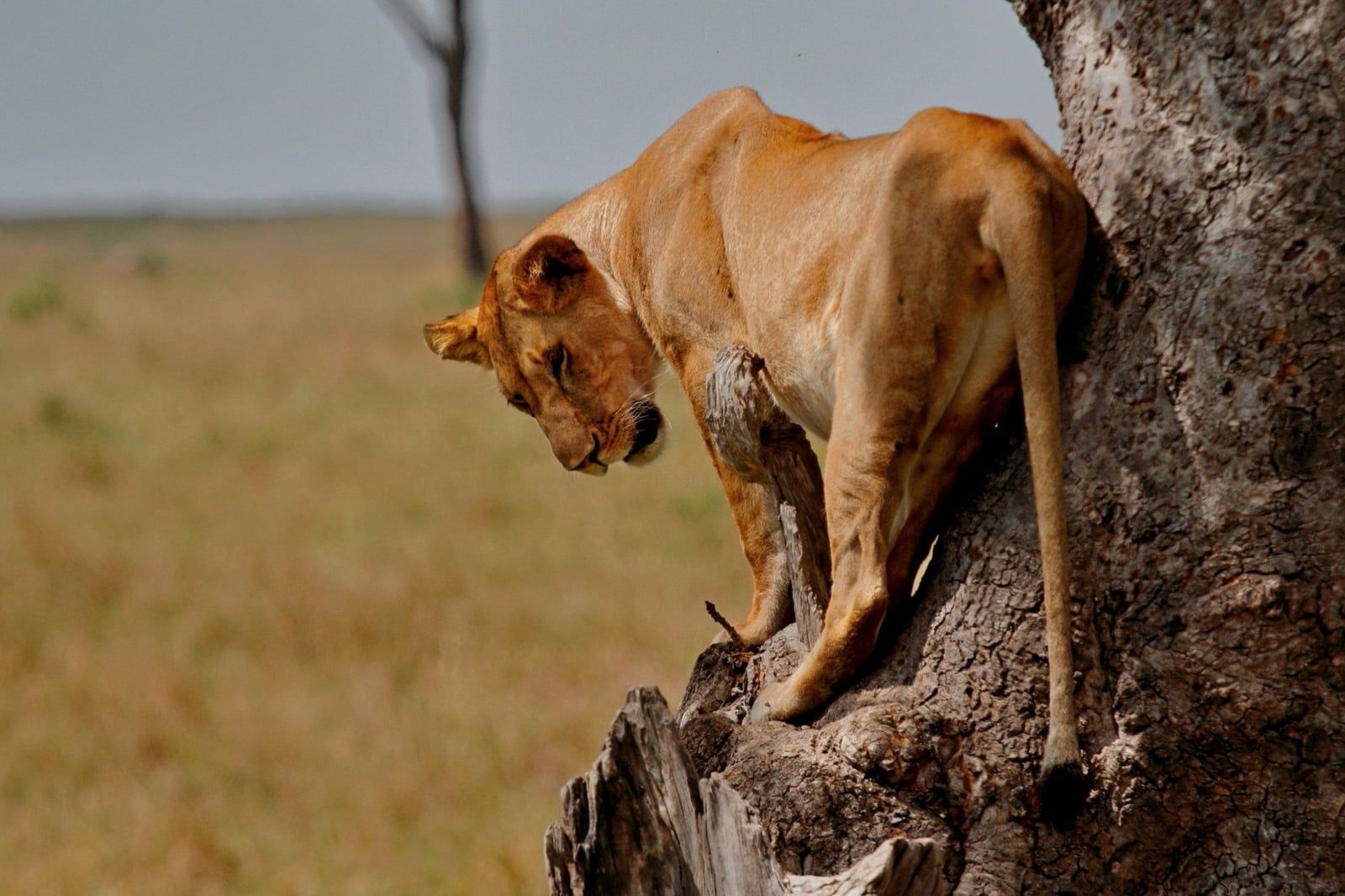
Leopards: Kenya's underrated park for them
Nakuru carries a better leopard reputation than most Kenyan parks, largely thanks to habitat: dense woodland along the western escarpment and the acacia forest behind Mikingo Hill give leopards cover they like. Work the forest edges and rocky outcrops early in the morning, when they're still moving. Keep expectations calibrated, though — even here a leopard is a low-to-moderate bet on a single day visit.
Spotted hyenas patrol the plains in growing numbers — rangers report far more sightings in recent years — and they're most active at dawn and dusk, as are the black-backed jackals that trot the tracks. Cheetahs are the ones to write off: they're rated effectively absent from the park, and the occasional report is a transient at best. Don't build a Nakuru day around a cheetah.
Hippos, Monkeys, Pythons and the Park's Smaller Residents
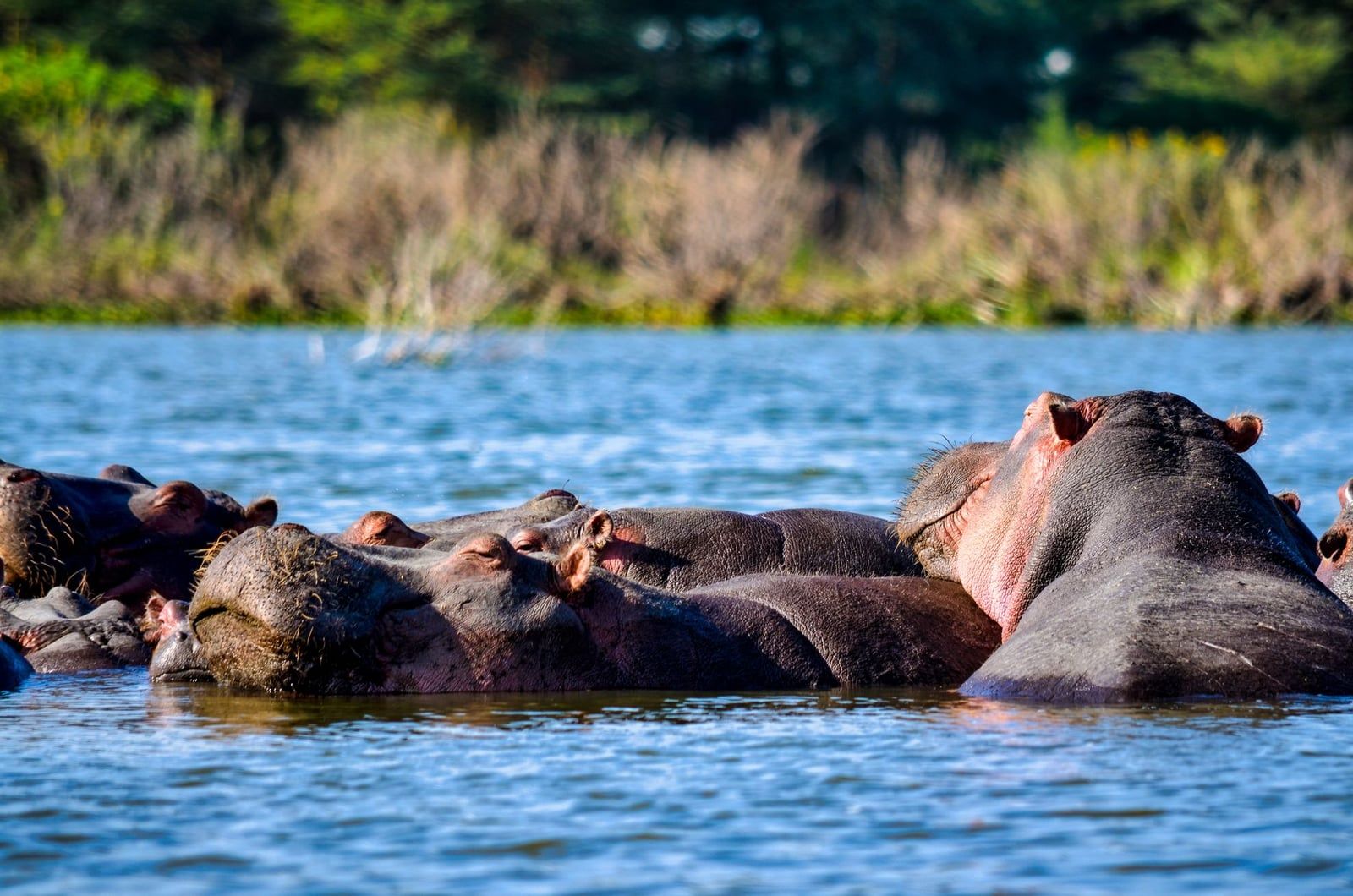
Hippos gather where freshwater rivers and springs enter the lake and dilute its alkaline edge — there's a dedicated hippo pool on the circuit. They feed on land at night, so a drive that starts at the 6 AM gate opening catches them trudging back to the water, sometimes in the middle of the road. They're one of the park's most dependable sightings. The usual rule applies with force: never position yourself, or let your driver position the vehicle, between a hippo and deep water.
Baboons, monkeys and the cliff-dwellers
Olive baboons own the picnic sites and viewpoints, and Baboon Cliff takes its name from the resident troop. They are bold — they will enter an open vehicle for food — so keep windows up and lunch out of sight at every stop. Vervet monkeys hang around the same areas in smaller numbers, while black-and-white colobus keep to the forest zones and are the quiet prize of the woodland drives. On the cliff top itself, rock hyraxes sunbathe on the rocks a few steps from the viewpoint.
Two reptiles deserve your eyes. African rock pythons grow large here and are sometimes seen draped over branches in waterside trees or crossing quiet roads — stop, and let one finish crossing. Nile monitors patrol the shoreline, and tortoises turn up on warm track verges. For everything with feathers, head back up to the birdlife section: the lakeshore is where most of the park's 450 species live.
Are There Elephants? The Big Five Question (and What You Won't See)
No — Lake Nakuru has no elephants, and there's a specific reason. The electric fence that turned the park into a rhino stronghold seals off all 188 km², and elephants can't survive on that: they need to range across far larger areas to feed a five-ton body through the seasons. The fence that concentrates everything else excludes the one animal that won't fit. So Nakuru's Big Five scorecard reads four out of five — rhino near-certain, buffalo easy, lion possible, leopard a genuine chance, elephant zero.
A few other African icons are missing too, and knowing in advance saves disappointment. Wildebeest, wild dog and cheetah are all effectively absent — SafariBookings rates all three "None" for the park. What Nakuru trades for them is density: four of the Big Five, an endangered giraffe, and hundreds of birds inside one compact, drivable day.
If elephants are the point of your trip, pair Nakuru with Amboseli or Tsavo — both reliable elephant parks — or with the Maasai Mara, where elephants and the big cat sightings Nakuru can't guarantee both come standard. Our Nakuru and Maasai Mara tours cover the most popular way to do it.
When and Where to See Lake Nakuru's Animals
Timing matters more at Nakuru than in the big parks, because its best animals keep schedules. Get both the season and the hour right, and a single day delivers most of this list.
Season and time of day
The dry season runs the show: June to October and January to February concentrate animals near water, thin the vegetation, and keep the tracks firm, with June through February the prime viewing window overall. April and May, the long rains, are the hardest months — mud, tall grass, and animals scattered. November's short rains can disrupt drives but rarely ruin them. Whatever the month, enter at the 6 AM gate opening: predators are still moving, hippos are heading home, and the lake lies mirror-flat before the breeze arrives. Late afternoon is the second-best window. Mornings sit near 10°C at 1,754 m of altitude, so bring a fleece even on the equator.
Sighting odds at a glance
Here's the honest picture for a one-day visit, combining where each animal lives with the realistic chance of finding it. Buffalo, zebra, waterbuck, impala and baboons don't need a table — count on all of them within your first hour.
| Animal | Where to look | Chance on a day visit |
|---|---|---|
| White rhino | Southern lakeshore grassland, causeway | High |
| Rothschild's giraffe | Acacia and fever-tree woodland, southwest shore | High |
| Black rhino | Thicket and woodland edges | Moderate |
| Lion | Lion Hill ridge; scan large trees | Moderate |
| Leopard | Dense woodland, forest edges, early morning | Low |
| Flamingo | Shoreline, Naishi plains, Baboon Cliff | Variable |
A one-day circuit from Nairobi
The park lies 156 km from Nairobi, 2.5–3 hours by road, so leave the city by 5:30 AM to reach Lanet Gate for the opening — that gate avoids Nakuru town traffic and connects straight to the highway. Our full day trip to Lake Nakuru itinerary covers the details, but the habitat logic is simple. Start on the southern grassland and the causeway for white rhino, buffalo and zebra. Work the acacia and fever-tree woodland on the southwest side for giraffe, a possible tree lion, and a slow black rhino scan of the thicket edges. The lake edge and wetlands give you hippo, waterbuck and most of the birdlife, and Baboon Cliff — baboons and all — caps the loop with the park's best panorama and its sunbathing hyraxes. Makalia Falls, in the south, is worth the detour after rain.
A one-day safari from Nairobi generally runs $150–250 per person, covering vehicle, guide, park fees and lunch; comparing guided safari tours is the fastest way to gauge the market. One thing to sort in advance: entry fees must be paid cashless through the KWS eCitizen portal before you reach the gate — USD 90 per non-resident adult per day — and our hours and entry fees page has the full breakdown by nationality. A single day covers the circuit comfortably. An overnight lets you run two relaxed drives at the two best hours of the day, and staying inside the park puts you first through the gate at dawn.
Frequently asked questions
Are there elephants in Lake Nakuru National Park?
No. Lake Nakuru has no resident elephants — the electric fence around the 188 km² park blocks the long-distance ranging elephants need to survive. For reliable elephants, combine Nakuru with Amboseli, Tsavo or the Maasai Mara.
Are flamingos still at Lake Nakuru?
Yes, but in far smaller numbers than the famous gatherings. Rising water since about 2013 diluted the lake's alkalinity and shrank the algae flamingos feed on, so flocks of roughly 10,000–30,000 now move between Nakuru, Lake Bogoria and Elementaita. Look along the shoreline early in the morning and from Baboon Cliff.
Can you see the Big Five in Lake Nakuru?
Four of the five: black and white rhino, buffalo, lion and leopard. Rhino is near-certain, buffalo easy, lion and leopard possible. Elephants are absent.
What is the best time of year to see animals in Lake Nakuru?
The dry season — June to October and January to February — when animals concentrate near water and tracks stay firm. April and May are the wettest months and the hardest for viewing. Whatever the season, start at the 6 AM gate opening.
How many days do you need in Lake Nakuru?
One full day covers the main circuit — rhinos, giraffes, buffalo, flamingos and a fair shot at the cats. An overnight adds a second relaxed drive at dawn. The park is 156 km (2.5–3 hours) from Nairobi.
How much does a Lake Nakuru day safari cost?
About $150–250 per person from Nairobi, including vehicle, guide, park fees and lunch. Non-resident entry is USD 90 per adult per day, paid in advance through the KWS eCitizen portal.
Are there cheetahs in Lake Nakuru?
Treat cheetahs as absent. They're rated "None" for the park, with only rare transient reports. Lions and leopards are the realistic cats here.
Can you see Rothschild's giraffes at Lake Nakuru?
Yes — relocated here from western Kenya beginning in 1977, they're now locally common and among the park's signature animals. Identify them by their unspotted, creamy-white lower legs.