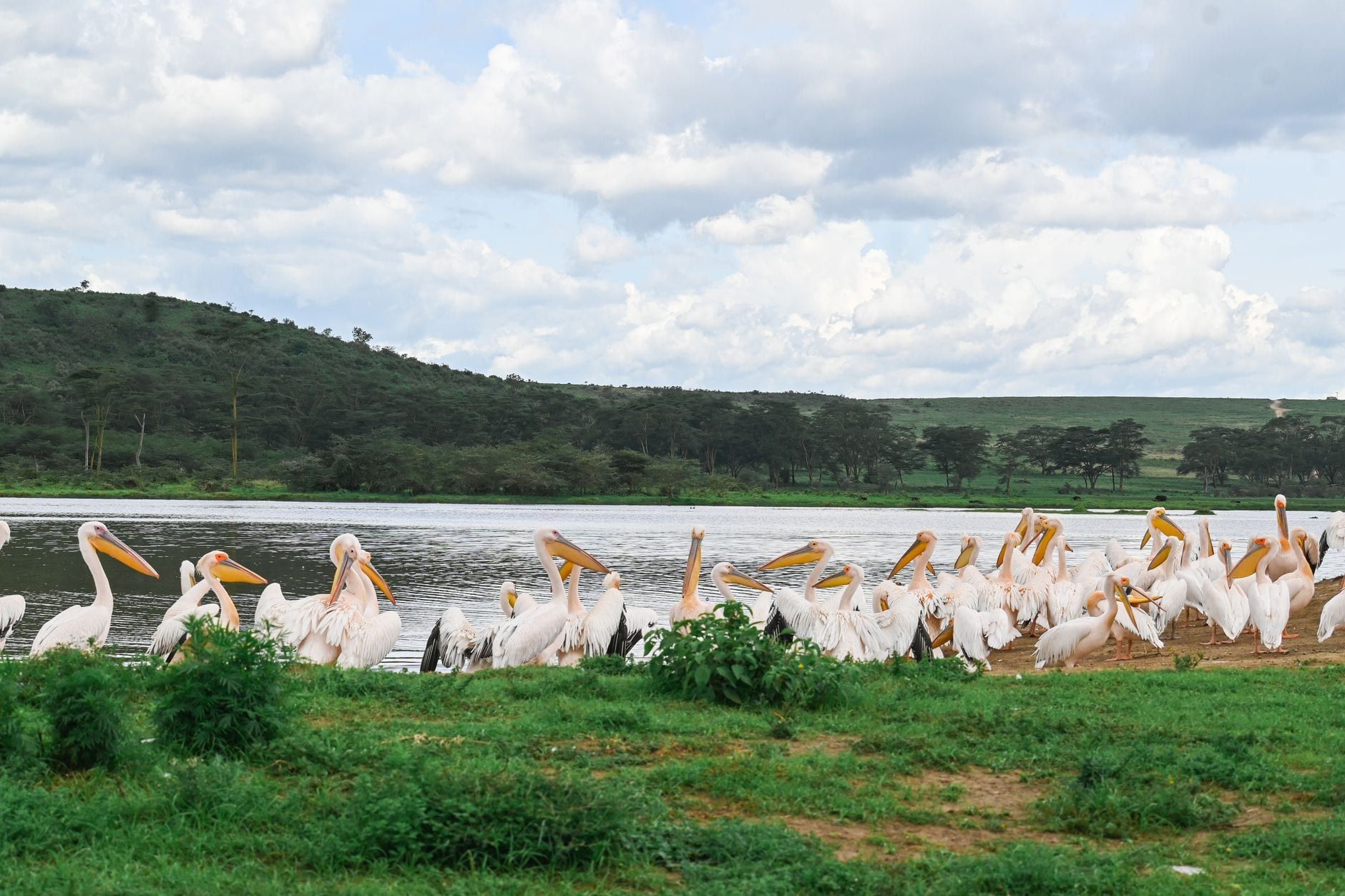
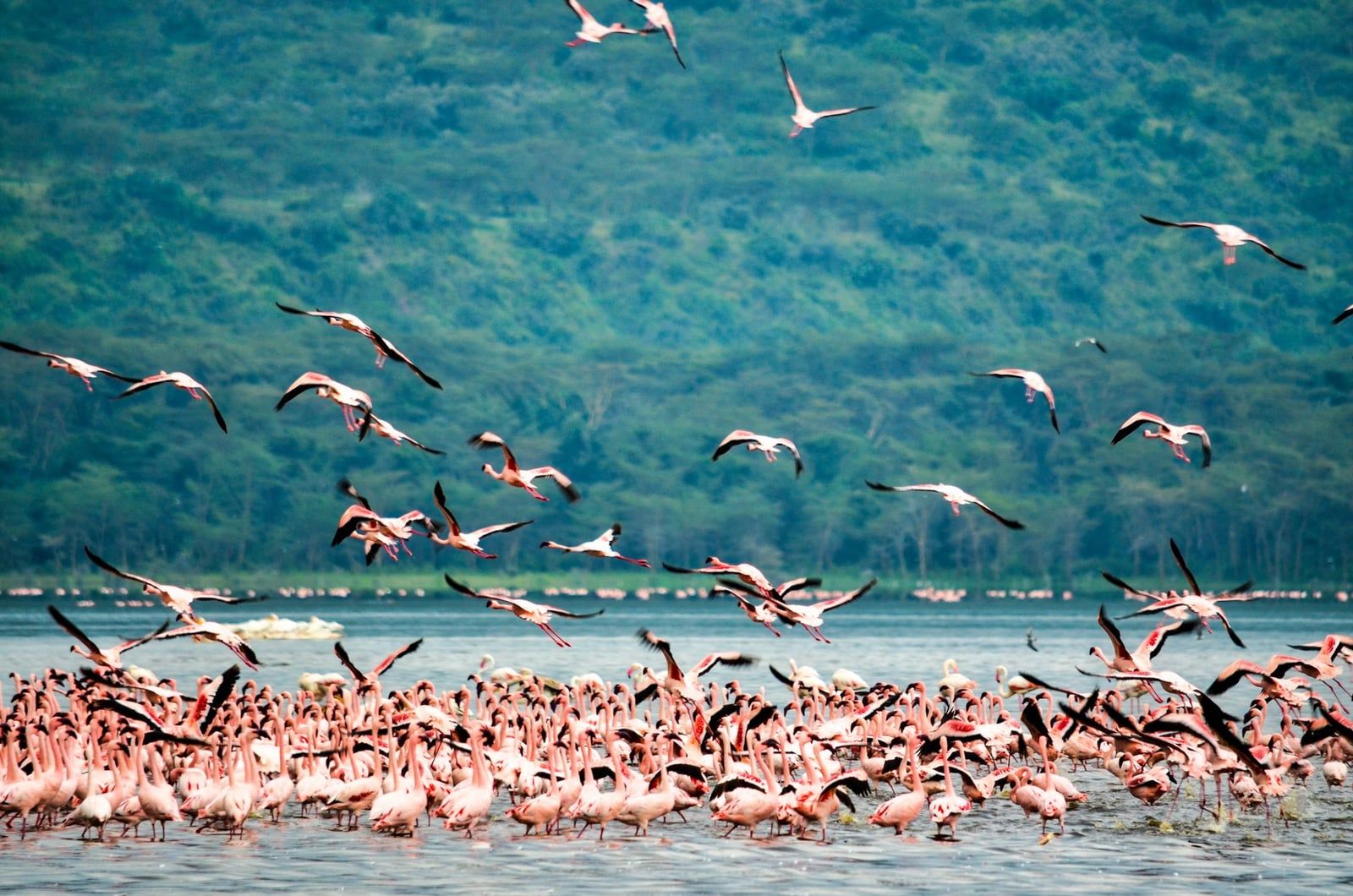
Flamingos still come to Lake Nakuru — just not in the millions that made the lake famous. A Kenya Wildlife Service survey counted 1,347,063 birds here in January 2006; today's flocks run to the tens of thousands, and they arrive and leave with the algae rather than the calendar. Most guidebooks still haven't caught up with that. This guide covers the current reality, the science behind it, and how to plan a visit that gives you the best odds.
That starts with honest expectations, and with using the park's other 449 bird species, its rhinos and its Rothschild's giraffes as more than consolation prizes. Lake Nakuru tours handle the logistics; the rest of this article handles the judgment calls.
Quick Answer: Are There Still Flamingos in Lake Nakuru?
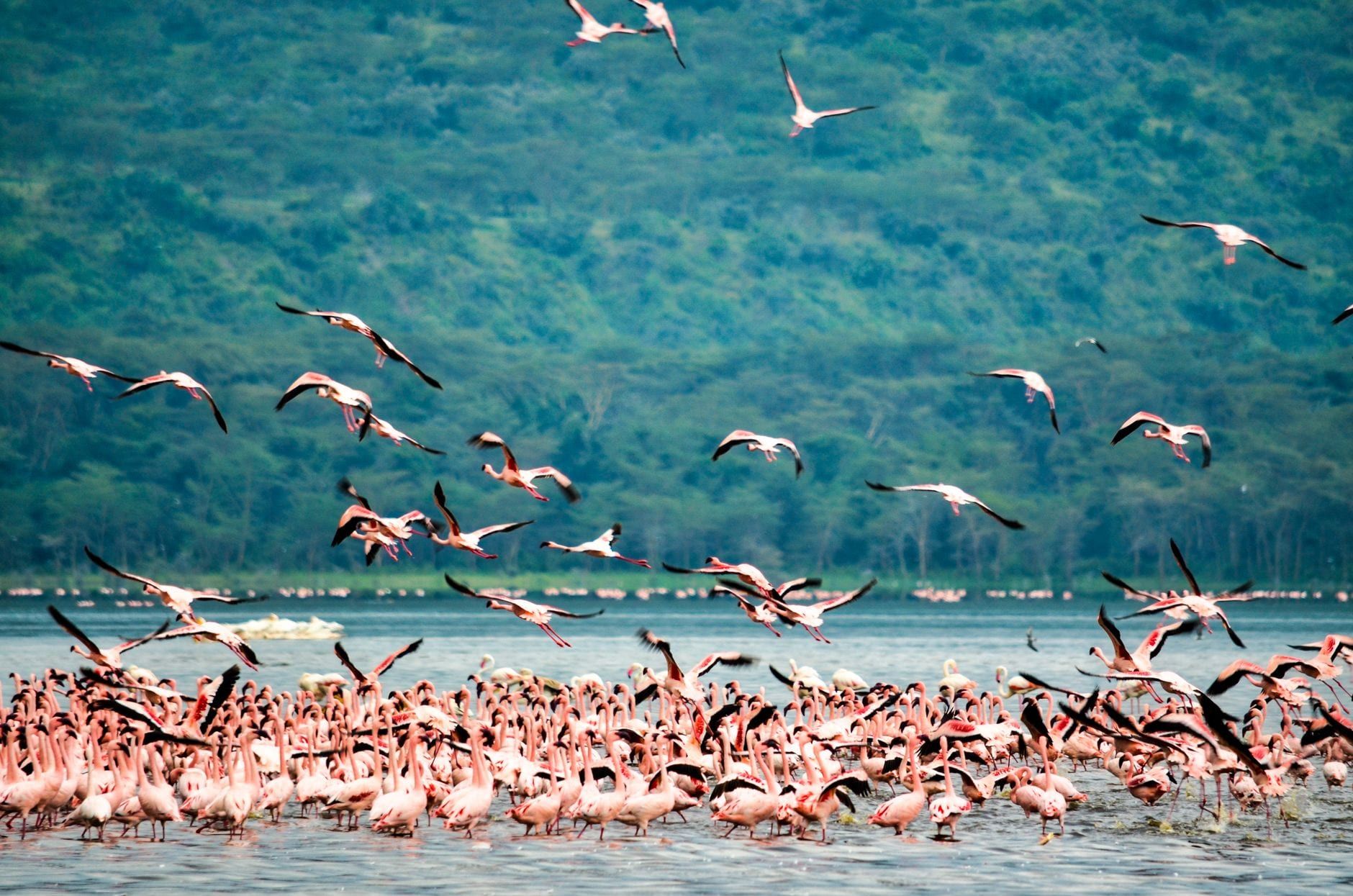
Yes — but the spectacle has changed shape. That January 2006 count of 1.35 million birds turned the shoreline pink for miles; recent observations put today's nomadic clusters at roughly 10,000–30,000 flamingos near the Naishi plains. You will probably see flamingos. You should not expect the wall-to-wall pink blanket of the old postcards.
The driver is chemistry, not season. Flamingos are nomadic specialists that track algae across the Rift Valley's chain of soda lakes — Nakuru, Bogoria, Elementaita and Natron — with no regard for park boundaries or entrance fees. When Nakuru's water turned too deep and too fresh, the big flocks shifted to Bogoria and Elementaita, and they still move between all three as conditions change. There is no live public tracker telling you where the birds are this week.
So this guide is built around odds rather than guarantees: why the birds left, the months and hours that favor big flocks, the shoreline tracks and gates that reach them fastest, what a visit costs, and a plan B if Nakuru's shallows turn out quiet. Nakuru rewards ecological curiosity far more than fixed expectations.
Why Lake Nakuru Turned Pink — and Why the Flamingos Left
Nakuru is a soda lake — shallow, warm and strongly alkaline — and that chemistry is the whole story. The lake sits on the Rift Valley floor at 1,754 m with no outflow; water leaves only by evaporation, which concentrates salts until fish can't live there. Around 10,000 years ago Nakuru, Elementaita and Bogoria formed a single deep freshwater lake, and the drier climate since has left three salty, shallow remnants. Historically Nakuru covered anywhere from 5 to 45 km² and averaged just 0.3 m deep.
Warm, alkaline water is exactly what Arthrospira — the blue-green algae known as spirulina — needs, and it bloomed so densely here that it fed more than a million lesser flamingos. Lesser flamingos filter-feed on almost nothing else. The carotenoid pigments in the algae are stored in the birds' feathers, skin and bills, which is why flamingos are pink at all; a pale bird is a bird on a poor diet.
Then the water rose. Between 2010 and 2020 the lake expanded from 40 to 68 km² — roughly 82 km² by recent estimates — flooding shoreline habitat, park tracks and, at times, the Main Gate itself. A 2024 study in Current Biology, built on 20 years of satellite data, found Nakuru's surface area grew 91% between 2009 and 2022 while the flamingos' algae likely dropped by about half. Diluted water kills spirulina. No spirulina, no lesser flamingos.
Scientists also link the rising water to deforestation and development in the Mau Forest Complex, the catchment that feeds the lake, which pushes more runoff downhill into the basin. Kenya's Wildlife Research and Training Institute (WRTI) now monitors the remaining spirulina pockets and water chemistry in the southern shallows, and KWS manages the lake as part of the UNESCO-listed Kenya Lake System alongside Elementaita and Bogoria. Past wet-dry cycles say the lake can turn pink again. Nobody can tell you when.
Lesser vs Greater Flamingos: How to Tell Them Apart
Two flamingo species feed at Nakuru, and telling them apart takes about ten seconds once you know the bill. The practical payoff: the species you're most likely to see well has changed along with the water.
| Feature | Lesser flamingo | Greater flamingo |
|---|---|---|
| Height | 80–90 cm | 110–150 cm |
| Weight | 2–2.5 kg | 3.5–4 kg |
| Plumage | Deep pink | Pale pink to white |
| Bill | Dark red, deep-keeled | Pink with black tip |
| Diet | Filters spirulina in very shallow water | Probes invertebrates and crustaceans along the shoreline |
| IUCN status | Near Threatened | Least Concern |
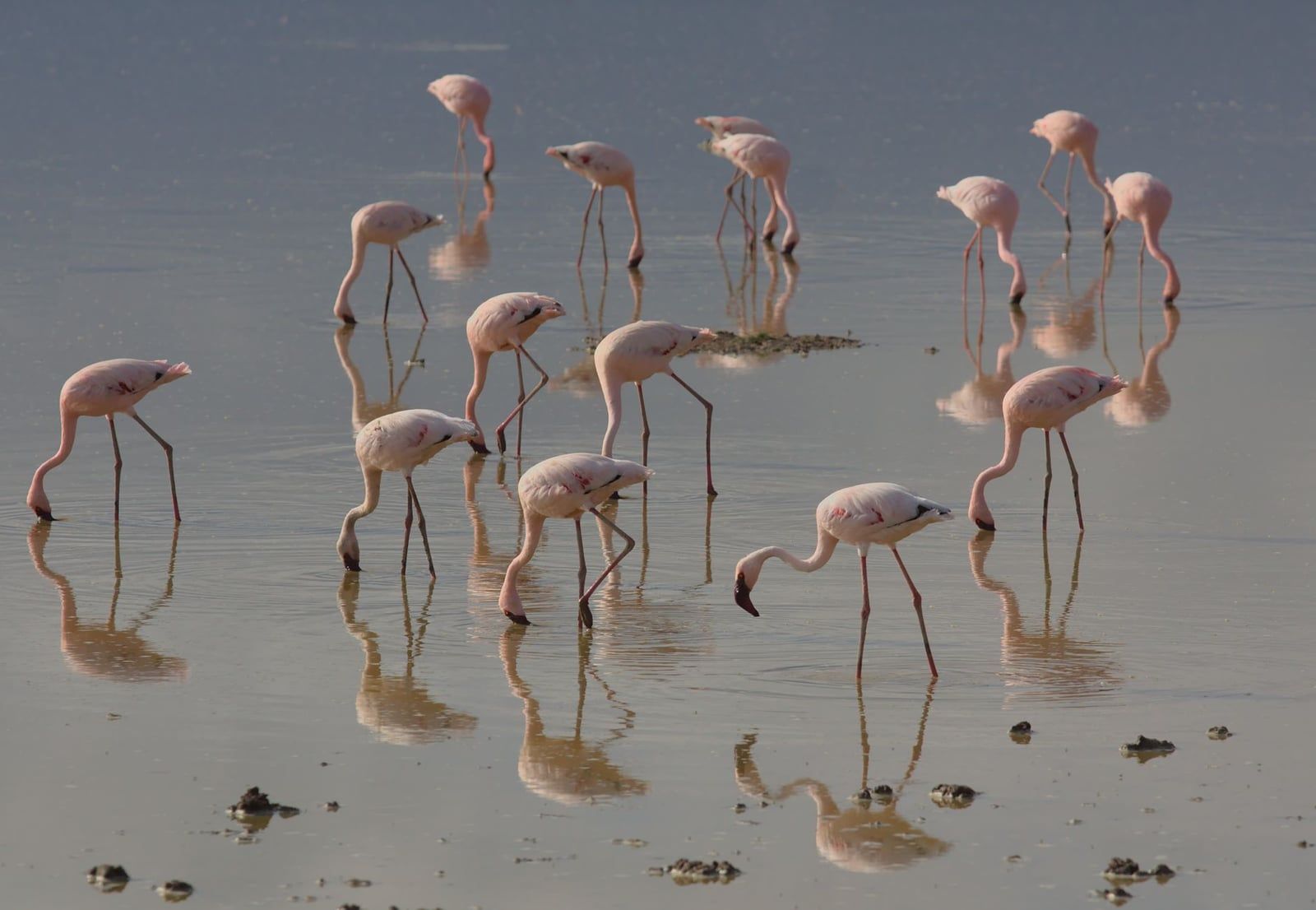
Because the lake is deeper and fresher now, the generalist greater flamingo is the consistent resident. Its longer legs and probing bill work in water where a lesser flamingo simply cannot feed, so the pale birds calmly working the shoreline on any given day are often greaters. The deep-pink lessers lake-hop: they're either at Nakuru in force or barely there at all.
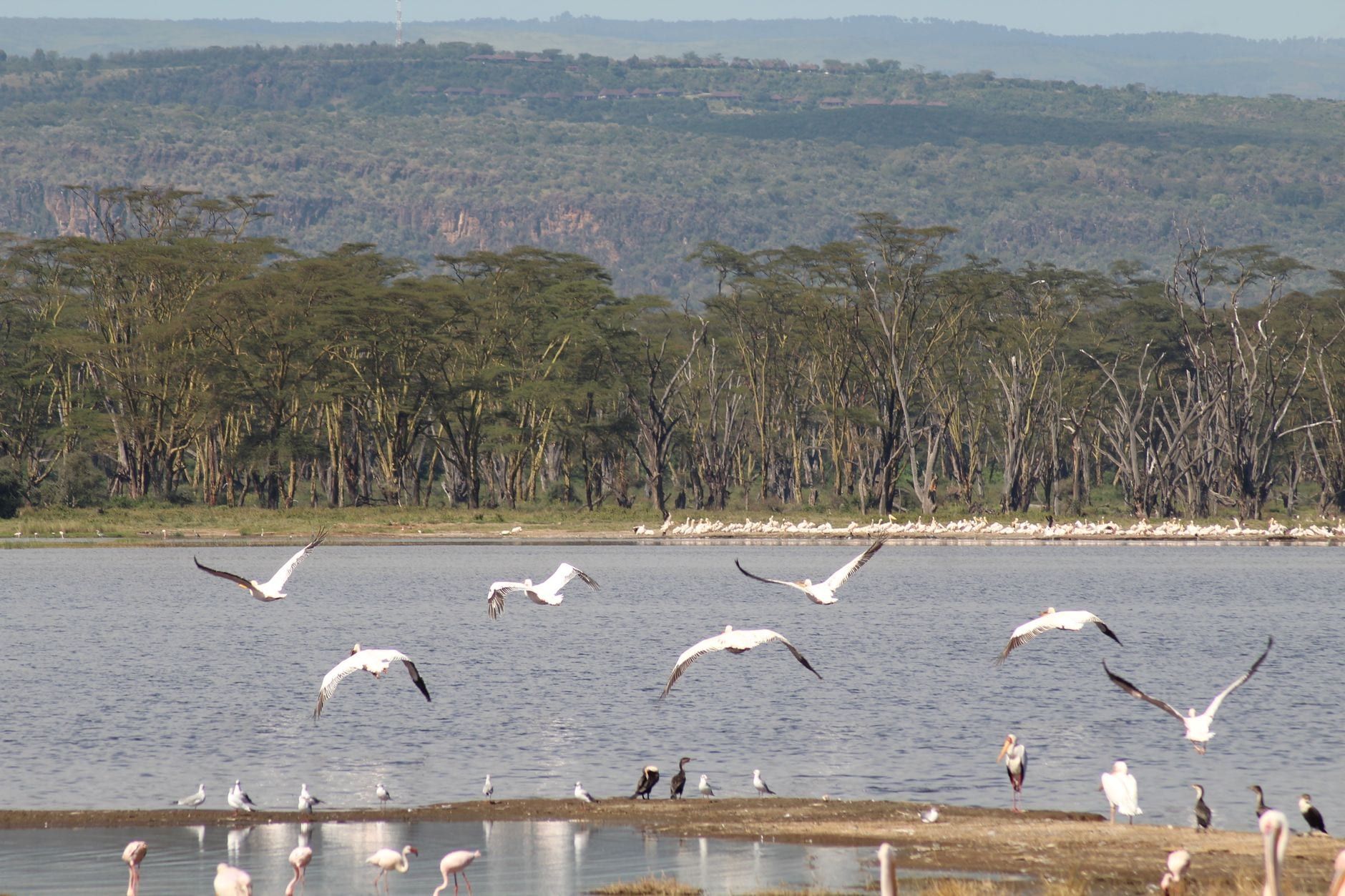
One identification trap to know about. The northern shoreline near the main entrance is now dominated by great white pelicans, and a distant pale flock of them reads convincingly as washed-out flamingos. Check the bills and the bulk before you count the sighting.
Nakuru is a feeding ground, never a nursery. The Rift Valley's flamingos breed almost exclusively at Lake Natron in Tanzania, where caustic salt flats keep predators off the nests; the birds build mud mounds 15–46 cm high with a hollow on top, usually in the wet season. And if you want the collective noun, it's a flamboyance — your guide will teach it to you regardless.
Best Time to See Flamingos in Lake Nakuru
There is no guaranteed flamingo season anywhere in the Rift Valley — the birds follow algae, not calendars — but the odds have a shape, and it's worth planning around.
January to March is the best statistical window for large flocks. July to October brings more moderate numbers with drier conditions and cleaner light, and Kenyan operators most often quote July–September plus December–February as the viewing months. Skip April and May: the long rains flood the tracks and freshen the lake further, and November's short rains are hit-or-miss.
The mechanism explains the pattern. Evaporation concentrates alkalinity and triggers spirulina blooms; rain dilutes it. Algae spike right after the rains and pull flocks back in, while the months just before the rains — when algae has been depleted — hold the fewest birds. Asking rangers or your lodge what the water has been doing lately tells you more than any month chart.
Time of day matters as much as month. Between roughly 6:30 and 8:30 AM the light is golden and the water is calm enough to mirror the flocks before Rift Valley winds ripple the surface. By midday the birds typically feed farther from shore and shrink to pink dots. Budget a full morning — two if your dates flex — because a one-shot midday window is the worst way to visit this park.
Where to See Flamingos in the Park: Best Spots, Viewpoints & Rules
Today's flocks work the shallow southern shoreline — the mudflats around Naishi and Makalia — rather than the deeper northern sector near the main entrance, which the pelicans have taken over. Plan the circuit around the south and scan from height.
Baboon Cliff
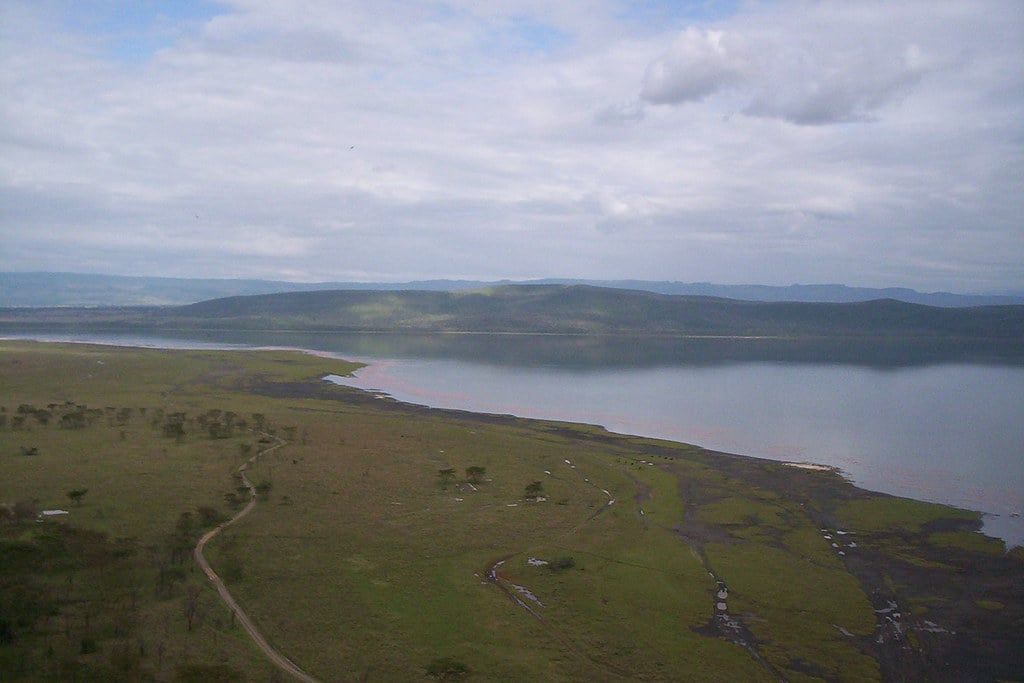
The park's most famous viewpoint looks down the lake from rocky elevation, and it's the best single place to read where the birds are: you see the whole southern shoreline at a glance. Bring a wide-angle for the panorama and keep your doors shut — the cliff's baboon troops will open an unlocked car. Early morning gives soft light over the water; late afternoon layers the escarpment behind it.
Out of Africa Lookout and Lion Hill
The Out of Africa Lookout and Lion Hill give the other two classic panoramas. Out of Africa sits high over the lake and the open plains; Lion Hill rises on the eastern shore near the Sarova lodge of the same name. Both work as backup scanning points when Baboon Cliff is busy, and both double as picnic spots.
Choosing your gate
Gate choice shapes your morning. Main Gate sits 4 km from Nakuru town but behind town traffic and northern roads that flood — it has periodically closed altogether. Lanet Gate, on the east side, is the fastest entry from Nairobi. Nderit Gate, in the south, drops you directly onto the productive southern tracks if you're coming from Elementaita or the Maasai Mara. Confirm which gates are open with KWS before you travel.
Rules that protect the birds
The rules protect both the birds and your wallet. Vehicles must stay on the tracks and keep at least 10 m from wildlife near the southern marshes; off-roading to close the distance on a flock carries a KES 20,000 fine, and the soft silt there can swallow a Land Cruiser. Drones are prohibited without pre-authorization from both KWS and the Kenya Civil Aviation Authority — if you want an aerial-style shot, earn it from Baboon Cliff instead. The speed limit inside the park is 40 km/h, and rangers do enforce it.
Photography: lenses and light
Photography strategy follows the water level. When the lake is high and the flocks feed far out, you need a telephoto — 400 mm and up — to make the birds count; during a congregation on the southern flats, go wide and use the elevated lookouts for scale. Morning light carries the pink; midday flattens it. Mirror-calm water before 8:30 AM is the shot everyone comes home with, and it's a good reason to be first through the gate at 6:00.
Planning Your Visit: Fees, Getting There & Where to Stay
The logistics are straightforward once you know two things: payment is online-only, and the birds reward patience. Here's the full picture — current rates, the drive from Nairobi, and where to sleep.
Entry fees and paying online
Entry is charged per person per day, with vehicles billed separately from KES 600 a day for small ones. Rates effective 1 October 2025:
| Visitor category | Adult | Child / student |
|---|---|---|
| Non-resident | USD 90 | USD 45 |
| African citizen (non-East African) | USD 50 | USD 25 |
| East African citizen | KES 1,500 | KES 750 |
| Kenya resident | KES 2,025 | KES 1,050 |
None of it is payable in cash at the gate. KWS takes payment only through the eCitizen portal (M-Pesa, card or bank), which issues a downloadable e-ticket you show at entry — so set it up on solid Wi-Fi before you leave Nairobi, and make sure the fee category matches the passport or ID you carry. Our page on opening hours and entry fees has the details, including the annual free-entry day around World Tourism Day.
Getting there from Nairobi
The park lies 156 km northwest of Nairobi on the A104 highway — about 2.5 to 3 hours without heavy traffic, though roadworks around Rironi can stretch that. Buses such as Easy Coach run the route several times daily from KES 750–1,450 one way, shared matatus from KES 600–900, and a private transfer costs roughly USD 120–170. Our guide to getting to Lake Nakuru covers every option, including light-aircraft flights into Naishi airstrip inside the park.
Self-drive or hire a guide
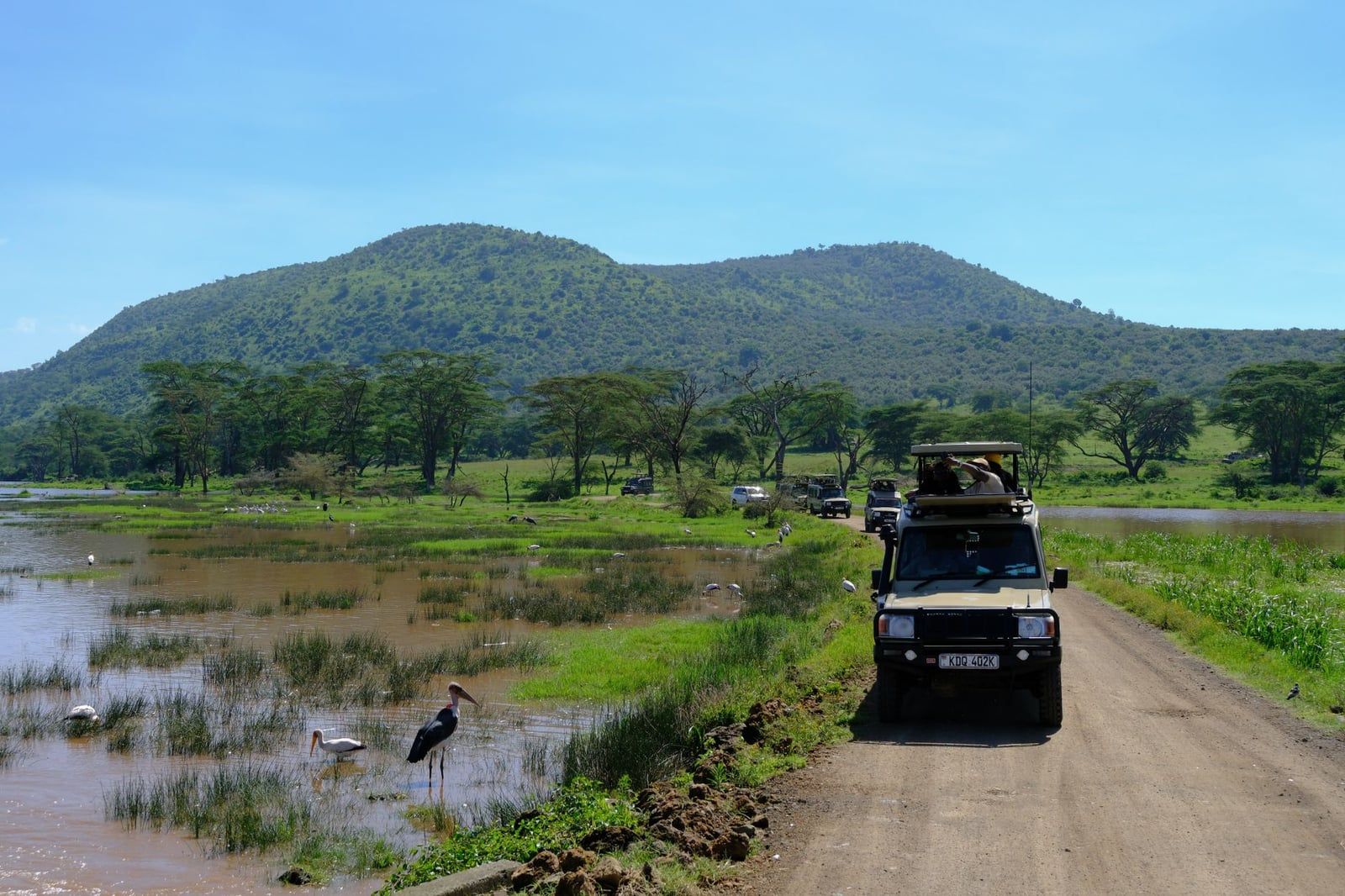
Self-driving works: the roads are maintained and marked, the circuit is compact, and the 40 km/h limit is easy to respect. But a guide hired at the gate or through guided safari tours costs little and knows where this week's flamingos, rhinos and lions actually are. With nomadic birds and a single day, that local intelligence is the difference between a sighting and a shoreline of dots.
Where to stay
Sleeping inside the park is the strategic play. Sarova Lion Hill is the most polished option, Lake Nakuru Lodge and Sopa Lodge are solid mid-range, and Flamingo Hill Camp runs tented rooms; packages run from the low $100s to over $300 a night, with budget guesthouses back in Nakuru town. Our guide to the park's lodges compares them all — an overnight buys you dawn light on the lake and a second morning to chase the current flock.
Day-trip math
Yes, Nakuru works as a Nairobi day trip — it's one of the few Kenyan national parks that genuinely does. But run the numbers on time: a rushed two-hour midday visit risks pelicans and distant pink dots, because the flocks may be feeding a 40-minute drive from wherever you enter. Leave Nairobi by 6 AM, be through Lanet Gate at opening, and give the whole morning to the southern shoreline. Our day trip itinerary lays out the full schedule.
Is It Still Worth It? Backup Lakes and What Else Nakuru Offers
Here's the honest verdict. If a guaranteed sea of pink is the only goal, Lake Bogoria currently outperforms Nakuru — its flamingo viewing peaks roughly November to April, when the lake is shallowest and its algae most concentrated, and its geysers and hot springs are a draw in their own right. If you want a complete safari with flamingos as one act among several, Nakuru remains one of Kenya's best-value parks — and it's the only lake where you can frame pink birds against grazing white rhinos.
The smart move is the Rift Valley loop: Nakuru plus Bogoria or Elementaita, all within a couple of hours of each other, so that when one lake is empty another is often full. Elementaita, Nakuru's UNESCO-listed neighbor 45 minutes south, holds flamingos, pelicans and hot springs with far fewer vehicles. Our Nakuru versus Naivasha comparison covers the alternative if you'd rather pair the park with a freshwater lake.
Rhinos, giraffes and the rest of the mammals
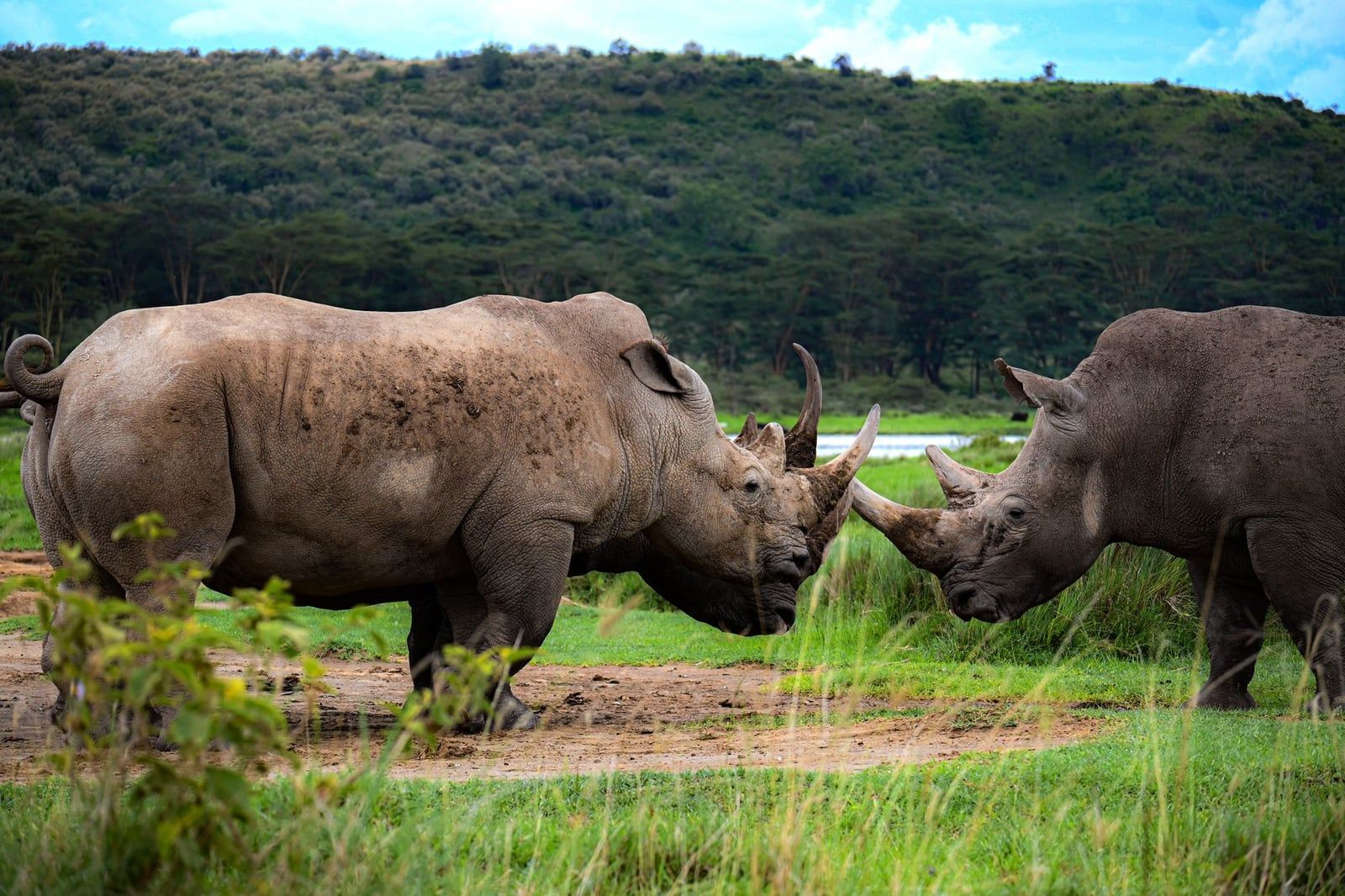
Nakuru became Kenya's first government-managed rhino sanctuary in 1987, and it still holds one of the country's largest black rhino concentrations — 25-plus eastern blacks alongside roughly 70 southern whites grazing the shoreline grasslands. Add Rothschild's giraffes (relocated here from western Kenya since 1977), lions, leopards, buffalo, hyenas and the odd python dangling from a tree, and the fenced 188 km² park delivers four of the Big Five in a morning's drive. The full species rundown is in our Lake Nakuru animals guide.
Birding beyond the flamingos
On a low-flamingo day, the birding still delivers. Roughly 450 species are recorded here — African fish eagles, Goliath herons, spoonbills, pied avocets and thousands of great white pelicans among them — and October to April adds Palearctic migrants to the mix. Bring binoculars; the lakeshore, the marshes and the euphorbia forests each hold different birds.
Filling the rest of the day
The park's remaining act doesn't depend on water chemistry. Makalia Falls thunders best after the rains in April–May and November, picnic sites sit at the viewpoints, and the escarpment tracks turn up lions dozing in the acacias. None of it moves with the algae — which is exactly why Nakuru is worth the drive even in a quiet flamingo week.
Lake Nakuru Flamingos: FAQs
Are there still flamingos in Lake Nakuru?
Yes, but in smaller numbers. A KWS survey counted 1,347,063 flamingos in January 2006; today's nomadic clusters run roughly 10,000–30,000 birds near the Naishi plains, moving between Nakuru, Bogoria and Elementaita as algae conditions shift.
Why did the flamingos leave Lake Nakuru?
Rising water since around 2010 expanded the lake 91% in surface area between 2009 and 2022, diluting the alkalinity that spirulina algae needs. The birds' food collapsed, so the flocks moved to Bogoria and Elementaita. Deforestation in the Mau Forest catchment, which increases runoff, contributes to the rising water.
What is the best month to see flamingos in Lake Nakuru?
There's no guaranteed season, but January to March offers the best odds at large flocks, and July to October brings moderate numbers with drier conditions and cleaner light. Operators most often cite July–September and December–February. Avoid the April–May long rains.
Do flamingos breed in Lake Nakuru?
No. Nakuru is a feeding and resting ground; Rift Valley flamingos breed almost exclusively at Lake Natron in Tanzania, where caustic salt flats protect the mud-mound nests from predators.
Is Lake Bogoria better than Lake Nakuru for flamingos now?
For sheer bird density, currently yes — especially November to April, when Bogoria is shallowest and its algae most concentrated. But Nakuru delivers the complete safari: rhinos, leopards, Rothschild's giraffes and the flamingo-with-rhino frame Bogoria can't offer.
How much is the entry fee for Lake Nakuru National Park?
Non-resident adults pay USD 90 per day (valid 24 hours), children USD 45; East African citizens pay KES 1,500. Payment is online only via the KWS eCitizen portal — cash is not accepted at the gates, so set up your e-ticket before you travel.
Can you see Lake Nakuru flamingos on a day trip from Nairobi?
Yes. The park is 156 km northwest of Nairobi, about a 2.5–3 hour drive on the A104. But because the flocks are nomadic, a rushed midday dash risks empty shorelines — leave at dawn and dedicate a full morning, or overnight inside the park.
Why are flamingos pink?
The pink comes from carotenoid pigments in their diet — spirulina algae for lesser flamingos, plus crustaceans and invertebrates for greaters. The pigments are stored in the feathers, skin and bill, and intensity varies with what the bird has been eating.