About All ToursPrivate ToursSafari ToursJeep ToursFull Day ToursMasai Mara Tours Directions Hours & Fees Guides
Find Tours 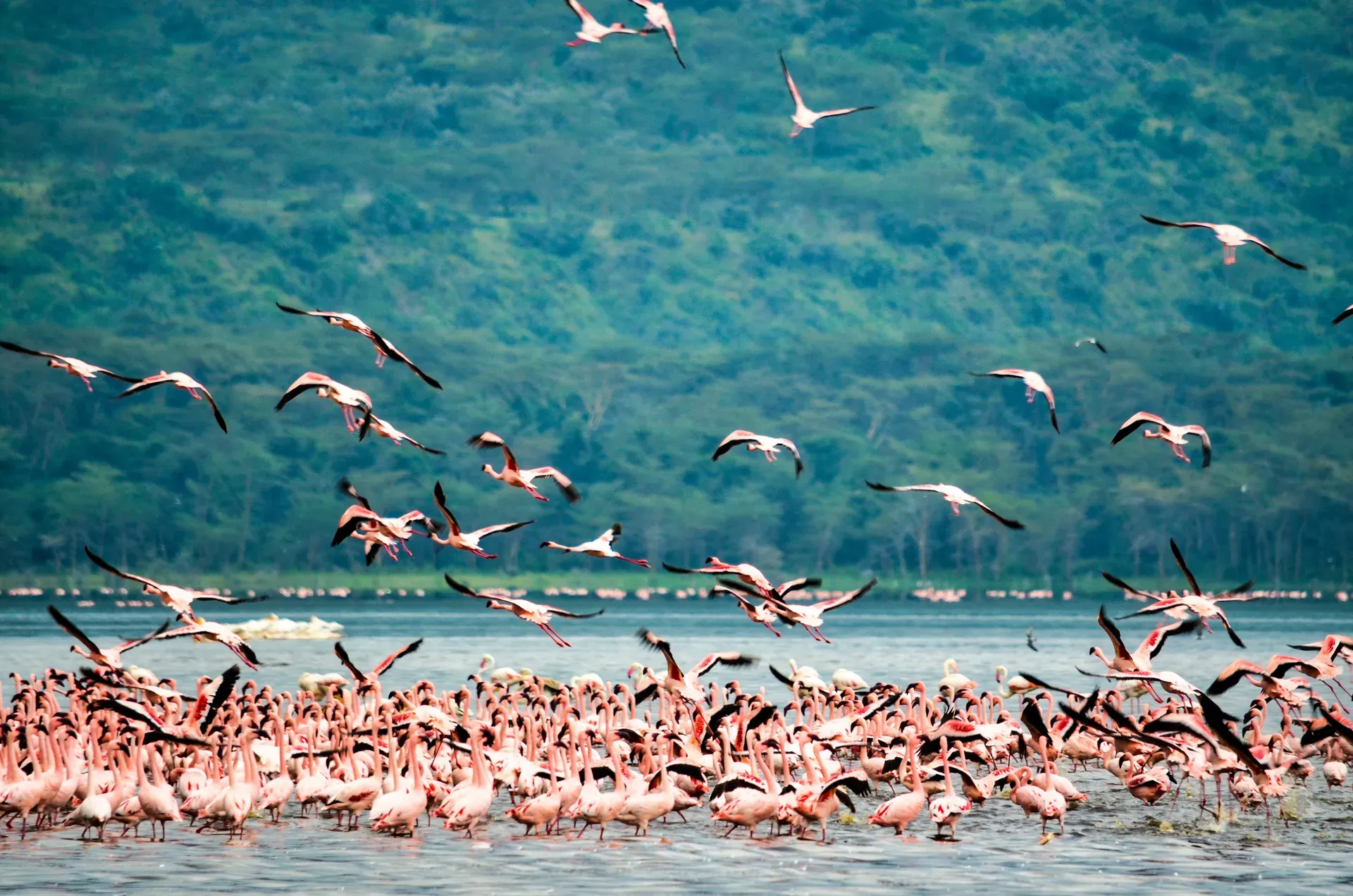
Choose from day trips and multi-day safaris to Lake Nakuru National Park, departing from Nairobi with hotel pickup, private guides, and game drives in 4x4 vehicles. Tours start at $90 per person.
 Free Cancellation
11.5-hour private tour from Nairobi with a 7-hour game drive in Lake Nakuru and an optional boat ride on Lake Naivasha.
 Free Cancellation
Nairobi day trip to Lake Nakuru National Park in a 4WD, with about 8 hours inside the park.
 Free Cancellation
7-day small-group safari (max 8) to Maasai Mara, Nakuru, Naivasha and Amboseli, with a free Nairobi hotel night.
 Free Cancellation
Private 10-hour Nairobi day trip: 6am pickup, Rift Valley viewpoint stop, game drive in Lake Nakuru, boat on Lake Naivasha.
 Free Cancellation
Private 11-hour 4x4 tour with 6:00am Nairobi pickup, Rift Valley viewpoint stop, and 8 hours inside Lake Nakuru park.
 Free Cancellation
12-hour day trip from Nairobi combining a game drive in Lake Nakuru National Park with a boat ride on Lake Naivasha.
 Free Cancellation
Roughly 10-hour day trip from Nairobi to Lake Nakuru National Park, with 360 minutes inside the park.
 Free Cancellation
8-hour day tour from Nairobi or Naivasha with 5 hours inside the park and a driver-guide.
 Free Cancellation
8-hour small-group day trip from Nairobi: game drives in Lake Nakuru park plus a boat ride on Lake Naivasha. (109 chars)
 Free Cancellation
Private full-day trip from Nairobi: game drives in Lake Nakuru park plus a boat ride on Lake Naivasha.
Read what travelers share about their experience visiting Lake Nakuru — from practical tips to personal highlights.
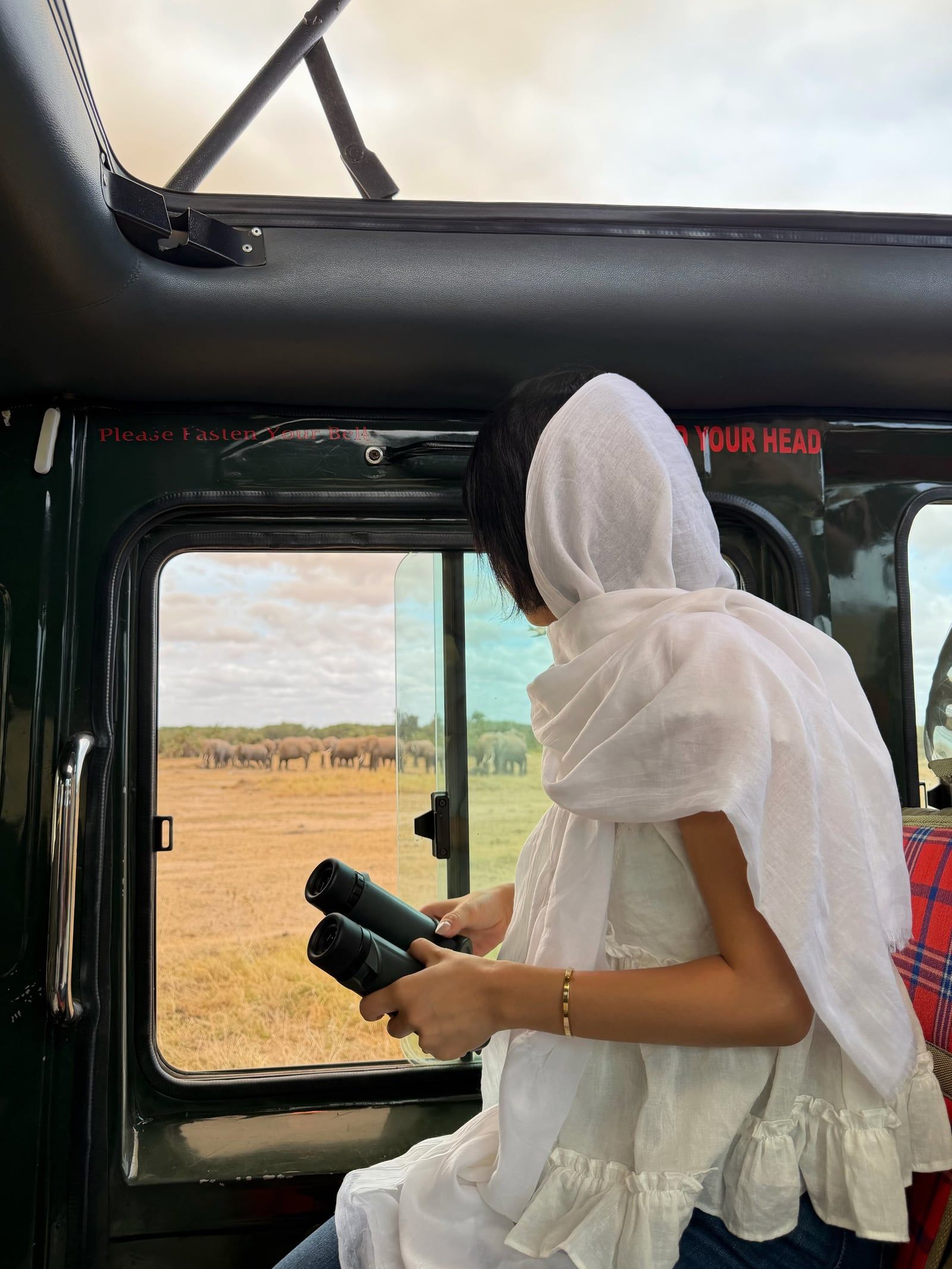
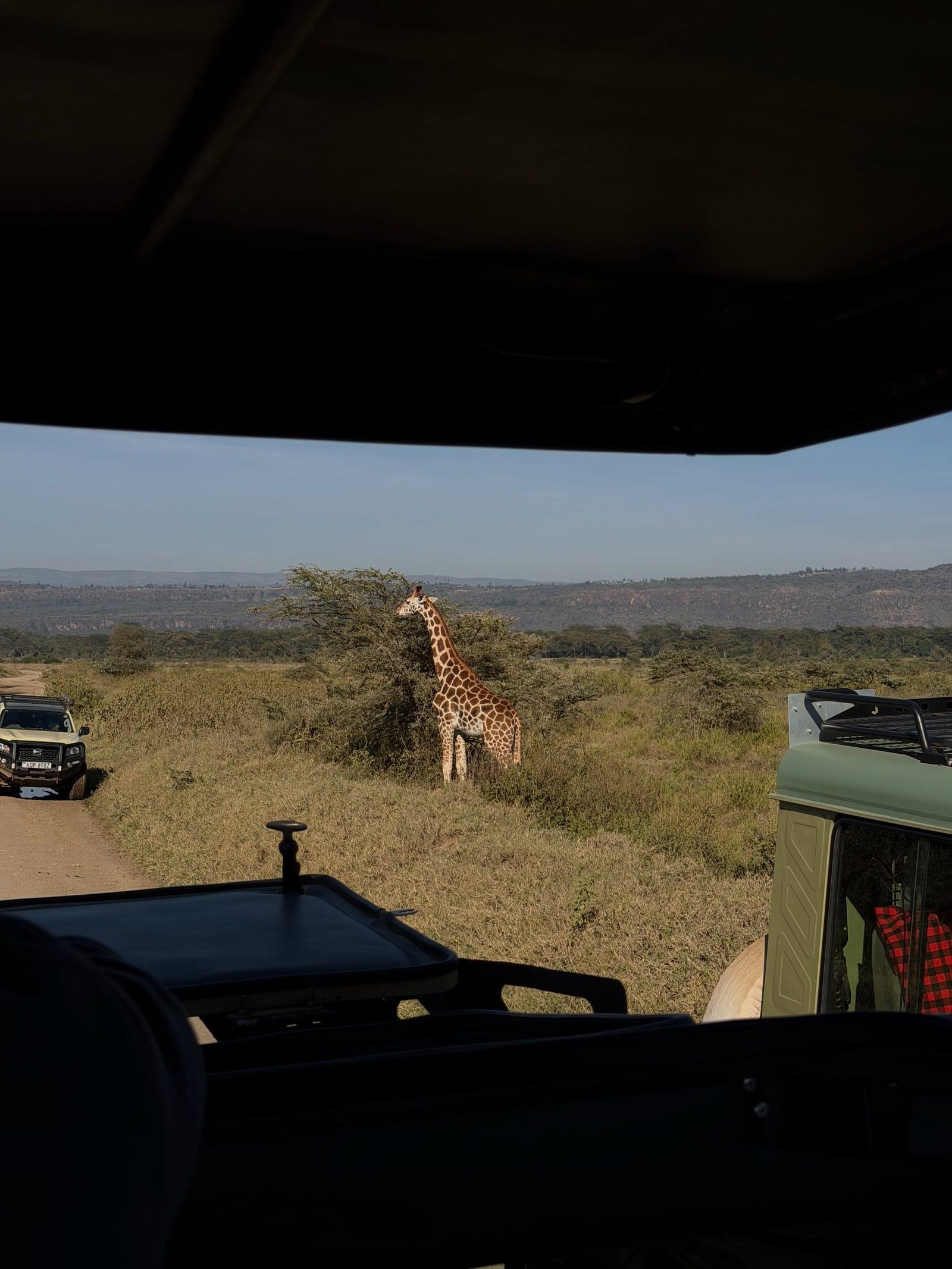
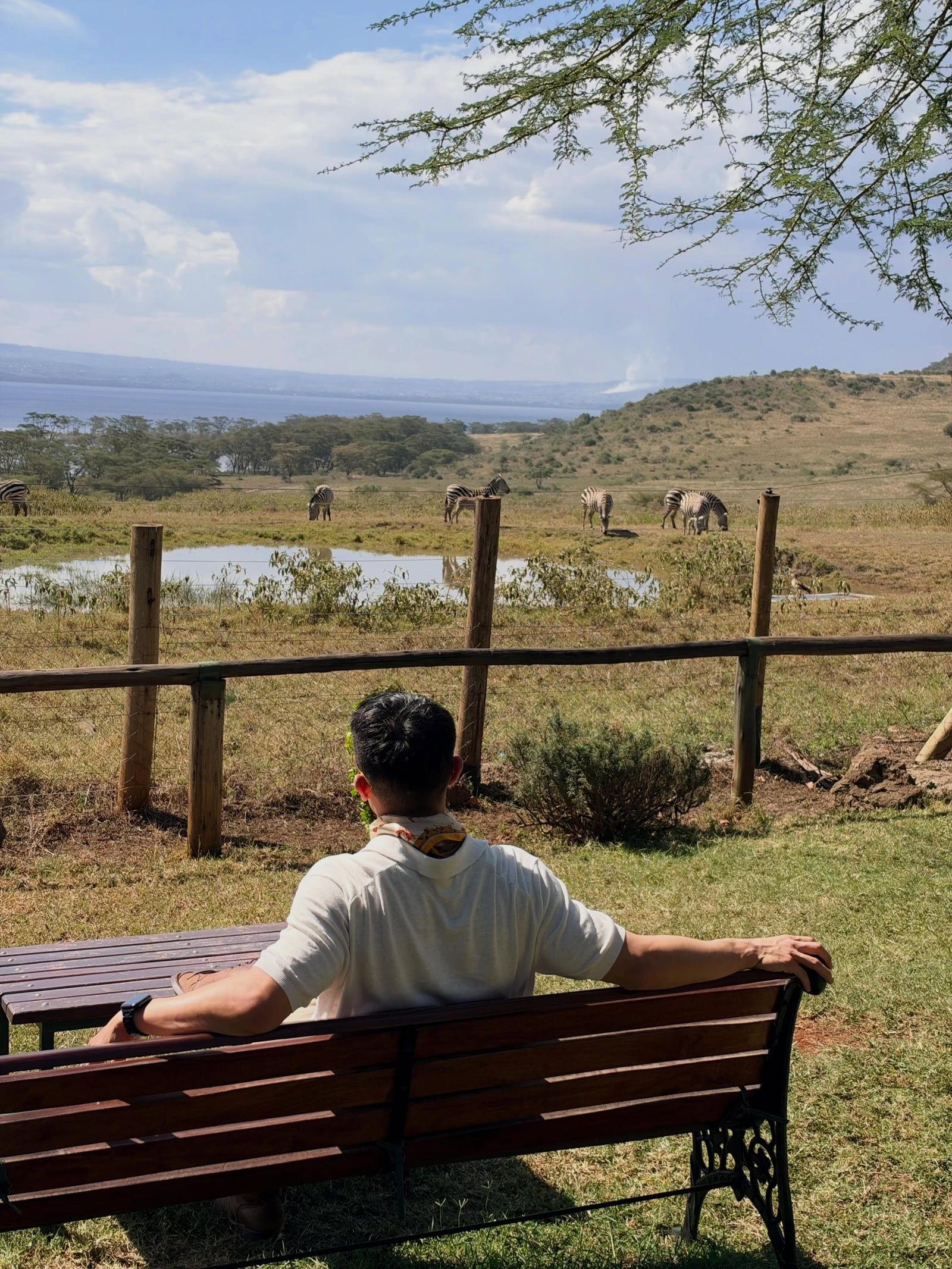
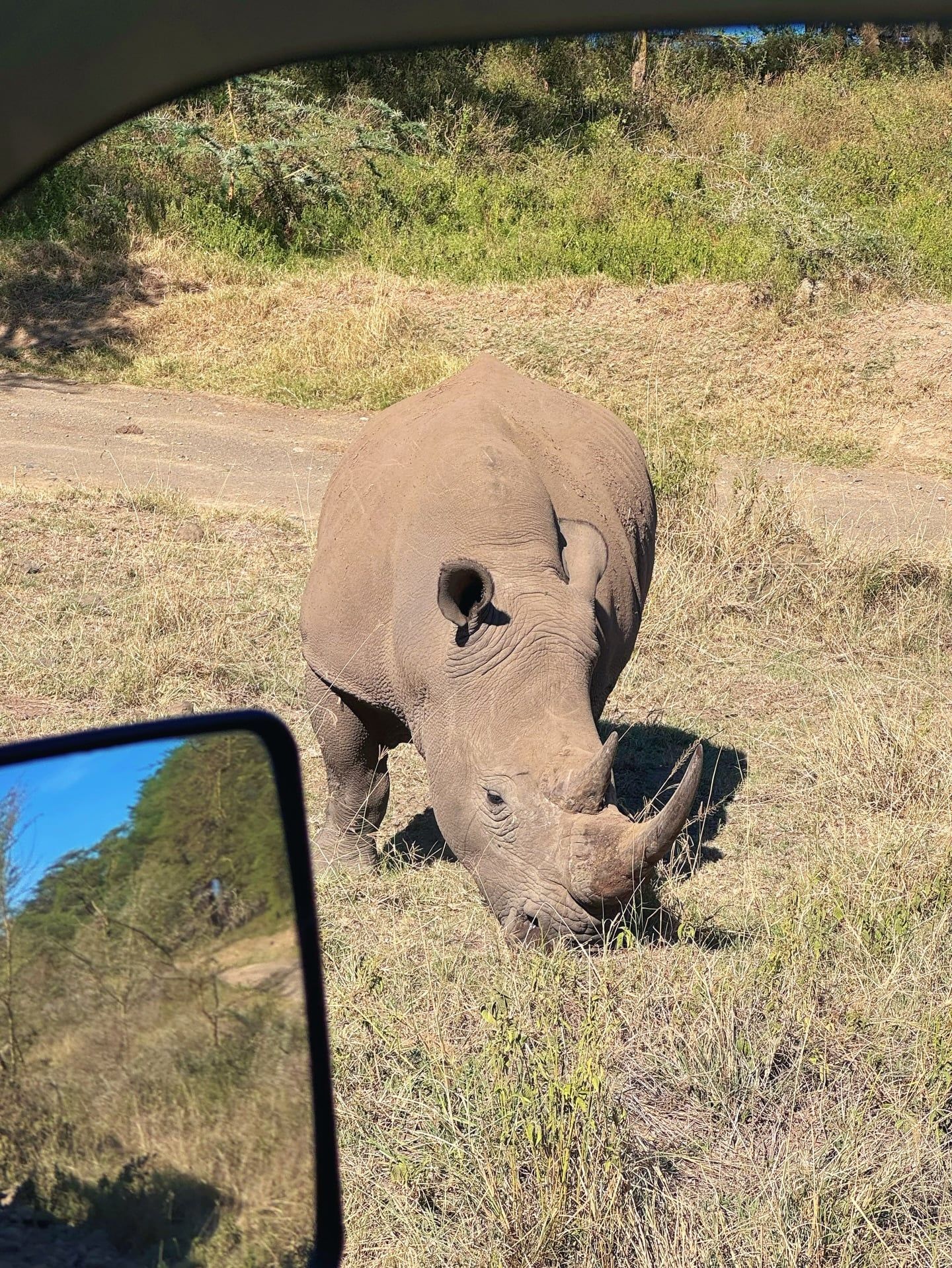
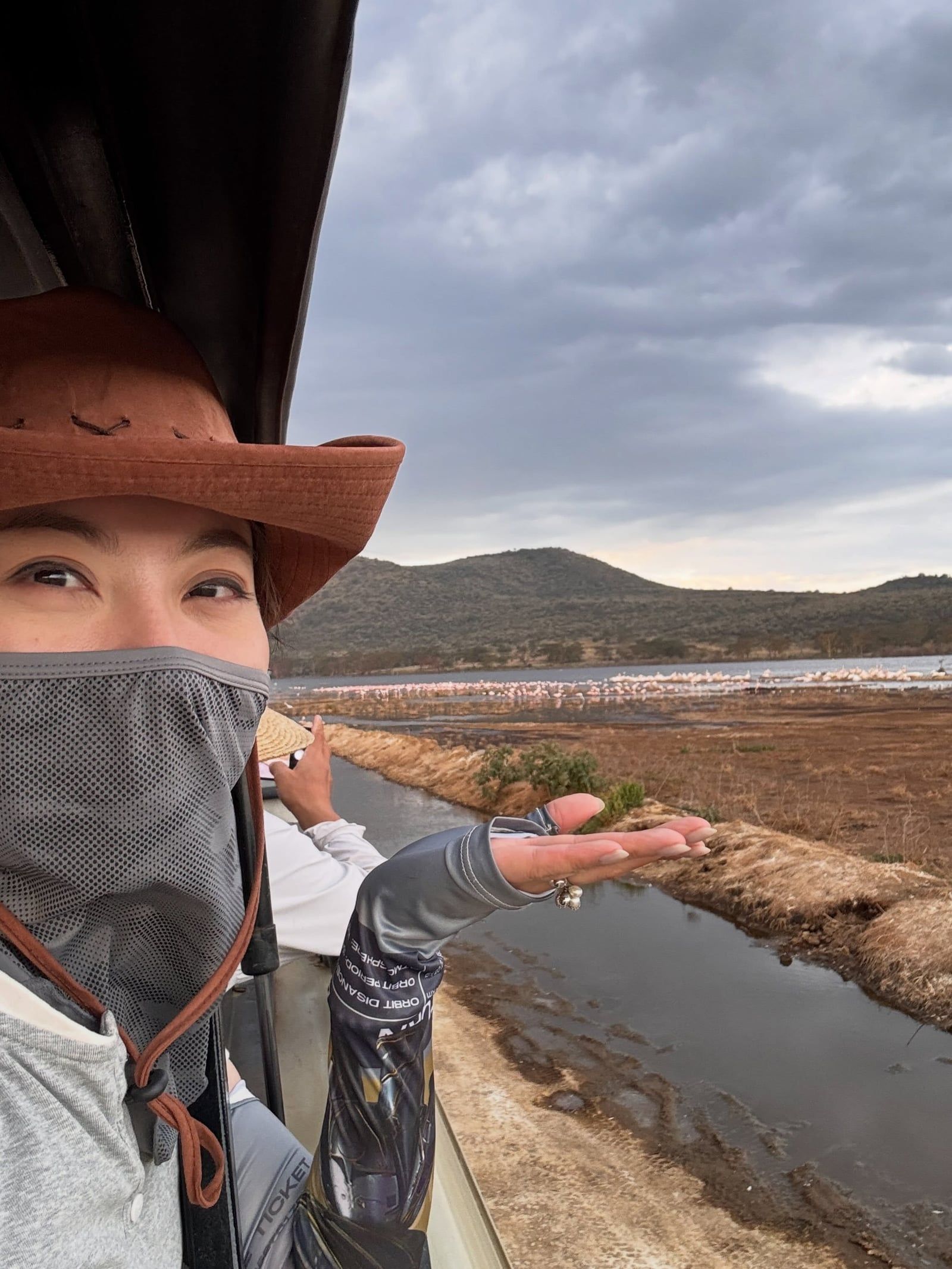
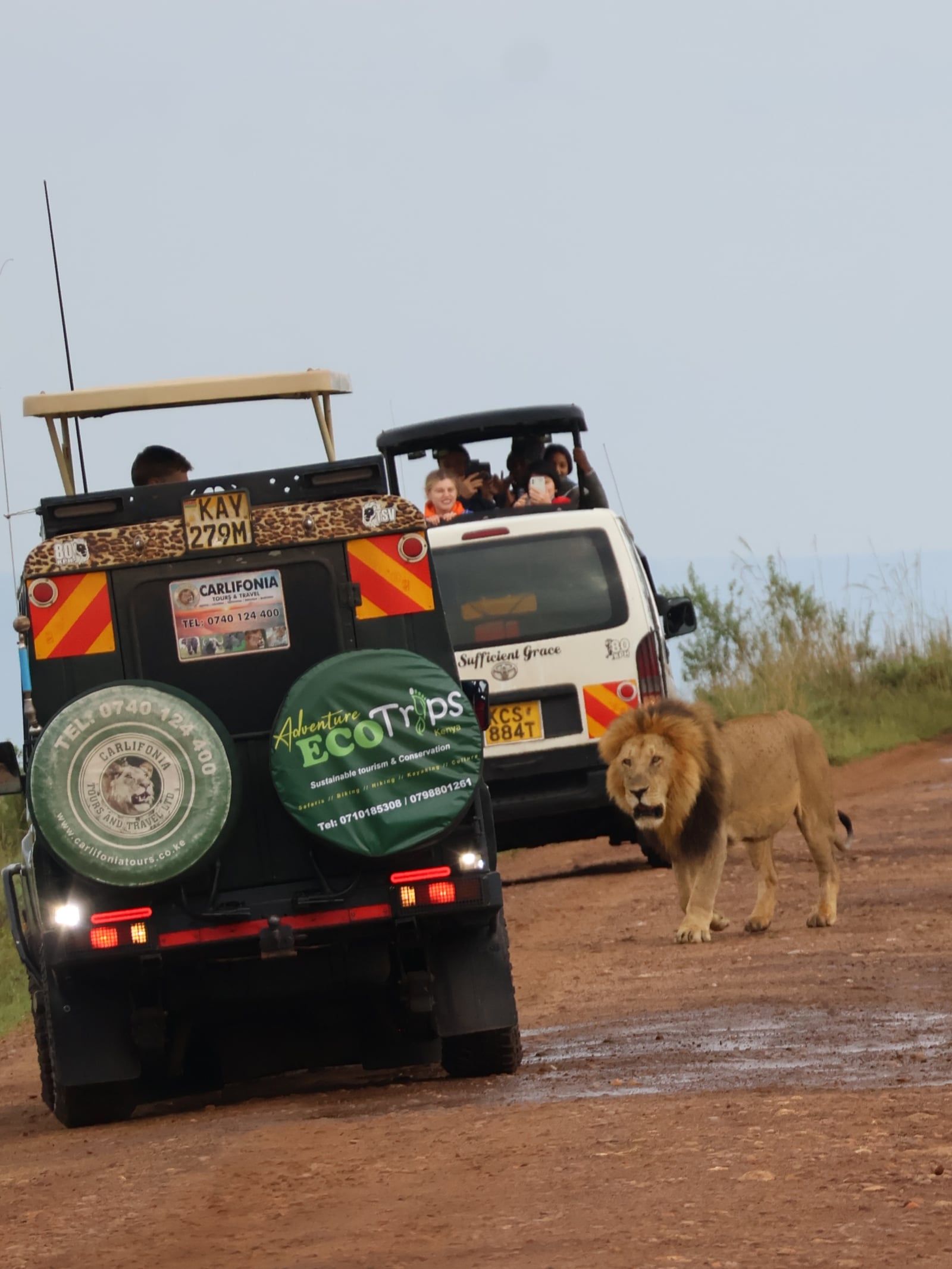
Your tour leaves Nairobi around 6:00 AM for the 156 km drive up the Rift Valley escarpment, usually with a photo stop at the valley viewpoint, and reaches the park gates by mid-morning. Most day tours give you five to eight hours inside Lake Nakuru National Park on a game-drive circuit linking the lakeshore, Baboon Cliff and the rhino areas, before the return drive gets you back to Nairobi by evening. It's a long day — 8 to 12 hours door to door — but the park is fenced and compact, so sightings come fast.
This is Kenya's first government-run rhino sanctuary, set up in 1987, and it still holds one of the country's largest black rhino concentrations plus around 70 southern white rhinos. Rhinos graze the shoreline grasslands in plain view, often within 20 meters of the track. For reliable rhino sightings, few parks in East Africa compete.
The park's most famous viewpoint looks out over the alkaline lake, the southern plains and, when they're present, flamingo feeding areas. Most tour itineraries stop here for photos and a picnic. Keep the van doors shut — the baboon troops here are bold and will hop into open vehicles for food.
The million-strong flocks of the 2000s are gone — a January 2006 survey counted 1,347,063 birds, while recent counts run to tens of thousands moving between Nakuru, Bogoria and Elementaita. You'll likely see flamingos in the shallows, just not the historic pink blanket. Ask your driver-guide where the current flocks are feeding; they track this daily.
African fish eagles, Goliath herons, pelicans, pied kingfishers and thousands of grebes and stilts work the lakeshore. October to April is peak season, when Palearctic migrants arrive. Several tours on this page offer guides in German, French, Italian or Spanish if English commentary isn't your preference.
Lion, leopard, buffalo and rhino all live inside the fence — elephants are the only absentee. Lions doze in the acacias, leopards lounge in branches, and spotted hyenas patrol the plains. Scan the trees, not just the grass; the dense woodlands also hide large pythons that sometimes cross the road.
Nearly every Nairobi departure pauses at the Great Rift Valley viewpoint on the escarpment road, about an hour out of the city. You'll get the panorama over the valley floor and a bathroom break before the descent. From there it's roughly two more hours to the park gates.
Day tours from Nairobi run $90–202 per person, and the differences between them are mostly about vehicle type, hours in the park, and whether lunch or a second stop is bundled. Read what's excluded before you book — park entry is almost never included.
Almost every tour on this page leaves the KWS conservation fee out of the price — you pay it yourself at the gate. Non-resident adults pay USD 90 per day (children USD 45) effective 1 October 2025, cashless via the KWS eCitizen portal or card at the gate. One tour's listing still quotes an outdated $60 rate, so budget for the current $90. The fee category must match the passport or ID you present.
Private tours in a 4x4 Land Cruiser with pop-up roof run $150–202 for a full day with your own driver-guide. Cheaper group options in customized tour vans start at $90 and pair you with other travelers. Multi-day safaris bundle Nakuru with the Maasai Mara, Naivasha and Amboseli from $800 for seven days, park fees included.
Nairobi departure tours run daily year-round and rarely sell out, but book 2–3 days ahead in July–September and over Christmas, when safari season peaks. All ten tours here offer free cancellation up to 24 hours before departure for a full refund, so there's little risk in locking in a date early.
Four tours on this page pair Nakuru with a boat ride on Lake Naivasha — a freshwater lake 1.5 hours south where you cruise past hippos and fish eagles. Prices run $120–195 depending on group size and vehicle. It makes for a 12-hour day, but it's the best value if you only have one day out of Nairobi.
Standard pickup is any hotel, apartment or villa within Nairobi at 6:00 AM, with the branded vehicle and a name-tagged guide meeting you. Airport terminal pickup is included on some tours; others charge a $20 supplement. If you're staying outside the CBD, enter your location when booking since some systems miss smaller apartments.
Three tours on this page list full wheelchair accessibility, including the vehicles. Game viewing happens from the vehicle on a relatively flat lake circuit, so mobility issues rarely limit the core experience. Baboon Cliff and Makalia Falls have uneven rocky ground and are easier with a companion.
Check the inclusions list carefully — lunch is included on some private tours, 'own expense' on others, and excluded outright on the cheapest options. There are few purchase options inside the park, so if lunch isn't covered, arrange it with your guide or carry food from Nairobi. Vegetarian options exist on request at booking.
Most tours run with English-speaking driver-guides, but two operators also offer German, French, Italian and Spanish commentary. If you need a non-English guide, confirm it at booking rather than at pickup — only a couple of the ten tours advertise this.
Swipe to see more
| Budget Group Day Tour | Private 4x4 Day Tour | Nakuru + Naivasha Boat Combo | Multi-Day Rift Valley Safari | |
|---|---|---|---|---|
| Duration | 8–10 hours, 5–6 hours in the park | 10–11.5 hours, up to 8 hours in the park | 8–12 hours, 6–8 hours in the park plus 1-hour boat ride | 7 days, overnight at each park |
| Best for | Travelers watching costs who still want a full game-drive circuit | Couples and families who want the vehicle to themselves and maximum time on sightings | First-time visitors who want two lakes and hippos in one day out of Nairobi | Travelers with a week who want Maasai Mara, Nakuru, Naivasha and Amboseli without re-planning daily |
| Includes | Pop-up roof vehicle, professional guide, bottled water, hotel pickup (lunch and park entry extra) | Private 4x4 with pop-up roof, driver-guide, pickup from any Nairobi address, lunch on some options (park entry extra) | Game drive, Lake Naivasha boat ride, transport, guide (park entry and lunch usually extra) | 6 nights' accommodation, all park entrance fees, most meals, airport transfer, 4x4 Land Cruiser (group max 8) |
| Price from (USD) | $90 | $150–202 | $120–195 | $800 |
Swipe to see more
The park is open daily from 6:00 AM to 6:00 PM East Africa Time. Gates close at 6:00 PM sharp unless you're staying overnight inside the park — rangers turn late vehicles away, so plan your exit with margin.
Three gates serve the park:
Flooding has periodically closed the Main Gate in recent years, with access diverted to Lanet and Nderit. Check current gate status with KWS (0800 597 000 or +254 726 610 509) before you travel.
Most Nairobi day tours leave at 6:00 AM and arrive mid-morning, giving you five to eight hours inside before the return drive. If you're self-driving, enter at 6:00 AM — predators are still active and the lake light is at its best.
Lake Nakuru sits 156 km northwest of Nairobi on the A104 highway — about 2.5–3 hours each way, longer if the Rironi roadworks back up traffic.
Your options from Nairobi:
Flying is possible too: light aircraft from Nairobi Wilson reach Naishi airstrip inside the park in under an hour. Arrange a game-drive vehicle to meet you at the airstrip in advance.
June to October and January to February are the best windows: wildlife concentrates near water, the vegetation thins out, and the tracks stay dry. April and May are the worst — the long rains turn tracks to mud and game viewing gets harder.
Birders should target October to April, when Palearctic migrants join the roughly 450 resident species.
Daytime highs sit at 20–25°C year-round with cool ~10°C mornings, thanks to the 1,754 m altitude. Bring a fleece for the 6 AM game drives.
One thing not to schedule around: flamingos. The million-strong flocks of the 1990s and 2000s have dispersed as the rising lake diluted the algae they feed on, and the birds now move nomadically between Nakuru, Bogoria and Elementaita. If a pink lake is your priority, check recent sightings or add Lake Bogoria, 1.5–2 hours north.
Lake Nakuru is one of Kenya's more accessible safari parks. The core experience — game viewing — happens from your vehicle on a relatively flat lake circuit, so flamingos, rhinos, giraffes and buffalo can all be watched without leaving your seat.
Three tours on this page advertise full wheelchair accessibility, including the transport. Some specialist operators run safari vehicles fitted with wheelchair ramps, and manual and electric wheelchairs are available for hire through accessible-safari providers.
Elderly visitors generally do well here: sightings come quickly and close to the vehicle, drives between highlights are short, and four lodges inside the park (Sarova Lion Hill, Lake Nakuru Lodge, The Cliff, Lake Nakuru Sopa Lodge) cut out transfers. Many operators offer vehicles with side steps.
Baboon Cliff and the Makalia Falls trail have uneven rocky ground — bring a companion for those stops. Children do well too: the park is compact, fenced and packed with easily seen animals, and kids 3–17 pay half the adult entry (under-3s enter free).
Options inside the park are limited, so carry your supplies in from Nakuru town. KWS's own packing list covers drinking water, food, sunscreen, insect repellent, a camera, binoculars, sunglasses and a first-aid kit.
Where to stay inside the fence: Sarova Lion Hill, Lake Nakuru Lodge, The Cliff and Lake Nakuru Sopa Lodge. One night is enough to see the park well; two lets you slow down.
Special campsites — Reedbuck, Naishi, Rhino, Chui, Soysambu, Kambi Nyuki and Kambi Nyati — must be reserved in advance through KWS. Naishi Guest House sits next to the park's airstrip.
Picnic spots at Baboon Cliff and Makalia Falls are the standard lunch stops on day tours. Keep food out of sight there; the baboons have learned what car doors look like when they're not fully shut.
The speed limit inside the park is 40 km/h (25 mph), and rangers enforce it. Off-road driving, hooting and driving under the influence are all prohibited, and vehicle recovery if you get stuck is charged separately.
Stay in your vehicle unless you're in a designated area, keep doors closed at all times, and view wildlife from a minimum of 20 meters. Feeding animals is prohibited — the baboons at Baboon Cliff will test you on this. Never leave food visible in an open vehicle.
The park is plastic-free: single-use plastics are banned. Firearms and pets are not allowed, and littering is an offence — pack out what you bring in.
Personal photography with cameras and phones is fine. Commercial filming, professional photo sessions and drones all require prior KWS (and, for drones, KCAA) authorization — flying an unregistered drone can end in confiscation and prosecution. Swimming in the lake is illegal.
Entry is cashless via the KWS eCitizen portal (kwspay.ecitizen.go.ke), accepting M-Pesa, bank transfer and cards. Your fee category must match the ID or passport you show at the gate.
Almost never. Nearly every tour on this page excludes the KWS conservation fee, which you pay yourself at the gate — currently USD 90 per non-resident adult and USD 45 per child per day, effective 1 October 2025. Payment is cashless via the KWS eCitizen portal or by card. One tour listing still quotes an old $60 rate, so budget for the current fee.
About 2.5 to 3 hours each way on the A104, covering 156 km. Most tours leave Nairobi hotels at 6:00 AM, stop at the Great Rift Valley viewpoint on the escarpment, and reach the park by mid-morning. Expect the full day to run 8 to 12 hours door to door, with five to eight hours actually inside the park.
Probably some, but not the famous pink blanket. A 2006 KWS survey counted 1,347,063 flamingos here; recent counts run to tens of thousands moving nomadically between Nakuru, Bogoria and Elementaita, because the rising lake diluted the algae they eat. Ask your driver-guide where the current flocks are feeding — they track this daily — and if flamingos are the main draw, consider a tour that adds Lake Bogoria instead.
You can see four of the five: lion, leopard, buffalo and both black and white rhino. There are no elephants inside the fully fenced park. Rhino sightings are the strongest draw — this is Kenya's first government-managed rhino sanctuary (est. 1987), holding one of the country's largest black rhino concentrations plus around 70 southern white rhinos.
For value, the Nakuru + Naivasha boat combos ($120–195) pack a game drive and a hippo-viewing boat ride into one 12-hour day. For comfort, a private 4x4 tour ($150–202) gives you the vehicle to yourself and up to eight hours in the park — the 4WD day tour with a 4.96 rating from 75 reviews is the strongest performer on this page. Budget travelers can find group van tours from $90.
Yes, and it's one of the better parks for both. The park is compact and fenced with quick, close sightings, and all game viewing happens from the vehicle. Children 3–17 pay half the adult entry fee (USD 45 for non-residents) and under-3s enter free. Most tours offer infant seats, and three on this page are fully wheelchair accessible. Cool ~10°C mornings mean warm layers for everyone.
All ten tours on this page offer a full refund if you cancel at least 24 hours before departure. Nairobi day tours run daily and rarely sell out, so last-minute rebooking is usually possible outside the July–September peak. The free-entry KWS days (World Tourism Day, late September) don't affect tour prices, only the park fee you pay at the gate.
Several. Four day tours pair Nakuru with a boat ride on Lake Naivasha, where you cruise past hippos and fish eagles. For longer trips, a 7-day safari from $800 covers the Maasai Mara, Nakuru, Naivasha and Amboseli in a 4x4 Land Cruiser with all park fees, most meals and accommodation included — capped at 8 travelers.
Standard pickup is 6:00 AM from any hotel, apartment or villa within Nairobi, with a name-tagged guide in a branded vehicle. Airport terminal pickup is included on some tours and costs a $20 supplement on others. Tours run with English-speaking guides as standard; two operators also offer German, French, Italian or Spanish if you confirm at booking.
Yes — it's one of Kenya's most popular day trips from Nairobi for good reason. Five to six hours inside the park covers the main circuit: lakeshore, Baboon Cliff, Makalia Falls and the rhino areas. The trade-off is the road time: 5–6 hours of driving in a single day. If that sounds like a slog, the two-lake combos break up the return with the Naivasha boat ride.
Browse verified tours with free cancellation and instant confirmation.
Find Tours


This private tour runs 11.5 hours and starts early: pickup from any hotel, private apartment, or villa within Nairobi at 6:00am, with a driver/guide giving live commentary in English. Airport pickup to your hotel costs an extra USD 20, paid on arrival. The route heads to Lake Nakuru National Park with a 20-minute stop at the Great Rift Valley viewpoint along the way. You then get a full 420 minutes inside the park for game viewing, including the flamingos and the sanctuary's rhinos. A 15-minute photo stop at the waterfalls inside the park follows, then the option of a 1-hour boat ride on Lake Naivasha for hippo viewing and bird watching. Drop-off back at your Nairobi hotel or residence closes the day. The price covers the private vehicle, driver/guide, hotel pickup and drop-off, and onboard commentary. Gratuities are not included, and cancel at least 24 hours before departure for a full refund.
For a full refund, cancel at least 24 hours before the scheduled departure time.
English


This day tour runs from Nairobi to Lake Nakuru National Park in a 4WD, with roughly 480 minutes (about 8 hours) inside the park — a full day on the game-drive circuit rather than a quick stop. You travel with a driver-guide who speaks English, and stops include the lakeshore viewpoints such as Baboon Cliff for panorama over the water. Pickup and drop-off are included. Look for a branded company vehicle with an official guide carrying a name tag. On board you get WiFi and bottled water. Lunch is not included, nor is online payment — plan to pay and eat accordingly. Cancellation is straightforward: a full refund if you cancel at least 24 hours before departure.
For a full refund, cancel at least 24 hours before the scheduled departure time.
English


Seven days, four parks, and a group capped at 8 people: Maasai Mara, Lake Nakuru, Lake Naivasha and Amboseli, travelling in a 4x4 LandCruiser with a pop-up roof for game viewing and photos. The guide speaks English. In Maasai Mara you sleep in big self-contained tents with a hot shower and toilet inside; Nakuru and Naivasha use proper hotels; the Amboseli leg is upgraded to a Luxury AA Lodge or similar. Nakuru is the stop for endangered rhinos, and there's an optional biking safari with animals at Hell's Gate. In Amboseli you get views of Mount Kilimanjaro on a clear day. The package covers 6 nights' accommodation, all park entrance fees, breakfast, lunch and dinner each day, bottled water, and a boat ride on Lake Naivasha. Airport pickup and drop-off are free, and if you land the day before departure you get a complimentary first night at Raha Suites, a boutique hotel in Nairobi — you'll need to send your flight arrival details in advance. Pickup and drop-off at your hotel or residence within Nairobi CBD is included too. The company runs a guaranteed daily departure for this itinerary, with no last-minute cancellations. Cancel at least 24 hours before departure for a full refund.
For a full refund, cancel at least 24 hours before the scheduled departure time.
English


A private car leaves Nairobi at 6:00am, picking you up from a hotel lobby, apartment, or airport terminal within the CBD. The drive west stops at the Great Rift Valley viewpoint before continuing to Lake Nakuru National Park, where you get roughly ten hours of the day in total for the round trip, with a full game drive inside the park. The tour then continues to a second Rift Valley lake, Lake Naivasha, where you go out by boat to see birds and hippos on the water. Everything runs in your own vehicle with a private English-speaking guide narrating throughout — no shared group, no fixed schedule beyond your own. Included are the game drive, all transportation by private car and boat, a bottle of water, and hotel pickup and drop-off. Meals and park entry fees aren't listed as included, so budget for them separately. Cancel at least 24 hours before departure for a full refund.
For a full refund, cancel at least 24 hours before the scheduled departure time.
English


This is a private tour in a 4x4 vehicle, just you and your English-speaking driver-guide, running about 11 hours door to door. Pickup is at 6:00am from your hotel lobby, apartment, or airport terminal within Nairobi, and the drive west includes a stop at the Great Rift Valley viewpoint en route to Nakuru. You get roughly eight hours (480 minutes) inside Lake Nakuru National Park, split between morning and afternoon game drives with the guide to yourself the whole day. Around 3:00pm the tour leaves the park and heads to Lake Naivasha for an optional one-hour boat ride — birds and hippos are the draw there. You'll also get a free company t-shirt before setting off. Lunch, bottled water, and hotel drop-off within Nairobi are included; the Naivasha boat is not. Cancel at least 24 hours before departure for a full refund.
For a full refund, cancel at least 24 hours before the scheduled departure time.
English


This 12-hour tour pairs two lakes in one day from Nairobi: roughly eight hours in Lake Nakuru National Park, then a boat ride on Lake Naivasha before the return drive. Both legs run in an air-conditioned tour van with a driver/guide who speaks English. Inside the park, the route covers the lakeshore, Baboon Cliff for views over the water, and Makalia Falls. Expect flamingos and pelicans at the lake, plus white and black rhinos, lions, leopards, giraffes, zebras and buffalo. The Naivasha boat leg adds waterbirds and hippos. Hotel pickup and drop-off, bottled water, and local taxes are included. Lunch is a stop along the way, at your own expense. If your pickup point isn't listed at booking, enter it manually. Cancel at least 24 hours before departure for a full refund.
For a full refund, cancel at least 24 hours before the scheduled departure time.
English


The tour runs about 10 hours door to door. A driver-guide picks you up at your Nairobi hotel, Airbnb, or private apartment, drives the roughly 160 km north to Lake Nakuru National Park, and drops you back at your pickup point in the evening. You get 360 minutes inside the park — a full six hours of game drives along the lake's shoreline, with stops for wildlife viewing and photography. The guide speaks English. Included are hotel pickup, hotel drop-off, and the professional guide. Meals, park entry fees, and other extras are not. Cancel at least 24 hours before departure for a full refund.
For a full refund, cancel at least 24 hours before the scheduled departure time.
English


Roughly three hours each way from Nairobi or Naivasha, with five hours inside Lake Nakuru National Park — that's how the 8-hour day splits. Pickup is complimentary from centrally located hotels, homes, and apartments in either town, and the driver-guide covers the Rift Valley countryside on the drive out. Lunch isn't included; the guide picks a spot inside the park where you eat what you've brought or buy. Park entry gives you time around the lake shore and the rhino and buffalo areas, with the guide deciding the route. Bottled water, air-conditioned vehicle, and drop-off back at your pickup point are covered. Guides work in English, German, French, Italian, or Spanish. Cancel at least 24 hours ahead for a full refund.
For a full refund, cancel at least 24 hours before the scheduled departure time.
German, English, Italian, French, Spanish


Two parks in one long day: six hours of game drives in Lake Nakuru National Park, then a one-hour boat ride on Lake Naivasha before the drive back. Pickup is at 6:00am from your hotel or residence in Nairobi CBD — the van also collects from the airport, hotels, private apartments and villas. The route climbs out of Nairobi with a stop at the Great Rift Valley viewpoint on the way to Nakuru. You spend the morning on game drives across the valley floor with a professional driver-guide in English, then break for lunch and do a few more drives on the way out of the park around 3:00pm. At Naivasha, the boat ride covers bird watching, hippos in the water, and eagle feeding from the boat. Transport is a customized safari van with an open roof, and the tour runs as a small group with a dedicated guide. All entrance fees and the boat ride are included; lunch is not mentioned as covered, so budget for it. Cancel at least 24 hours ahead for a full refund.
For a full refund, cancel at least 24 hours before the scheduled departure time.
English


A private safari vehicle with a pop-up roof picks you up at your Nairobi hotel or apartment at 6:00am for a full-day run to Lake Nakuru, with roughly eight hours spent inside the park on game drives. The trip continues with a second stop: after leaving the park around 2pm, you drive to Lake Naivasha for a one-hour motorboat ride, which is where the hippo viewing happens. A professional guide, bottled water, and all hotel transfers within Nairobi are included. Guides are available in English, German, French, Italian, and Spanish. Coffee and tea are not covered, so bring your own for the early start. You can add the Naivasha boat ride as an option when booking. Cancel at least 24 hours before departure for a full refund.
For a full refund, cancel at least 24 hours before the scheduled departure time.
German, English, Italian, French, Spanish