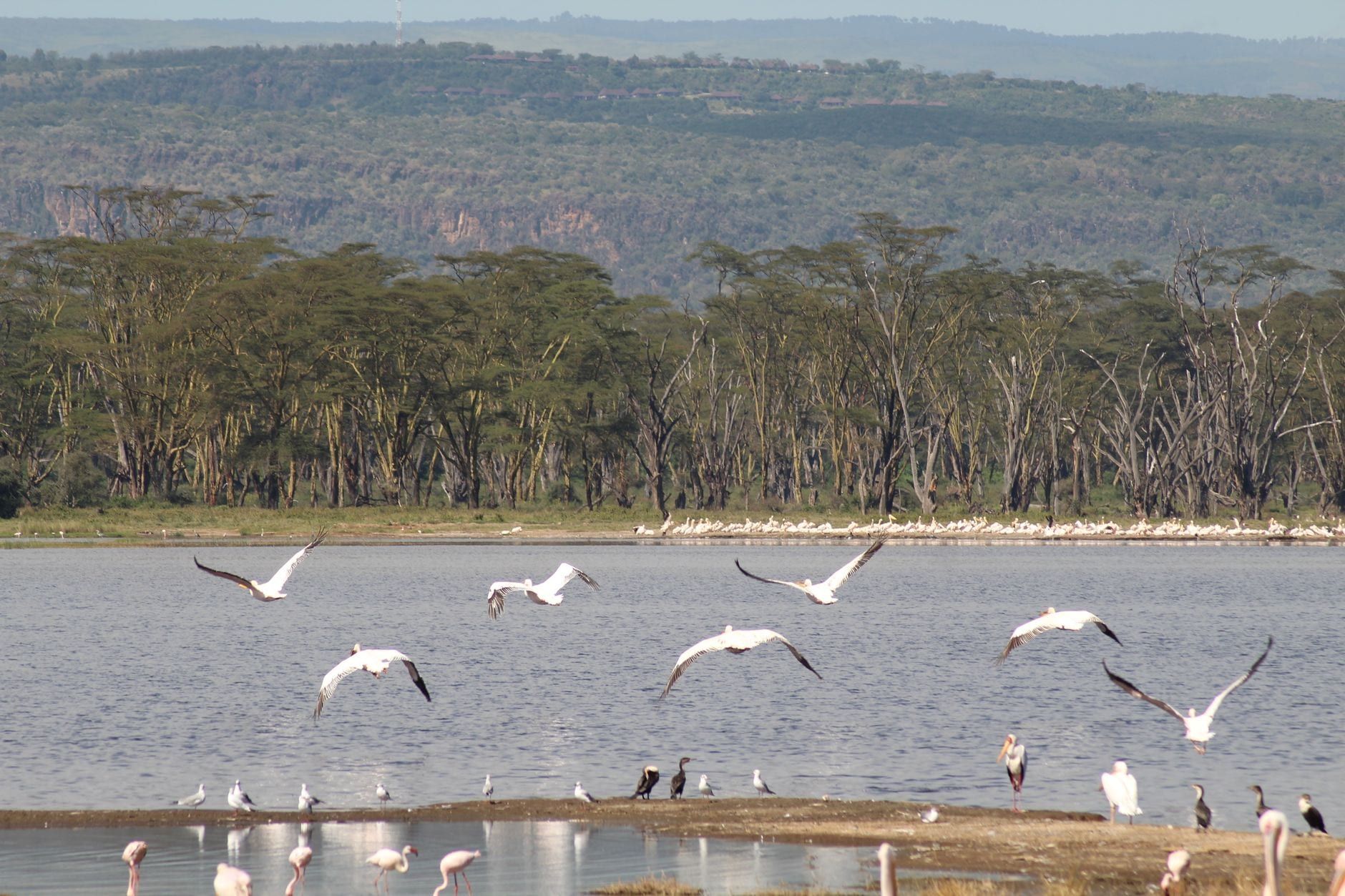
Lake Nakuru sits 156 km northwest of Nairobi, and that short hop — plus a fenced 188 km² park where rhinos, giraffes and buffalo feed within a few metres of the tracks — makes it one of the few Kenyan parks that genuinely works as a day trip. The trade-off is the arithmetic: about 320 km of driving bought you four or five hours inside the gates. For most time-poor visitors, that exchange still pays off.
This guide walks the day hour by hour, from the 5:30 am alarm in Nairobi to the 6 pm gate close, then covers what it costs, what you'll realistically see, the flamingo situation (short version: the pink-lake postcards lie), and the practical decisions — which gate, which season, and whether you need a 4x4. If you'd rather hand the logistics to someone else, full-day tours from Nairobi run this exact itinerary daily.
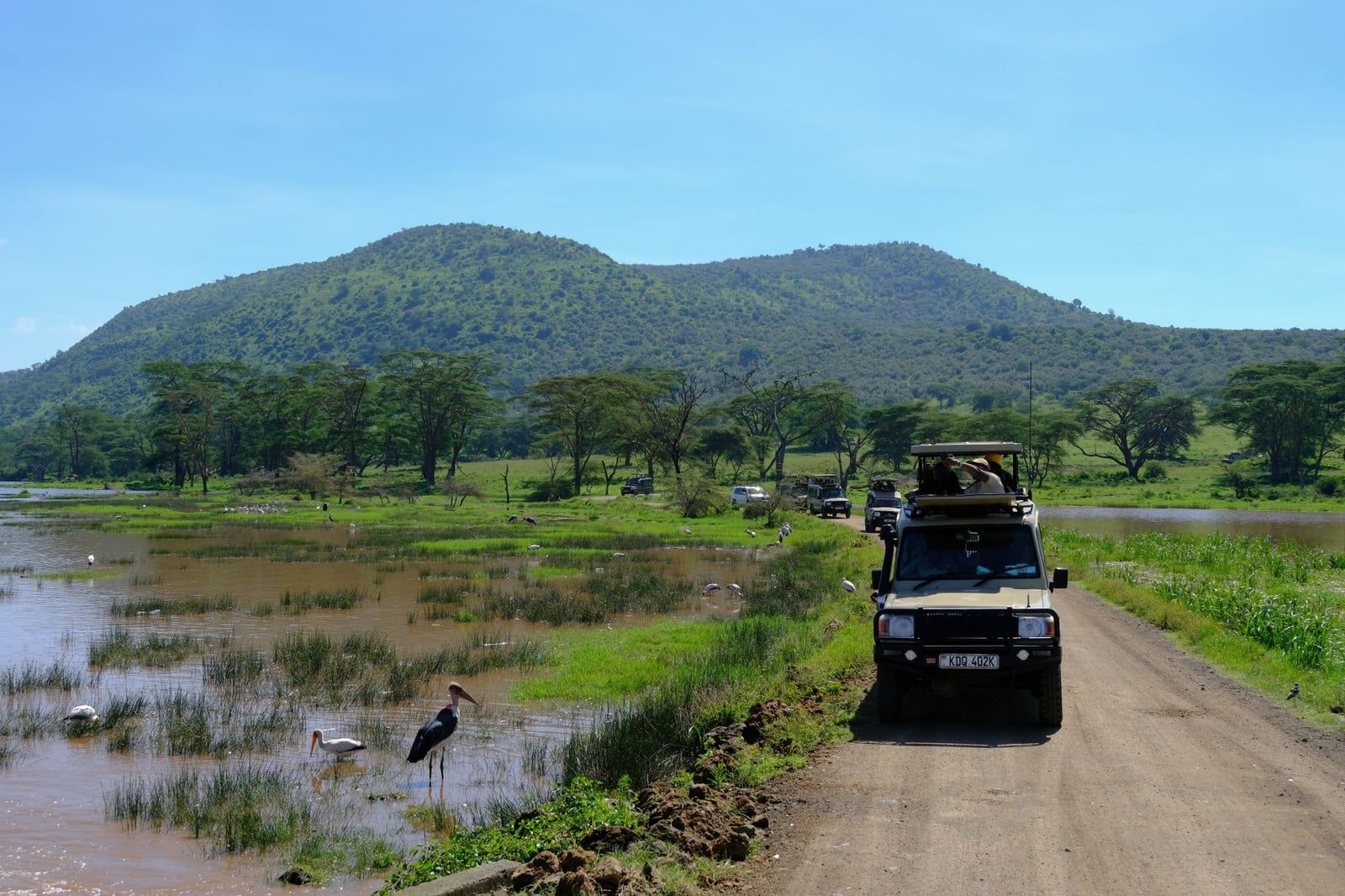
What a Lake Nakuru Day Trip from Nairobi Looks Like, Hour by Hour
The departure time makes or breaks the day. Nairobi traffic thickens fast, and the roadworks around Rironi on the A104 can add 30–45 minutes if you're not past Limuru by 6:00 am. Aim for a 5:30 departure and you'll clear the worst of it, drop into the Rift Valley, and reach the park around 9:00 am with the whole morning still ahead of you.
- 5:30–6:00 am — leave Nairobi; beat town traffic and the Rironi roadworks
- ~9:00 am — enter Lanet Gate with your prepaid QR code ready
- 9:00 am–12:30 pm — morning game drive, the day's best wildlife window
- 12:30 pm — lunch: packed picnic, Pelican Picnic Site, or a lodge restaurant
- 2:30–5:15 pm — viewpoint loop south, then head for the gate
- ~6:30–7:00 pm — back in Nairobi; call it a 12-hour day
The park runs 6:00 am to 6:00 pm daily, and the close is enforced — dawdle on the way out and you risk a late-exit fine of around KES 5,000. That's why the afternoon loop turns toward the gate by 5:15 at the latest, even if a lion is doing something interesting. It usually is, right at the wrong moment.
Three formats run this schedule. A group-joining tour is the cheapest organized option and you simply show up. A private tour gives you a dedicated 4x4 and guide, so the loop bends to your interests — worth it for photographers who want to linger at a sighting. Self-drive works too, and it's the only version where the schedule is entirely yours to blow.
Is a Day Trip Worth It? The Honest Verdict
Do the math before you book: 6–8 hours of driving for 4–5 hours of game viewing. That ratio sounds grim on paper, and it's the single best argument for an overnight instead. What tips it back is what those hours inside actually deliver — Nakuru is small, fenced, and stocked, so a half-day here can out-produce a full day in a bigger, emptier park.
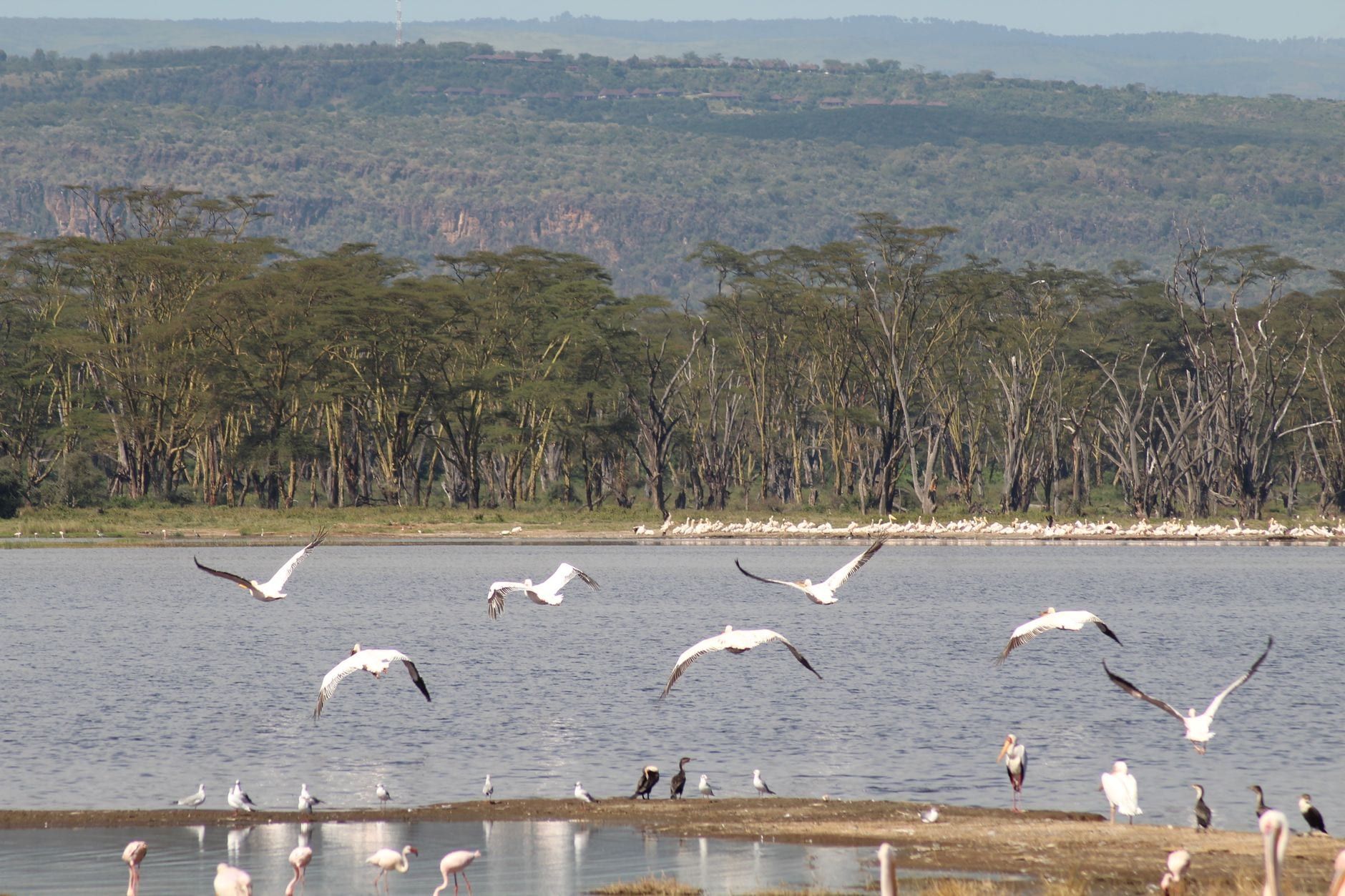
Reliably, one day gets you both rhino species, Rothschild's giraffes, buffalo, zebra, waterbuck and a lake shore busy with pelicans and fish eagles. What it can't give you is the predator window. Lions and leopards are most active between 6:00 and 8:30 am, and a day-tripper arriving at 9:00 has already missed the best of it. You also lose golden-hour light at Baboon Cliff, which is where the park's photographers spend their evenings.
The 24-hour permit is the quiet loophole. Entry is valid for a full day from your time of entry, not a calendar day — so arriving at 2:00 pm, sleeping at a lodge inside or near the park, and driving again at dawn gets you two sessions on one ticket. That's the upgrade I'd push on photographers and serious wildlife watchers. For everyone else — layovers, a single safari day bolted onto a Nairobi stay, first-timers sampling Kenya — the day trip stands on its own.
One caveat: with children under about six, a 12-hour day that starts in the dark is a grind. Either pick a lodge-based overnight or save Nakuru for when the kids can handle the distance.
Getting There: Route, Departure Time, and Gates
The route is the A104 Nairobi–Nakuru highway, 156 km of mostly good tarmac that takes 2.5–3.5 hours depending on traffic and the ongoing Rironi roadworks. Leave late and those roadworks alone add half an hour. Public transport exists — Easy Coach buses and matatus run to Nakuru town for KES 600–1,450 one way — but a bus doesn't fit a same-day return comfortably; it belongs to the overnight crowd. Full transport options and routes are worth a read if you're weighing them.
Gate choice matters more than most guides admit. Lanet Gate, off the highway before Nakuru town, is the day-tripper's gate: it skips city traffic and drops you straight into the eastern acacia country and rhino habitat where your first hour of sightings should happen. The Main Gate, 4 km from town, is slower to reach and has periodically closed when high water flooded its connecting circuits — check its status with KWS before you rely on it. Nderit Gate, in the south, suits anyone approaching from Elementaita or the Maasai Mara direction rather than from Nairobi.
You can fly it. Light aircraft land at Naishi Airstrip inside the park from Nairobi's Wilson Airport in roughly 30–40 minutes, though door-to-gate time and the cost usually only make sense if you're combining parks. Arrange a game-drive vehicle to meet the plane — an airstrip without a vehicle is just a field.
On the 4x4 question: in the dry season a 2WD saloon manages the ridge roads and main circuit, and plenty of locals drive them. After rain, no. Black cotton soil on the causeway and southern plains turns to deep, suction-cup mud that stops ordinary cars, and vehicle recovery inside the park is billed separately. In the wet months, a 4x4 with high clearance isn't a recommendation, it's the difference between a safari and a very expensive afternoon.
Entrance Fees, Payment, and the Real Cost of One Day
Nakuru became a premium KWS park in late 2025 and the non-resident fee jumped from $60 to $90 — a change that surprised a lot of people holding older guidebooks. There's no seasonal pricing; the same flat rates apply all year.
| Category | Adult | Child/student |
|---|---|---|
| Non-resident | $90 | $45 |
| African citizen (non-EAC) | $50 | $25 |
| East African citizen | KES 1,500 | KES 750 |
| Kenya resident | KES 2,025 | KES 1,050 |
Vehicles pay separately: KES 600 per day for cars under six seats, scaling up for larger vans. Tickets are valid 24 hours from entry but single-entry only — leave the park for lunch in Nakuru town and you pay the whole fee again, so plan your meals inside. Current opening hours and entry fees are worth confirming close to your date, since KWS has adjusted rates repeatedly in recent years.
Organized day trips start around $138 per adult for a group-joining tour, with private versions running $180–$300. Read what's included: park fees sit outside the tour price on many listings, which turns a $150 headline into a $240 day. Budget a $15–$20 driver-guide tip per day on top, and small cash for that — cashless covers the gate, not the people.
Wildlife You Can Realistically See in One Day
Four or five hours inside a small, fenced park is a real wildlife session — the kind where you stop counting buffalo. Here's what's near-certain, what's a bonus, and the one animal you won't see.
Rhinos: the headline act
Nakuru became Kenya's first government-managed rhino sanctuary in 1987, and it still holds one of the country's largest concentrations — roughly 70 southern white rhinos and 25-plus eastern black rhinos. The whites graze the shoreline grasslands in plain view; the blacks keep to the acacia thickets and take more finding. This is the park's most dependable spectacle, and the reason many people book the day at all. Four or five hours is genuinely enough for both species.
Lions, leopards and the timing problem
The park's lions are famous for climbing trees — usually to escape wet ground or flies — and leopards work the woodland edges. Both are most active before 8:30 am, which is exactly the window a Nairobi day-tripper spends on the highway. Arriving at 9:00 means your lion sighting, if it comes, is more likely a flat cat in a tree than a hunt. Scan the acacias anyway; a dozing lion in a branch beats a grass-level one you can't see. Spotted hyenas patrol the plains, and the woodlands hide pythons big enough to stop traffic when they cross a road.
Giraffes, buffalo and the no-elephant caveat
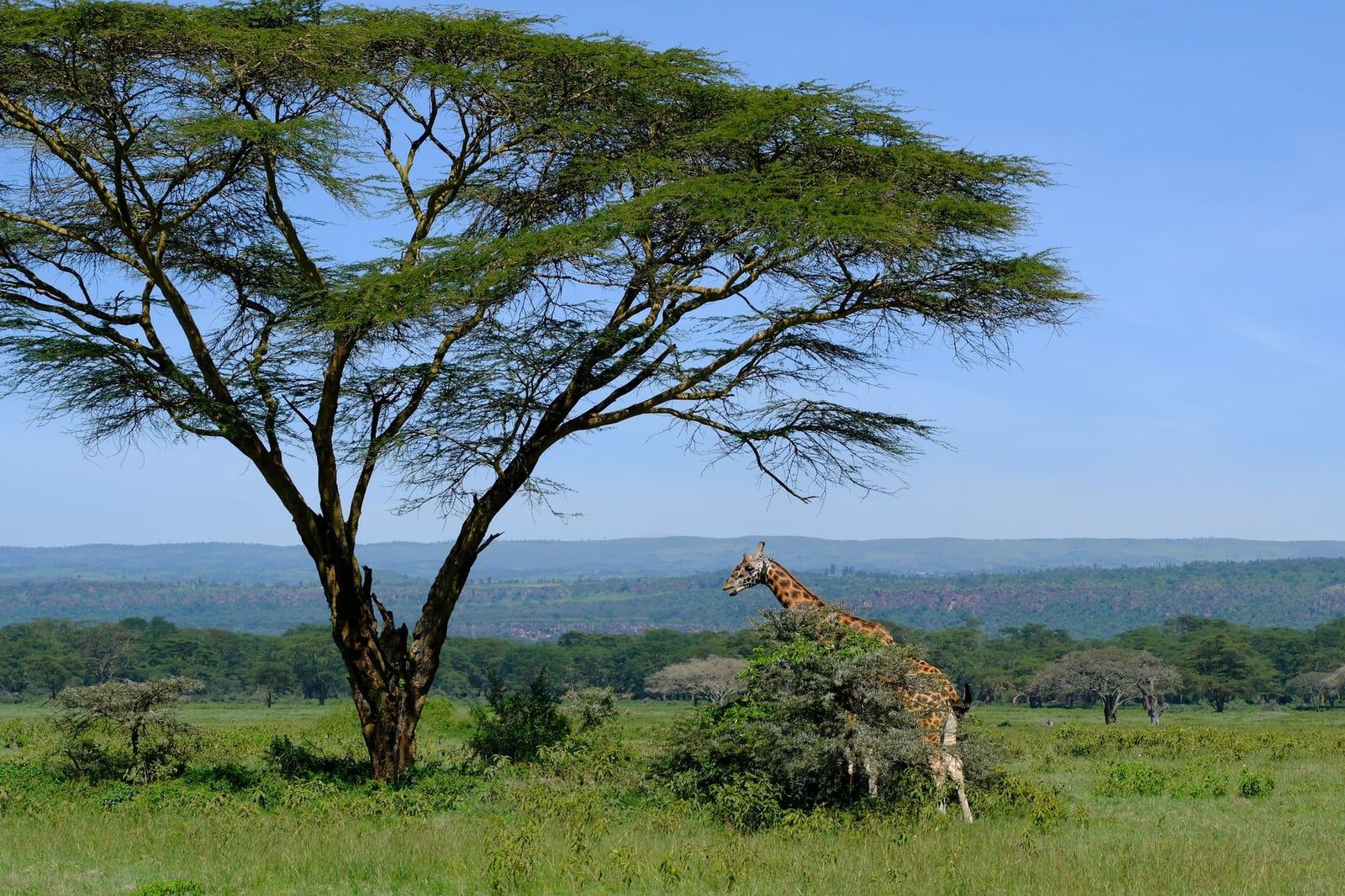
Rothschild's giraffes were relocated here from western Kenya starting in 1977, and Nakuru now holds one of the healthiest populations of this endangered subspecies — they're everywhere on the eastern side. Buffalo herds, zebras, impala, waterbuck (both Kenyan subspecies), hippos and troops of baboons round out the standard morning. What you won't see is elephants; the park is fully fenced and has none. That's the honest framing: four of the Big Five, not five. A fuller guide to Lake Nakuru's animals covers the rest of the roster.
Why birders rate Nakuru above its size
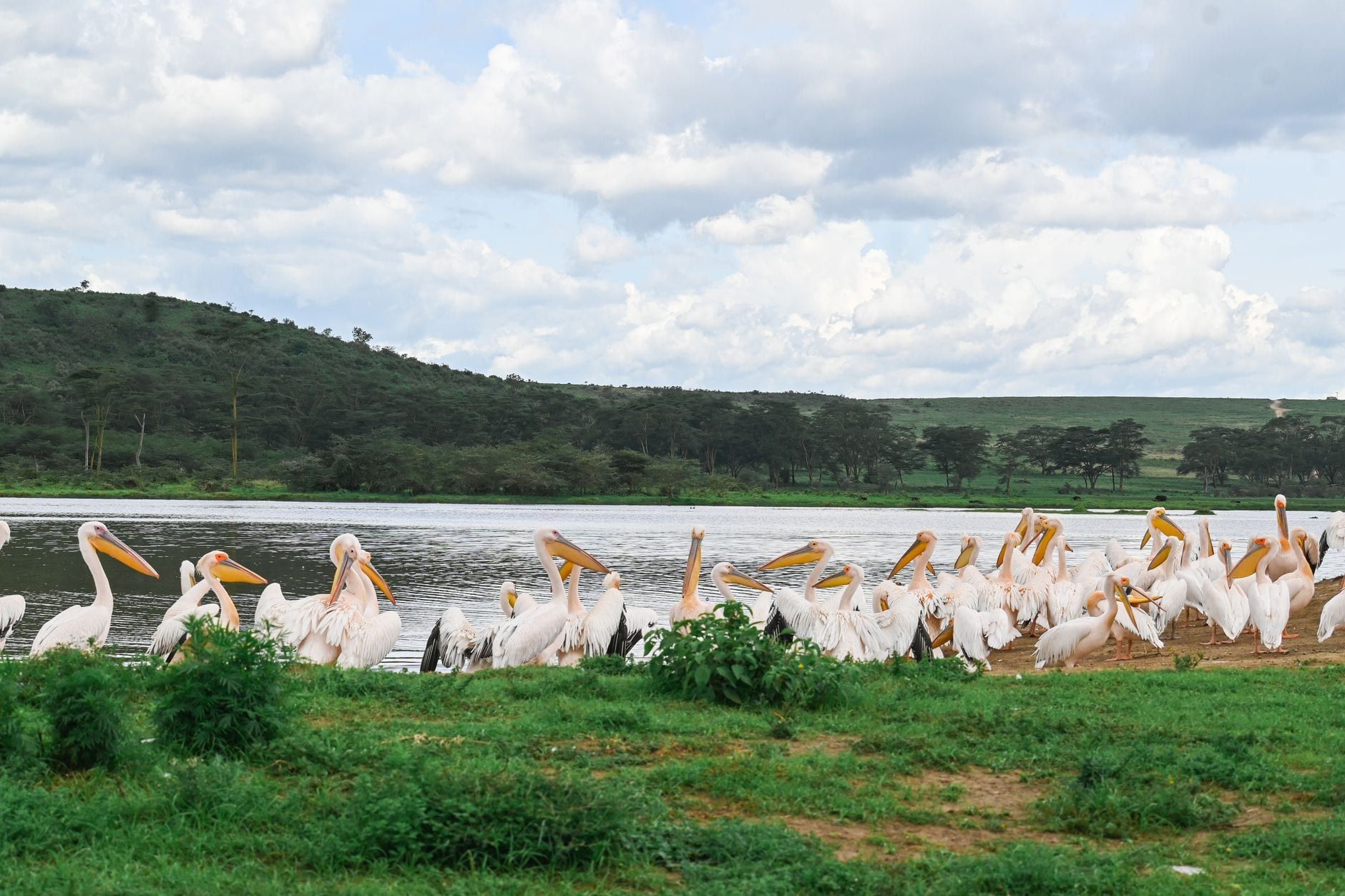
Around 450 bird species have been recorded here, and the park holds International Birding Area status. Great white pelicans fish in squadrons, African fish eagles call over the shallows, and Goliath herons, pied kingfishers and Verreaux's eagles all show up on a lucky day. October to April is peak season, when Palearctic migrants join the residents. If birds are your priority, Nakuru arguably beats bigger-name parks — and it pairs well with guided safari options that can put a birding-minded driver on your vehicle.
Flamingos: The Honest Reality and Where the Birds Are Now
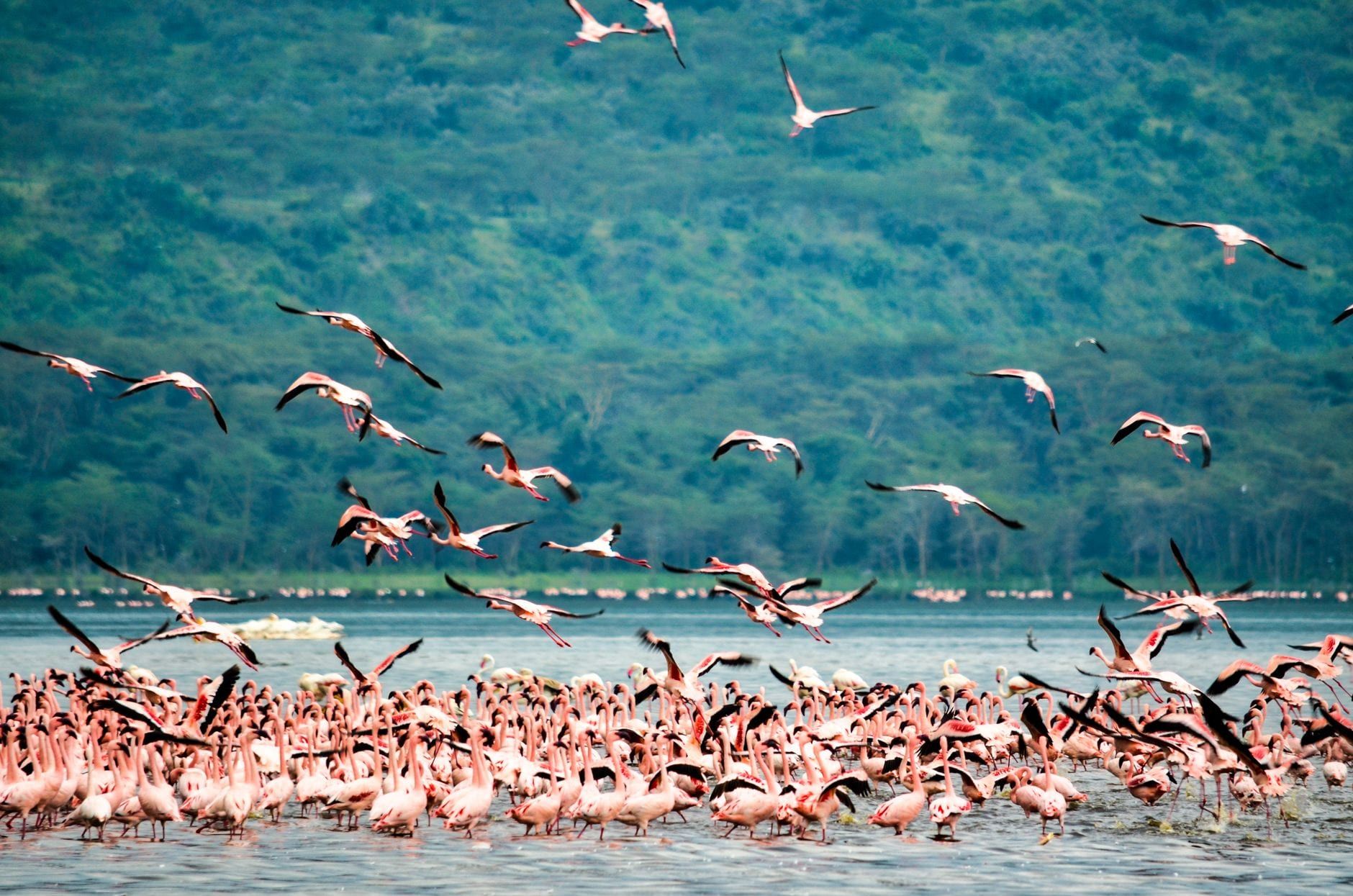
The million-flamingo photographs are two decades old. A KWS survey in January 2006 counted 1,347,063 birds on the lake; since then the water has risen — the surface grew from roughly 40 km² to beyond 68 km² between 2010 and 2020, and sits around 80-plus km² now — diluting the alkalinity and killing the Spirulina algae the lesser flamingos fed on. Most of them moved to Lake Bogoria, an hour and a half north.
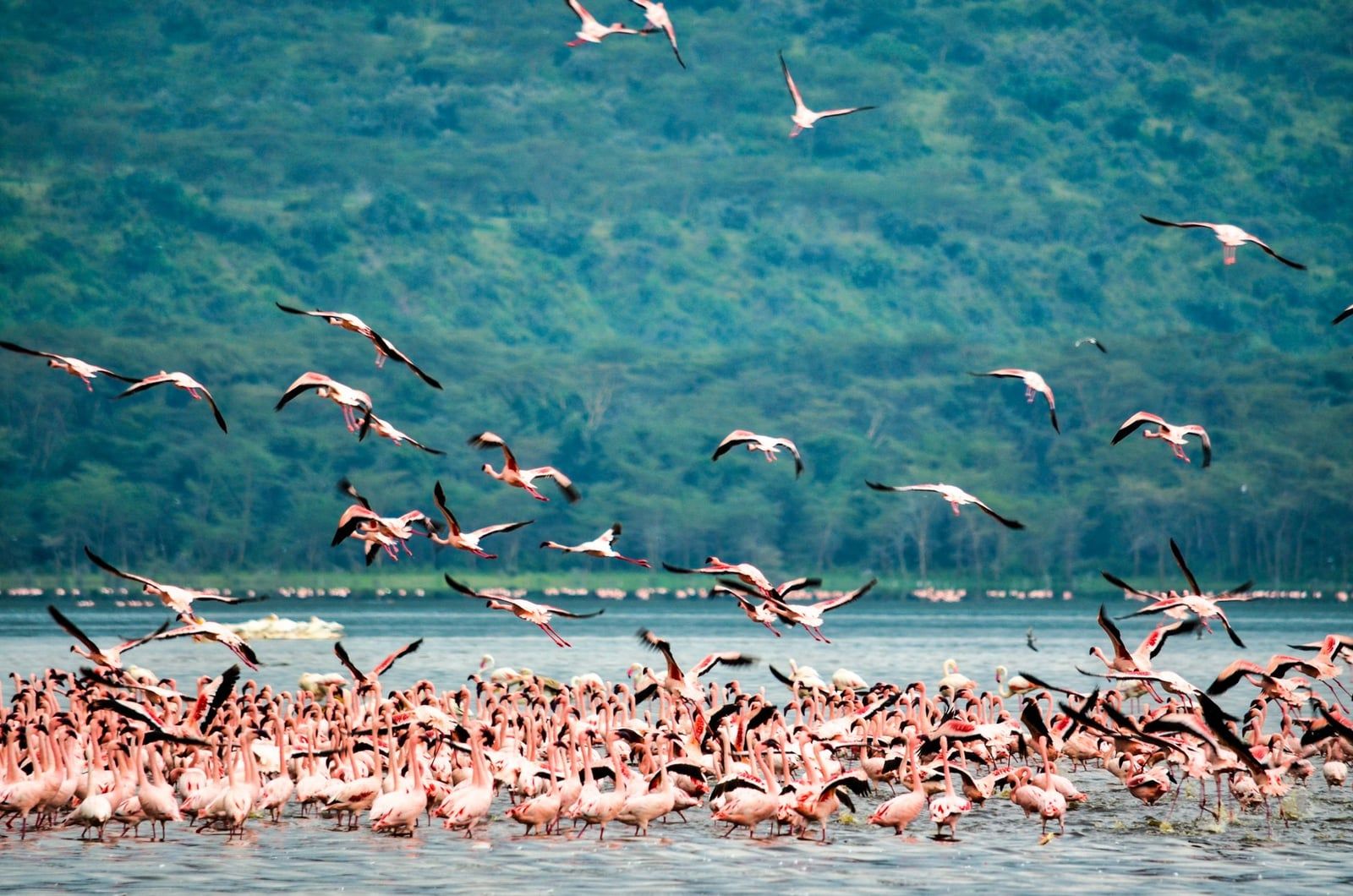
Nakuru still holds flamingos — tens of thousands rather than a million, mostly greater flamingos, shifting around the Naishi plains and the southern shore. Flamingo numbers at this lake have always swung with water levels and algae, so this is a fluctuation, not an extinction. Odds are best in February–March, July and November, when algae blooms follow the rains. Ask at the gate where the flocks are feeding today; rangers track them and will point you straight.
Two honest options. If the pink spectacle is the entire point of your trip, do Lake Bogoria instead — that's where the big flocks and the geysers are now. If you want the best of both worlds, Nakuru is still the only park where you can frame flamingos and a white rhino in the same shot, because the birds feed within sight of the rhino grasslands. Our Lake Nakuru flamingo guide goes deeper on the water-level story.
The In-Park Game Plan: Viewpoints, Stops, and a Smart Loop
Here's the loop that fits one day. Enter at Lanet, work the eastern shore and Naishi plains for rhinos and giraffes through the morning, break for lunch, then swing south past Makalia Falls and come back up the western side to Baboon Cliff before exiting at Lanet by 5:15. It's a compact circuit — the park's 188 km² make it one of the few Kenyan parks you can genuinely cover in a half-day.
Baboon Cliff
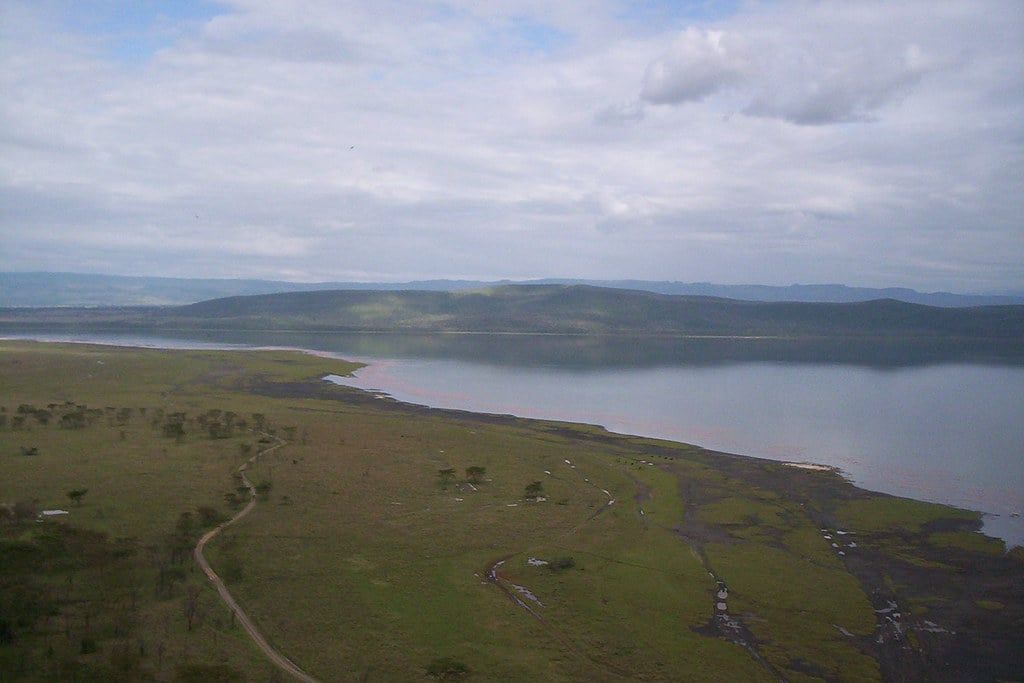
The park's classic panorama looks out over the whole alkaline lake, the southern plains and, when they're present, the flamingo feeding areas. Come in layered afternoon light and you'll understand why people linger. One rule, no exceptions: windows up, doors locked, nothing edible visible. The cliff's namesake baboons are accomplished thieves and will enter an open vehicle for a sandwich, a phone or a pair of sunglasses.
The Dead Forest and the quieter lookouts
The rising lake drowned a stand of acacias on the eastern shore, leaving bleached, skeletal trees standing in shallow water — it's become the park's most photographed feature, and your morning drive along the eastern tracks passes right by it. If Baboon Cliff is busy, the Out of Africa lookout gives you the alkaline flats in near-silence, and Lion Hill on the eastern side is the local alternate. All three cost you nothing but driving time.
Makalia Falls
At the park's southern tip, Makalia Creek drops about ten metres over a rock lip — modest by waterfall standards, but it's one of the few places in any Kenyan park where you're allowed out of the vehicle to stretch your legs. The falls are seasonal and at their best after the rains; in a dry September the creek may be a trickle and the stop takes five minutes. The surrounding bush hides impala and baboons, so don't wander far.
Lunch, and the boat question
Three lunch routes. The cheapest is a packed picnic eaten at Pelican Picnic Site, lakeside and shaded. Lodge restaurants — Sarova Lion Hill, Lake Nakuru Lodge and the others — sell day-guest lunches with a view and a proper bathroom; our guide to the park's lodges lays out the options. Or eat before you enter and spend the whole permit on game viewing. On the optional boat ride: it ran at roughly $15 an hour when last reported, but availability is inconsistent — confirm with your operator before the day, and remember that an hour on the water is an hour off the game drive.
Best Time of Year for a Day Trip
June to October is the safe answer. The long dry season thins the grass, pulls animals to the water, keeps the tracks firm, and delivers the best cat sightings — at the cost of more vehicles at every sighting. January and February are nearly as good: dry, clear, and the flamingo odds tick up in February–March.
The green season, November to May, splits opinion. Birding peaks from October to April as migrants arrive, the landscape goes green, crowds vanish and flamingo numbers can bounce back after the rains. But tracks turn to mud, and April–May — the long rains — is the worst window of the year for a day trip, when black cotton soil can end your circuit early. If you're locked into those months, book a 4x4 and lower your road-speed expectations.
- June–October: peak game viewing, firm roads, most vehicles
- January–February: dry, clear, all-round reliable
- February–March and November: best flamingo odds
- October–April: peak birding with migrant species
- April–May: heavy rains, mud risk, avoid if flexible
One calendar quirk: every September since 2003, the park hosts the Cycle with the Rhino event — a 64 km charity ride through the park raising money for fence repairs and community conservation. If a September trip coincides with it, expect closures on the ride route and a festival atmosphere at the gates.
What to Pack and Day-Trip Practicalities
Dress for two climates. At 1,754 m, a 6 am Nairobi departure is genuinely cold — around 10°C — and an open safari vehicle makes it colder, while midday inside the park runs to the mid-20s. Layers, not a single outfit. Neutral khaki, olive and brown tones are the convention; skip white and black, which the pale alkaline dust ruins within an hour.
- Warm layer and windproof for the dawn drive
- Sunscreen, sunglasses and a brimmed hat for midday
- Insect repellent — this is a malaria zone
- Refillable water and snacks; buy nothing inside the park
- Binoculars, plus a camera with real zoom (300mm+ covers most needs)
- Offline screenshot of your eCitizen QR permit, plus small cash for tips
The park is plastic-free — single-use plastics are banned — so pack accordingly. Inside, the speed limit is 40 km/h and it's enforced; stay in the vehicle except at designated spots like Makalia Falls, and keep the engine off at sightings rather than idling beside an animal. The last practicality is the one people fumble: the clock. Gates shut at 6:00 pm sharp, the fine for a late exit stings, and the drive back to Nairobi is three hours you shouldn't be doing in the dark. Start the homeward leg by 5:15 and the whole day ends exactly as planned — tired, dusty, and with a memory card full of rhinos.
Frequently asked questions
Is a Lake Nakuru day trip from Nairobi worth it?
Yes, if you're short on time. The trade is 6–8 hours of driving (~320 km round trip) for 4–5 hours in the park, which reliably delivers rhinos, Rothschild's giraffes, buffalo and strong birdlife. You'll miss the dawn predator activity and golden-hour light that overnight guests get, so photographers may prefer an overnight.
How much does a Lake Nakuru day trip cost?
Non-resident entry is $90 per adult and $45 per child, plus a vehicle fee (KES 600 for small cars). Organized day tours run from about $138 per person in a group to $180–$300 private — often with park fees excluded. Add a $15–$20 driver-guide tip.
What time should I leave Nairobi, and how long is the drive?
Leave by 5:30–6:00 am. The park is 156 km away and the drive takes 2.5–3.5 hours each way; roadworks near Rironi add 30–45 minutes if you're not past Limuru by 6 am. Park hours are 6 am–6 pm, with a late-exit fine of roughly KES 5,000.
Will I still see flamingos at Lake Nakuru?
Some, but not the historic pink blanket. Rising water diluted the lake and killed the algae the lesser flamingos ate, so most moved to Lake Bogoria; Nakuru now holds tens of thousands, mostly greater flamingos, near the Naishi plains. Best odds are February–March, July and November.
Can I see the Big Five on a day trip?
Four of five — there are no elephants in the park. Rhinos are near-guaranteed thanks to Kenya's first rhino sanctuary (est. 1987), buffalo and giraffes are easy, and lions and leopards are most likely if you're inside early.
Which gate should I use?
Lanet Gate if you're coming from Nairobi — it bypasses Nakuru town traffic and enters the rhino-rich eastern sector directly. Nderit Gate suits a southern approach from Elementaita or the Mara. The Main Gate, 4 km from town, has periodically closed due to flooding, so confirm its status before you go.
Do I need a 4x4 for a Lake Nakuru day trip?
In the dry season a 2WD can manage the main circuit and ridge roads. After rain, a 4x4 is effectively mandatory — black cotton soil on the causeway and southern plains turns to deep mud that stops ordinary cars, and recovery inside the park is charged separately.
Can I pay park fees in cash at the gate?
No. Payment is entirely cashless through KWSpay on eCitizen, by card or M-Pesa. Pay in advance on reliable Wi-Fi, save an offline screenshot or printout of your QR code, and make sure your fee category matches the passport or ID you present at the gate.